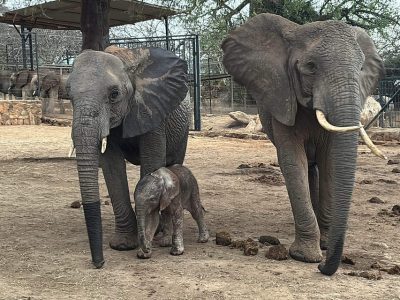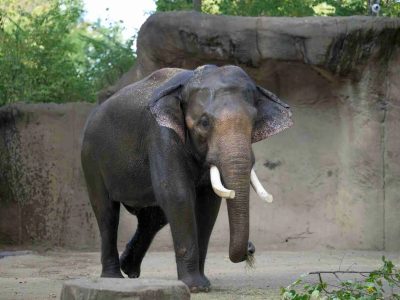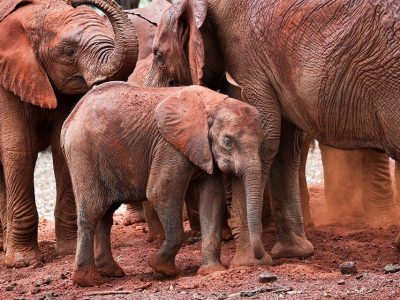

In the second half of 2022, drought emptied the southern sector of Kenya’s Tsavo ecosystem. Vegetation failed, African savanna elephant mothers stopped producing enough milk, and calves that could not keep pace with herds searching for food were left behind. The Sheldrick Wildlife Trust’s Voi Reintegration Unit, which normally takes older orphans partway through their return to the wild, filled up with juveniles instead and became, in the Trust’s words, a nursery of sorts.
The keepers nicknamed that intake the Voi Kids. In 2022 alone it included Akina, Ashanti, Baraka, Busara, Dabida, Epiya, Hildana, Itinyi, Juni, Kenderi, Kilulu, Seri and Ushindi. Four years on, the Trust has been publishing their individual rescue records, three of them on September 11, and the picture they add up to is not a rescue story at all. It is a story about what a rescued elephant becomes.
Three rescues, three weeks apart
Dabida was reported on August 15, 2022 on the Mwatate Sisal Estate, on the boundary of Tsavo East. She was thin and dehydrated, and the Voi team brought her in with help from community rangers. She was named for the area she was found in. At the stockades she went onto a drip that ran on and off for weeks before she stabilized.
Seri was spotted from the air on the afternoon of August 23, alone and in poor condition on the Voi River Circuit, in the same stretch where Kenderi had been found the day before. She had enough strength left to fight. She dodged the first attempt to catch her and ran for the sandy riverbed, and the team had to regroup, fan out, get ropes on her and put a towel over her head to cut down what she could see before carrying her up the bank to a vehicle. Several hours on drips brought her round.
Ushindi, whose name means victory in Swahili, was found on the afternoon of August 28 at Kanderi in southern Tsavo East. In a wet year Kanderi is a green wetland; in 2022 it was a plain. She had been trying to attach herself to passing herds and being turned away by all of them, and she collapsed shortly after reaching the Voi stockades. A day of drips had her back on her feet.
What four years did
The Trust’s accounts are unusually specific about temperament, which is what makes them worth reading. Seri arrived so aggressive that she charged at passing keepers, at birds and at bales of lucerne, and was given time alone in her stockade to decompress. She is now the one who is late for everything, milk bottles included, because she will not be rushed, and she is entirely relaxed around adult bulls. Not long after her rescue she stood between the forelegs of Laikipia, an ex-orphan bull more than twenty years her senior, and half-heartedly tried to suckle.
Dabida went the other way. The keepers call her the most kali of the group, kali being Swahili for spirited, and she has the dentistry to show for it: a skirmish with Kilulu cost her the left tusk in December 2025, and a play-fight with Manda took the right one three months later. Both will grow back. She is also first in line whenever the ex-orphans bring their own calves through, and has taken on Arruba’s daughter Aura and Naipoki’s son Nsimba.
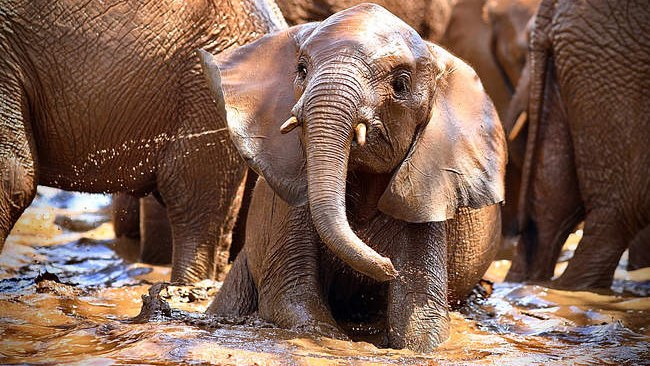
Ushindi has adopted a calf outright. She shadows Serenget from sunup to sundown, stands guard while she drinks her milk, and splashes beside her in the mud bath.
That is the arc worth noticing. A drought produced a cohort of orphans; the cohort is now nannying the next set of calves, including calves born to elephants the Trust raised. Reintegration is usually measured in releases. This is the other measure, and it takes about a decade to show up.
How endangered is a Tsavo elephant?
The IUCN Red List assesses the African savanna elephant, Loxodonta africana, as Endangered under criteria A2bd. The assessment is by Gobush and colleagues, last assessed on November 13, 2020 and published in an amended version in 2022, and it records the population trend as decreasing and continuing to decline in mature individuals. The Red List gives no global figure for mature individuals. Generation length is put at 25 years, which is why a four-year view of thirteen elephants is still an early one.
Drought appears on that assessment’s own list of threats, under climate change and severe weather. The 2022 Tsavo drought is not a weather anecdote attached to this story; it is one of the named pressures on the species, and the Voi Kids are what one season of it looked like on the ground.
Which zoos pay for this?
We trace the accredited zoos and aquariums behind field conservation work, because the money is usually there and rarely stated. On the Sheldrick Wildlife Trust we have looked more than once and not found it. The Trust is funded through its adoption program, individual donors and corporate supporters, and its named partners on other projects are Kenyan government agencies and community organizations rather than zoological institutions. That was the finding when we covered the black rhino calf Tytan’s first year, and nothing has changed.
It is worth saying why, because the absence is not an accident. The Trust publishes a position opposing the capture of infant elephants for captivity. An organization that holds that view is unlikely to appear on a zoo’s conservation partner list, and a zoo is unlikely to seek it out. We report that plainly rather than working around it. For scale on the wider category, AZA reported that in 2025, 235 accredited and certified facilities spent approximately $372.4 million on conservation across 139 countries; no published breakdown isolates an African share, and we do not print one.
The rescues themselves are documented in the Trust’s own orphan updates, which is where these three accounts came from.
Quick answers
- Who are the Voi Kids?
The cohort of orphaned elephants the Sheldrick Wildlife Trust took in at its Voi Reintegration Unit during the 2022 Tsavo drought. In 2022 alone it included Akina, Ashanti, Baraka, Busara, Dabida, Epiya, Hildana, Itinyi, Juni, Kenderi, Kilulu, Seri and Ushindi.
- How were Seri, Ushindi and Dabida rescued?
Dabida was brought in on August 15, 2022 from the Mwatate Sisal Estate. Seri was spotted from the air on August 23 on the Voi River Circuit. Ushindi was found on August 28 at Kanderi in southern Tsavo East. All three arrived dehydrated and were stabilized on drips.
- What are they doing now?
Nannying younger orphans and the calves of ex-orphans. Ushindi shadows a calf called Serenget; Dabida looks after Arruba's daughter Aura, Naipoki's son Nsimba and a younger orphan named Lumo.
- How endangered is the African savanna elephant?
The IUCN Red List assesses Loxodonta africana as Endangered under criteria A2bd, last assessed on November 13, 2020 and published in an amended version in 2022, with a decreasing population. Drought appears on the assessment's own list of threats.
- Do any accredited zoos fund the Sheldrick Wildlife Trust?
We looked and did not find any. The Trust runs on adoptions, individual donors and corporate supporters, and it publishes a position opposing the capture of infant elephants for captivity.