
In 2025 a veterinarian at the Cincinnati Zoo became the first at an AZA-accredited institution to earn board certification in theriogenology. That is the veterinary specialty of reproduction, and the reason it matters to a zoo is that most of what a breeding program needs is not a pairing recommendation. It is diagnostics.
Dr. Julie Barnes works with the Imperiled Cat Signature Project at the zoo’s Center for Conservation and Research of Endangered Wildlife, and serves as Reproductive Advisor for the Lion Species Survival Plan.
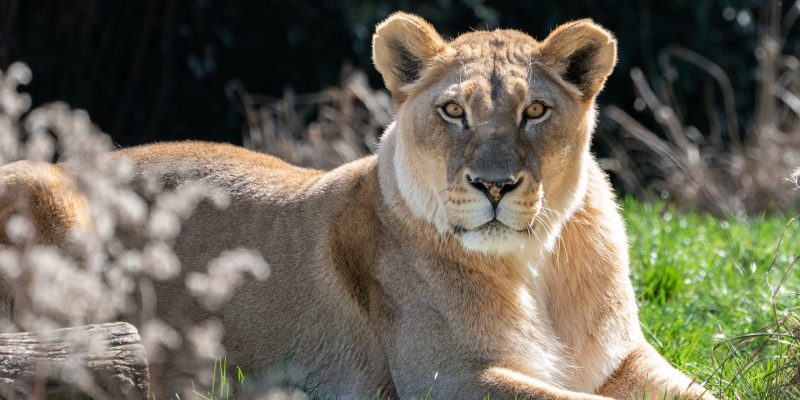
Two lionesses that did not produce cubs
The zoo described the work in August 2026, and it is worth reading as a record of what did not work, because that is rarer than a birth announcement.
One female would not accept natural breeding. Artificial insemination was attempted across two consecutive breeding seasons and pregnancy was not achieved. During a planned preventive spay, the team performed a gamete rescue, recovering eggs that were fertilized by IVF into four embryos now held in cryopreservation.
The second female was enrolled in a natural reproductive cycle monitoring study, tracking fecal hormone metabolites, blood and salivary hormones, vaginal cytology, reproductive behaviors and vocalizations.
Neither animal produced a cub. The program produced four embryos and a dataset, which in this field is the actual output.
The bank
Since 2023 Barnes and the CREW team have run comprehensive reproductive evaluations and semen collections on seven genetically valuable male African lions, banked in CREW’s CryoBioBank. The broader program covers African lions, jaguars and Amur leopards.
The logic of a frozen bank is straightforward and slightly grim. A genetically valuable animal represents a set of genes that exists in a finite number of copies, and animals die. Banking gametes means the genes outlive the individual and stay available to a population manager decades later.
What this is and is not
This is ex situ work. The Lion SSP is a partnership among AZA zoos coordinating breeding and population management for African lions in human care, and the program described here has no field component in Africa and does not claim one.
That distinction gets blurred often enough to be worth stating. The value of the CREW program is not that it puts lions back in the Serengeti. It is that it keeps the North American population genetically viable without importing more animals from the wild, and it develops assisted reproduction techniques that eventually transfer to species with far smaller margins.
The same reproductive science underpins careful pairings elsewhere, including the Sumatran tiger transfer to Loro Parque, where the studbook and not the institution decides who breeds.
The zoo did not explain the medical reason for the preventive spay, and no individual lion in the account is named.
Source: Cincinnati Zoo and Botanical Garden.