
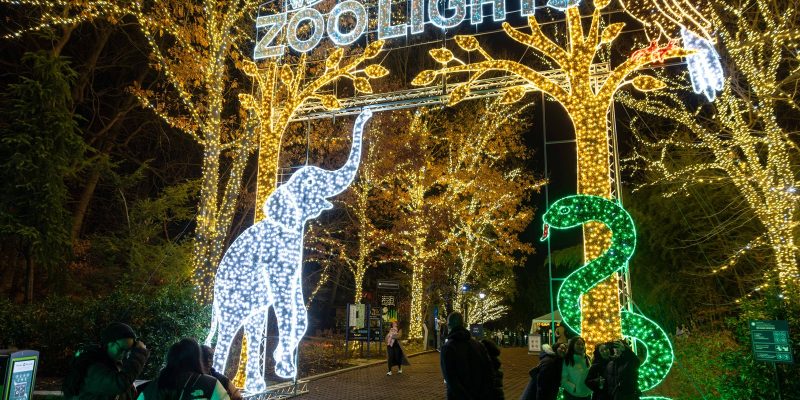
ZooLights returns to the Smithsonian’s National Zoo and Conservation Biology Institute on Friday, November 20, and runs on selected evenings through Sunday, January 3, 2027. Tickets are $10, on sale now, and the zoo is urging people to buy early. This is the event’s 18th year.
The headline number is a million LED lights and more than 100 illuminated lanterns, shaped as animals and grouped by the habitats they come from: ocean, desert, grassland, rainforest and polar. The less obvious detail is what happens to the real animals while all this is going on.
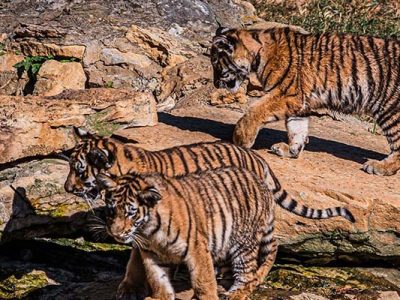
The animals get the night off
On general-admission ZooLights nights, every indoor animal exhibit is closed. The zoo shuts at 4 p.m. to all visitors and reopens at 5 p.m. for ticket holders, and the animal houses stay shut, so the animals get a full night’s rest.
That is a real design decision rather than a courtesy, and it is the reason ZooLights is a walk through a lit park rather than a night tour of the collection. If seeing animals is the point of the trip, come during the day: daytime entry passes are free, and parking can be booked separately.
Two nights are built as exceptions. The two Member Nights, Tuesday, December 8 and Wednesday, December 9, include special after-hours access to selected animal houses, as does the Adults-Only Night on Wednesday, December 16.
Dates and hours
ZooLights runs November 20 to 22, November 27 to 29, December 4 to 6, December 11 to 13, December 16, December 18 to 23, December 26 to 30, and January 2 to 3, 2027.
Monday through Saturday it runs 5 p.m. to 9 p.m., with last entry at 8:30 p.m. On Sundays it runs 5 p.m. to 8 p.m., with last entry at 7:30 p.m. It is held rain or shine.
Tickets, parking and what counts as an extra
Tickets are $10 per person. Everyone aged three and up needs one; children two and under are free. Parking passes are separate, at $30 per vehicle in advance or $40 on the day, subject to availability. Bus parking is $120. Group tickets are available for parties of 50 or more, requested through an online form at least two weeks ahead, and are not valid on Member Nights or the Adults-Only Night.
Zoo members can reserve up to six free entry tickets for Member Nights and buy additional ones at $10. Advance reservations for those nights are required. On any ZooLights night, members get their usual 15 percent discount on in-park food and retail with a membership card and photo ID.
Proceeds from tickets, concessions and parking go to animal care and conservation science at the zoo.
A few upgrades are sold on site rather than online: festive glasses that turn the displays into glowing snowflakes, $3 or $1 as an add-on to another attraction; a winter-themed maze for $6; and the National Zoo Choo Choo, a $6 train ride that loops around the Great Cats exhibit.
The Adults-Only Night
Wednesday, December 16, 5 p.m. to 9 p.m., for visitors 21 and over. Tickets are $19 and include a complimentary adult beverage, seasonal treats, games, festive music and after-hours access to selected animal houses. Parking is the usual $30 in advance or $40 on the day.
Entertainment, and one carousel caveat
December weekends have a theme. Community performance groups play each Friday. Roaming carolers work the paths each Saturday, singing holiday songs from the 1970s through the 2000s. Sundays bring a holiday trivia game covering the same decades.
The Speedwell Foundation Conservation Carousel runs during ZooLights, weather permitting, and the threshold is specific: it closes when the outside temperature drops below 35 degrees Fahrenheit. Carousel tickets are sold on site at the ride entrance.
The Conservation Pavilion can be booked for private events across the whole ZooLights season. It is fully enclosed, well lit, climate controlled and newly fitted with full audiovisual equipment, it overlooks the lantern displays in the lower zoo, and it holds 120 seated or 200 standing, rising to 300 standing when the adjoining patio is included. A booking covers one ZooLights evening and includes admission for every guest.
Plan ahead
The zoo’s own advice, and it is worth taking: ZooLights sells out. Capacity is limited, it is one of the most popular family events in the Washington area, and both tickets and parking passes are best bought early. The zoo’s other big seasonal run, Boo at the Zoo, opens October 16 and works the same way.
Source: Smithsonian’s National Zoo and Conservation Biology Institute, October 8, 2026.
Quick answers
- When is ZooLights 2026?
Selected evenings from Friday, November 20, 2026 through Sunday, January 3, 2027: November 20 to 22, November 27 to 29, December 4 to 6, December 11 to 13, December 16, December 18 to 23, December 26 to 30, and January 2 to 3.
- What time does it run?
Monday through Saturday, 5 p.m. to 9 p.m., with last entry at 8:30 p.m. On Sundays, 5 p.m. to 8 p.m., with last entry at 7:30 p.m. It is held rain or shine.
- How much are tickets?
Ten dollars per person. Everyone aged three and over needs a ticket; children two and under are free. Parking passes are separate, at $30 per vehicle in advance or $40 on the day. Bus parking is $120.
- Can I see the animals during ZooLights?
Not on general-admission nights. Every indoor animal exhibit is closed so the animals get a full night of rest. The two Member Nights, December 8 and 9, and the Adults-Only Night on December 16 do include after-hours access to selected animal houses. For animals, visit during the day, when entry passes are free.
- What is the Adults-Only Night?
Wednesday, December 16, 5 p.m. to 9 p.m., for visitors 21 and over. Tickets are $19 and include a complimentary adult beverage, seasonal treats, games, festive music and after-hours access to selected animal houses.
- What do members get?
Up to six free entry tickets for the Member Nights of December 8 and 9, with extra tickets at $10 and advance reservations required. On any ZooLights night members also get their standard 15 percent discount on in-park food and retail.
- Where does the money go?
Proceeds from tickets, concessions and parking support animal care and conservation science at the Smithsonian National Zoo and Conservation Biology Institute.