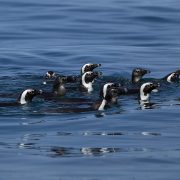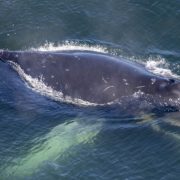

An idea that started at an aquarium in Cape Town is now a United Nations Ocean Decade Activity. MPA Day, the annual August 1 celebration of Marine Protected Areas founded by Dr Judy Mann-Lang of the Two Oceans Aquarium, drew more than a hundred events worldwide in 2025 and beat that number again in 2026.
The Two Oceans Aquarium published its account of the 2026 celebrations on August 12. The scale of it is the news: a single-country initiative with a modest first-year target has become one of the fastest-growing ocean conservation campaigns anywhere, and the institution behind it is a public aquarium rather than a government or a treaty body.
What is a Marine Protected Area?
A nature reserve in the sea. An MPA is a defined stretch of ocean where extractive activity is restricted or prohibited outright, which lets fish populations, reef structure and seafloor habitat rebuild inside the boundary. Well-managed reserves tend to spill their surplus outward, which is why fishing communities next to a working MPA often end up better off rather than worse.
The catch is that a marine reserve is almost invisible. A national park has a gate and a sign. An MPA is a line on a chart over water that looks exactly like the water beside it, which makes public support hard to build and easy to lose. That is the problem MPA Day was invented to solve.
How much did it grow?
Mann-Lang, who founded the day, described the trajectory in the aquarium’s own account. “Last year we hoped for 50 activities to celebrate MPA Day. Over 100 activities took place around the world,” she said. “This year I secretly hoped that we would reach the same number. I was thrilled to see that in 2026 we had even more celebrations, and we know that more are still to come!”
She also thanked the organizers individually, noting how much work goes into planning and running each activity, and said the clearest change this year was how many people were talking publicly about why Marine Protected Areas matter for ocean protection.
The United Nations Ocean Decade endorsement is the part with institutional weight. It puts a day founded by an aquarium’s conservation staff inside the framework that coordinates global ocean science through 2030.
What people actually did
South Africa again led the calendar, and the range of activity is a useful picture of what marine conservation outreach looks like when it is not a press release.
On the KwaZulu-Natal north coast, Ezemvelo KZN Wildlife introduced school groups to the biodiversity of the uThukela Marine Protected Area. At Sodwana Bay inside the iSimangaliso MPA, Adventure Mania and the Maputaland Hope Spot ran fun runs, marine conservation lessons, rocky shore explorations and beach clean-ups. On the KZN south coast, Wild Alliance Africa and the Aliwal Shoal Hope Spot put on a 33-kilometer beach walk, guided dives, snorkeling trips, citizen science and a screening of the Mission Blue documentary centered on the Aliwal Shoal MPA.
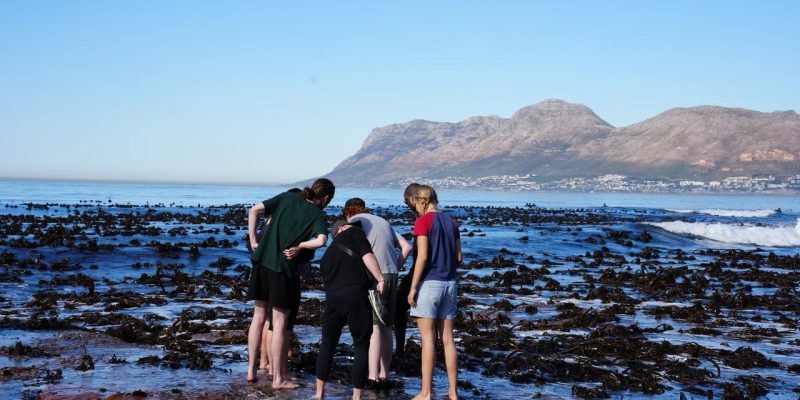
Across the Western Cape and Garden Route, Nature’s Valley Trust took primary school pupils onto the rocky shore and Conserve Eden ran educational hikes at Robberg Nature Reserve. Around Cape Town, the Two Oceans Aquarium hosted families for a rocky-shore session, the I AM WATER Foundation led community snorkels through the Great African Seaforest, Trail Freedivers went into Water’s Edge Beach, Ocean Pledge took people kayaking in False Bay, Save a Fishie organized a beach clean-up in support of the Robben Island MPA, Cape RADD ran a snorkeling activity, and Guardians of the Deep finished their Swim for Life fundraiser across the Table Mountain and Robben Island MPAs.
Not one of those requires a boat charter or a research permit. That is the design.
Why this one carries an aquarium hub
We trace the accredited zoos and aquariums behind conservation work in this region before we write it up, and in this case the trace is short, because the aquarium is not a funder standing behind somebody else’s project. MPA Day was founded by a member of the Two Oceans Aquarium’s own conservation staff, the aquarium continues to anchor it, and the aquarium ran its own public program on the day. That is the institution in the story rather than beside it.
It is also a useful example of what a public aquarium can do that a research institute cannot, which is convene an audience. The Association of Zoos and Aquariums reports that in 2025 its 235 accredited and certified facilities spent approximately $372.4 million on conservation across 139 countries, and no published breakdown isolates the African share, so no African figure appears here. But money is not the only thing an aquarium contributes. A million visitors a year and a communications team is a distribution channel, and MPA Day is what happens when one gets pointed at a policy problem.
The Two Oceans Aquarium’s rescue and rehabilitation work has appeared here before, most recently in the release of a trafficked ragged-tooth shark back into the wild ocean.
What happens between now and next August
Mann-Lang’s stated goal is a campaign that does not stop on August 2. She said the aim has always been much bigger than one annual celebration, and that the intent is a global movement running through the year, with reducing plastic use, choosing sustainable seafood, joining a beach clean-up, teaching, contributing to research or simply spending time near the ocean all counting.
For an American reader, the transferable part is the format. A Marine Protected Area near you has the same visibility problem as one off Sodwana Bay, and the fix that worked in South Africa was not a campaign budget. It was a date on the calendar and a hundred people willing to organize a walk.
Source: Two Oceans Aquarium, South African-born MPA Day Makes a Global Splash with Record-Breaking 2026 Celebrations, by Olivia Jones Communications, published August 12, 2026.
Quick answers
- What is MPA Day?
An annual celebration of Marine Protected Areas held on August 1, founded by Dr Judy Mann-Lang of the Two Oceans Aquarium in Cape Town. It is now endorsed as a United Nations Ocean Decade Activity.
- What is a Marine Protected Area?
A nature reserve in the sea: a defined stretch of ocean where extractive activity is restricted or prohibited, letting fish populations, reef structure and seafloor habitat rebuild inside the boundary.
- How big did MPA Day get in 2026?
More than 100 activities took place worldwide in 2025, and 2026 exceeded that. Mann-Lang says the first-year hope was for 50.
- What did people do on the day?
Rocky-shore explorations, community snorkels, guided dives, beach clean-ups, a 33-kilometer beach walk, kayaking, fun runs, citizen science, school programs and a documentary screening, mostly across South Africa's Marine Protected Areas.