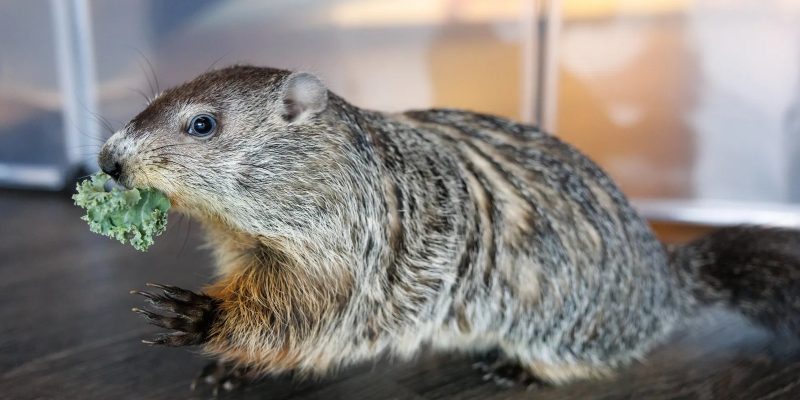
The Tennessee Aquarium has a groundhog again. His name is Waddles, his public title is Chattanooga Chuck II, and he got the job because a car broke his leg.
He made his debut on September 22, the first day of fall, joining the Aquarium’s ambassador animal program in the River Journey building. He will appear alongside educators in programs about a native mammal most people in Tennessee have seen and almost nobody has looked at. And, in February, he will be asked to predict the weather.
How he got here
Waddles arrived as a juvenile at a private veterinary clinic on Lookout Mountain run by Dr. Chris Keller, who is also the Aquarium’s director of animal health. He had been struck by a car and had a broken leg.
The fracture healed well. The problem was what came next.
“Groundhogs are extremely reliant on their forelegs for digging burrows,” Keller said. “Though his broken leg has healed well, we were concerned about him developing issues related to his injury that could impact his ability to thrive if he were released into the wild.”
A groundhog that cannot dig properly is a groundhog without a house, a nursery or a place to spend the winter. So rather than release him into a landscape where that limitation would eventually catch up with him, the Aquarium took him in, where husbandry and veterinary teams can manage whatever his leg does over a lifetime.
Why the name is inherited
The first Chattanooga Chuck made his first Groundhog Day forecast at the Aquarium in 2010 and went on to compete for attention with Punxsutawney Phil, with predictions broadcast nationally. The Weather Channel put him on its list of top groundhogs to watch. He died in his sleep in November 2019 at the age of 10, and the Aquarium went nearly seven years without a weather-watching whistle pig.
Passing the name along is a deliberate convention rather than sentiment, and the Aquarium compares it to college mascots: Tennessee has had generations of Smokeys, Georgia has had generations of Ugas.
The actual point of a groundhog
Thom Benson, the Aquarium’s vice president and chief marketing and communications officer, spent more than a decade as an on-air meteorologist in Chattanooga before taking the job, which makes him an unusually qualified person to explain why a rodent is on the payroll.
“Having an ambassador like ‘Chattanooga Chuck’ allows the Aquarium’s team to introduce guests to a charismatic native species throughout the year,” Benson said.
“But there’s a lot of fascinating weather folklore associated with a variety of species from fish to birds, and even reptiles and amphibians,” he added. “That makes Groundhog Day special here as we’re able to shine a light on animals with fun, forecasting lore that the Groundhog’s fame has overshadowed.”
Which is a neat trick: use the famous animal as the door, and bring people through it to the ones nobody has written a holiday around.
What he is like
His caregivers are preparing him for public work through voluntary training and positive reinforcement, meaning he chooses to participate and is rewarded when he does, rather than being handled into cooperation.
“He is very outgoing, curious and food-motivated,” said Tyler Schneider, a senior animal care specialist. “He is adventurous and will act timid at first with strangers, but he quickly comes out of his shell when food is involved. Carrots, broccoli and cashews are some of his favorites.”
Three things about groundhogs
Groundhogs, Marmota monax, are one of the few native North American mammals that enter true hibernation. True hibernation is not a long nap: body temperature drops and heart rate and breathing slow dramatically for most of the winter, which is why a groundhog emerging in early February is a noticeable enough event that somebody built a holiday on it.
They are mostly solitary, and individuals generally interact only during mating season.
They are herbivorous rodents with four large incisors for chewing and strong legs built for digging extensive burrows, which they use for protection, for raising young and for hibernating. Which is the whole reason Waddles is at an aquarium instead of in a field.
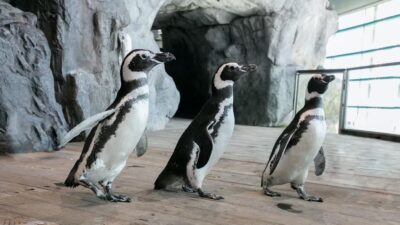
The Tennessee Aquarium’s ambassador and rearing work has been busy this year, including a run of gentoo penguin chicks over the summer.
Chuck II’s first Groundhog Day is February 2.
Source: Tennessee Aquarium, September 22, 2026.
Quick answers
- Who is Chattanooga Chuck II?
A young groundhog named Waddles by his caretakers, who joined the Tennessee Aquarium's ambassador animal program on September 22, 2026. He inherits the public name of the Aquarium's previous groundhog, who forecast from 2010 and died in November 2019.
- Why is he at an aquarium instead of in the wild?
He arrived at a veterinary clinic with a leg broken after being struck by a car. The fracture healed, but groundhogs depend on their forelegs to dig burrows, and his care team was concerned that related problems would affect his ability to thrive if he were released.
- Do groundhogs really hibernate?
Yes, and unlike most animals they enter true hibernation: body temperature drops and heart rate and breathing slow dramatically for most of the winter. They are one of only a few native North American mammals that do.