
Six years ago the Sheldrick Wildlife Trust put a small team of Kenyan volunteers on a boat in the Lamu archipelago and asked them to start replanting mangroves by hand. As of the Trust’s September 3 field notes, that program has propagated more than 17.6 million trees.
Lamu sits on Kenya’s northern coast and holds more than 60 percent of the country’s mangrove forest, the largest continuous mangrove ecosystem in Kenya. Between 1985 and 2009, Kenya lost about a fifth of its mangroves to overharvesting, illegal logging, charcoal production and coastal development. The reforestation initiative began in 2020, and the Trust’s monthly field notes, written by chief executive Angela Sheldrick, devoted this month’s edition to it.
Why does a wildlife trust plant trees?
Because mangroves are habitat, and unusually productive habitat at that. The stilted root systems that give the trees their nickname, the walking trees, sit half submerged and form a sheltered nursery for juvenile fish and crustaceans. Birds nest and roost in the branches. Sea turtles shelter among the roots. Primates work the insect population. A mangrove stand is a nursery, a larder and a rookery stacked in one place.
The trees also do structural work. They hold shoreline soil against erosion, buffer storm surge and wind damage for the communities behind them, and filter nitrates and phosphates out of runoff before it reaches coastal water, which protects reefs and seagrass from algal blooms.
And they are a carbon story with a twist. Mangroves store between two and ten times more carbon per hectare than terrestrial or tropical forest, and unlike most trees they keep the majority of it below ground. Waterlogged, low-oxygen mud slows decomposition to a crawl, so organic matter accumulates in the sediment for centuries rather than breaking back down into carbon dioxide.
How the planting actually works
Mangroves do not grow from dormant seed. They propagate through propagules, pencil-shaped seedlings that sprout while still attached to the parent tree and then drop into the water. Tides carry them, they take on water and shift from floating horizontally to floating upright, and eventually they anchor into coastal mud at low tide and root.
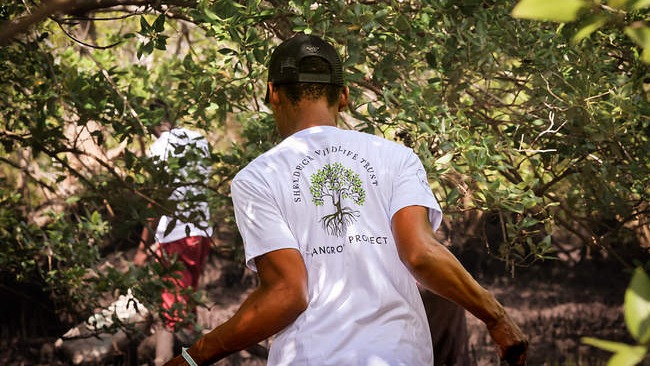
The Lamu team harvests propagules daily and plants the previous day’s harvest at the next low tide, traveling by boat through remote waterways to each site and spearing every propagule into the mud by hand. On ground stripped of vegetation the crews use what the Trust calls a caregiver method, setting new propagules close to surviving mangroves so they get shade and richer soil. Planting then advances in bands: once a band reaches two years old it is established enough to shelter the next band planted beside it.
Where to plant is decided with a map. Working with the Kenya Forest Service, the team has catalogued every part of the forest showing degradation, and crews in the water every day flag areas that need particular attention. Not all the damage is human. The 1998 El Nino left bald patches that never recovered on their own; nearly thirty years later, propagules planted into them are already standing more than two meters tall.
Survival rates on new planting run between 80 and 85 percent. In sections where the forest is already healthy the crews switch to enrichment planting, which thickens existing forest rather than restoring bare ground.
The part that is about people
The first reforestation unit was not recruited so much as adopted. An informal beach management unit already existed in Lamu, local volunteers who patrolled the shoreline and stopped illegal mangrove harvesting on their own initiative. They became the program’s first paid employees.
The team now numbers 30: 24 planters, two team leaders, two boat captains, one forest monitor and one restoration manager. Planters are selected by the local Community Forest Association, the body that partners with the Kenyan government to manage and benefit from public forest. Formal jobs are scarce in Lamu, and that scarcity is what pushes people toward poaching, charcoal burning and illegal harvesting in the first place. Paying the people who would otherwise be extracting from the forest to replant it addresses both problems with the same budget line.
Is there zoo or aquarium money behind this?
We look for the accredited zoos and aquariums funding conservation work in this region before writing it up, and here, as with the Trust’s orphan program, we did not find any. The named partners on the Lamu work are the Kenya Forest Service, the Lamu Conservation Trust and the local Community Forest Association. The Sheldrick Wildlife Trust’s own funding runs on public adoptions, individual donors and corporate supporters, and no zoological institution is named by either side.
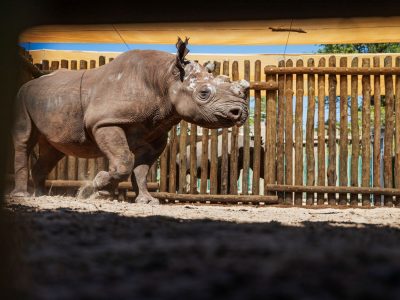
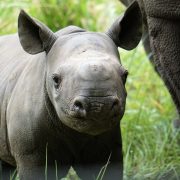
That is worth saying plainly rather than leaving blank, because habitat restoration is one of the areas where the zoological world does fund overseas work and a reader could reasonably assume it here. For scale, the Association of Zoos and Aquariums reports that in 2025 its 235 accredited and certified facilities spent approximately $372.4 million on conservation across 139 countries. No published breakdown isolates the African share, so no African figure appears here. We covered the Trust’s other side of the ledger recently in the first year of an orphaned black rhino at its Nairobi nursery.
What 17.6 million trees buys
Reforestation is slow to look like anything. A propagule speared into the mud is a stick in the water for the better part of a year. But six years in, the bald patches from a 1998 weather event are filling out, the shoreline in front of the villages is holding, and thirty people have a paycheck that depends on the forest standing rather than coming down.
Mangroves are one of the few habitats where the restoration technique is cheap, the survival rate is high and the ecological return arrives fast. That combination is rare enough in conservation that it is worth watching what Lamu looks like at ten years.
Source: Sheldrick Wildlife Trust, Kenya’s Walking Trees, Field Notes by Angela Sheldrick, published September 3, 2026.
Quick answers
- How many mangroves has the Sheldrick Wildlife Trust planted in Lamu?
More than 17.6 million propagated since the program began in 2020, according to the Trust's September 3, 2026 field notes.
- Why does Lamu matter for mangroves?
It holds more than 60 percent of Kenya's mangrove forest and the largest continuous mangrove ecosystem in the country. Kenya lost about a fifth of its mangroves between 1985 and 2009.
- How are mangroves planted?
By hand, at low tide. Crews harvest propagules, the sprouted seedlings that drop from parent trees, and spear the previous day's harvest into coastal mud. Survival on new planting runs between 80 and 85 percent.
- Who does the planting?
A team of 30: 24 planters, two team leaders, two boat captains, one forest monitor and one restoration manager. Planters are selected by the local Community Forest Association, and the first recruits were volunteers who had been patrolling against illegal harvesting.
- Do any accredited zoos or aquariums fund this work?
We looked and did not find any. The named partners are the Kenya Forest Service, the Lamu Conservation Trust and the local Community Forest Association, and the Trust runs on adoptions, individual donors and corporate supporters.