A cheetah has had the strictest protection the world’s wildlife trade treaty offers since 1975. A cheetah born in a breeding facility can be exported under much easier rules. Everything therefore depends on three words printed on a permit, “bred in captivity,” and on whether anyone can check them.
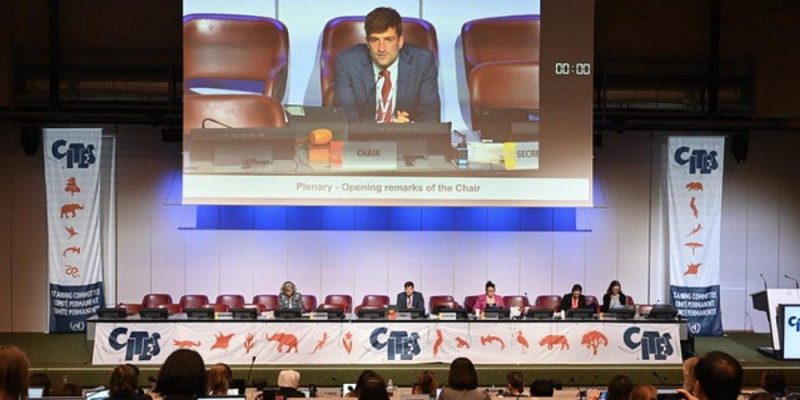
Dr. Shira Yashphe went to Geneva for the Cheetah Conservation Fund to watch that question get argued, and wrote up the week on November 18. The 81st meeting of the CITES Standing Committee ran from November 2 to 6, with an agenda of more than 60 items covering everything from rosewood to seahorses. Almost none of them said cheetah. She went anyway, on the principle that the rules that will matter to a trafficked cheetah in ten years are written in rooms where nobody mentions cheetahs.
The question nobody could answer
What is founder stock? It sounds like a technicality. It is the whole argument.
One reading is that founder stock means whichever animals a captive breeding line happens to have started from, wherever they came from. The other is that it means the original wild-caught animals at the base of that line, which in a long-running facility can be decades back. If the first reading holds, nobody ever has to ask how the wild animals were obtained. If the second holds, somebody can still ask, and can ask about animals taken in the 1990s.
The Committee took this up on Tuesday November 3, not as a standalone argument about definitions but inside its work on legal acquisition findings, the formal process by which a country satisfies itself that a specimen was legally obtained in the first place. It did not resolve it. According to the meeting’s own summary record for that day, the Committee instructed its intersessional working group to carry on and, specifically, to identify the outstanding legal and practical questions around the terms “founder stock” and “parental stock,” including what it calls the temporal scope and the chronological documentation needed to show legal acquisition. The working group reports back at the Committee’s 82nd meeting, which falls in 2027.
The Secretariat was separately asked to fold the same problem into the draft terms of reference for a technical workshop on trade in specimens that are not of wild source. So the answer has been deferred twice, into a working group and into a workshop, which is slower than CCF wanted and is also how this treaty has always moved.
What proof looks like when a committee insists on it
The useful part of the week was not the deferral. It was Friday, when the same Committee showed what it looks like when the demand for documentation is actually enforced, on a different animal.
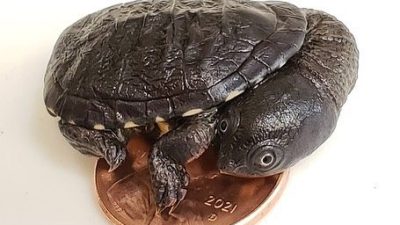
Under its review of trade in specimens reported as captive-produced, the Committee kept in place its recommendation that countries suspend commercial trade in the African spurred tortoise, Centrochelys sulcata, from Benin. The summary record sets three conditions for lifting it: Benin has to document the legal origin of its founder stock, has to provide facility-specific evidence that its breeding operations can actually produce offspring in the numbers they report, and has to cap any future quota at a maximum carapace length of 15 centimeters. The Committee acknowledged that Benin has made real progress, and kept the suspension anyway.
Mali is under a similar suspension with an extra condition: it has to show the scientific basis for concluding that taking wild tortoises as breeding stock did not harm the species. Togo stays in the review. And Egypt was released from the review on the Egyptian tortoise, Testudo kleinmanni, but keeps zero export quotas for every source until its breeding facilities are registered and the legal acquisition questions about its founder stock are settled.
That is the standard CCF wants applied to cats. The carapace rule is the part worth noticing, because it is the one that is hard to fake: a hatchling-sized cap means an exporter cannot pass off wild-caught adults as farm production without the measurement giving it away. Proof, in this system, is usually a physical fact somebody can check at a border rather than a sentence on a form.
Cheetah was not among the cases examined this time, which CCF says plainly and counts as a disappointment rather than a defeat. The Committee did ask its Secretariat to chase seven species and country combinations for better information on the legal origin of captive-produced animals exported from countries where the species does not occur in the wild, which is the shape of the problem CCF is pointing at. One of the seven is the African spurred tortoise exported from Peru.
Why this is a zoo story at all
Because source code C, the permit marking that says captive-bred, is the same code that legitimate zoo breeding programs rely on when they move animals between institutions. A loophole in it is not only a laundering route for traffickers. It is also the thing that makes every properly documented transfer harder to trust, and accredited institutions are the ones with the stud books to prove their own animals’ ancestry. We have covered the receiving end of this repeatedly, most recently when Brevard Zoo returned confiscated box turtles to wild Florida, because confiscated animals have to go somewhere and it is usually a zoo.
A note on the listing
The cheetah, Acinonyx jubatus, is listed as Vulnerable on the IUCN Red List under criteria A2acd and C1, from an assessment dated May 2014 and published in 2015, which gives 6,674 mature individuals and a continuing decline. CCF’s own site says fewer than 7,500 cheetahs remain in the wild, and the two figures are not in conflict: mature individuals and total population are different quantities, and the Red List number is more than a decade old. CCF’s own more recent work points the same way rather than the other, and we reported it when the Fund’s count dropped below 7,000.
Which zoos or aquariums paid for this?
None that we can verify, and the honest version of that is more interesting than a forced one.
CCF names no funder for its CITES delegation anywhere in this account or on its policy pages. Sending one scientist to Geneva for a week is not the kind of expense that attracts a named sponsor, and no accredited zoo or aquarium is credited with it.
What is documented is organization-level support, and there is a lot of it. CCF’s published corporate giving page lists accredited institutions including the Columbus Zoo and Aquarium, Saint Louis Zoo, Dallas Zoo, Indianapolis Zoo, Toronto Zoo, Kansas City Zoo, Metro Richmond Zoo, Nashville Zoo at Grassmere, Caldwell Zoo, Little Rock Zoo, The Living Desert, Dickerson Park Zoo, Turtle Back Zoo, the Virginia Zoo, Wildlife World Zoo and Alexandria Zoo. That is money given to the organization, not to this week in Geneva, and we are not going to present it as the latter. We reached the same conclusion about the Fund’s genetics laboratory and about its veterinary teaching work in Somaliland, and recording the pattern is worth more than pretending each case is a surprise.
For scale on the sector, the Association of Zoos and Aquariums reports that in 2025 its 235 accredited and certified facilities spent approximately $372.4 million on conservation across 139 countries. No published breakdown isolates the African share, and we are not going to estimate one.
Quick answers
- What was decided about captive-bred animals at CITES SC81?
Nothing final. The 81st meeting of the CITES Standing Committee, held in Geneva from November 2 to 6, 2026, sent the question of what "founder stock" and "parental stock" mean back to its intersessional working group on legal acquisition findings, which reports back at the Committee’s 82nd meeting in 2027. The same issue was also folded into the terms of reference for a technical workshop on trade in specimens that are not of wild source.
- Why does the definition of founder stock matter?
Because it decides whether anyone can ask where a breeding line’s original animals came from. If founder stock means only the animals a line started from, whatever their origin, the question stops there. If it means the original wild-caught animals, a country can still be asked to show they were legally acquired, even decades later.
- What did the Committee do about tortoises?
It kept its recommendation that countries suspend commercial trade in the African spurred tortoise from Benin until Benin documents the legal origin of its founder stock, shows its facilities can produce offspring in the numbers reported, and caps any future quota at a 15 centimeter maximum carapace length. Mali remains under a similar suspension with an added condition on non-detriment, Togo stays in the review, and Egypt keeps zero export quotas for the Egyptian tortoise until its breeding facilities are registered.
- Was the cheetah discussed?
Not as a case of its own. The Cheetah Conservation Fund says it pressed for it and the cheetah was not among the cases examined. The Committee did ask its Secretariat to seek more information on the legal origin of captive-produced animals in seven species and country combinations exported from countries where the species does not occur in the wild.
- How many cheetahs are left?
The IUCN Red List assessment of Acinonyx jubatus, dated May 2014 and published in 2015, lists the cheetah as Vulnerable and gives 6,674 mature individuals with a continuing decline. The Cheetah Conservation Fund says fewer than 7,500 remain in the wild, which counts a different quantity, and its own more recent estimate has come in below 7,000.
- Do zoos fund the Cheetah Conservation Fund?
Many accredited institutions support the organization, including the Columbus Zoo and Aquarium, Saint Louis Zoo, Dallas Zoo, Indianapolis Zoo, Toronto Zoo, Kansas City Zoo, Metro Richmond Zoo and Nashville Zoo at Grassmere. None is credited with funding its CITES delegation, and the Fund names no funder for that work.