
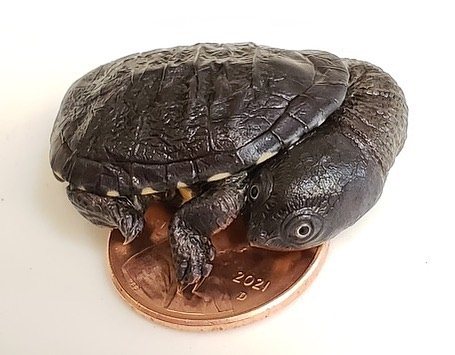
A hatchling Roti Island snake-necked turtle is larger than a penny, and weighs about as much as two of them. In late 2022 the Fort Worth Zoo announced that 24 turtles it had hatched were on their way to Singapore Zoo, and from there back to Indonesia.
An island’s worth of range
The species lives in inland lakes and swamps on Roti Island, Indonesia, and nowhere else. That is the entire global range. It is classified as critically endangered by the International Union for Conservation of Nature, with collection for the food and pet trades, habitat destruction and climate change all named as drivers.
The turtle is named for the long, snake-like neck it folds sideways under its shell rather than pulling straight back. A full-grown adult reaches roughly nine inches in shell length.
Bred in Texas, released on Roti
Fort Worth is one of only a few facilities anywhere that has successfully bred the species. The 24 turtles traveled to Singapore Zoo as a staging point before eventual release into their native range, in an area protected specifically for this species.
The word the zoo uses for this is repatriation, and it is the correct one. These are not animals being introduced somewhere new. They are a population being put back into the single island it came from, on ground that has been secured first, which is the part of a reintroduction that usually fails.
The zoo expected more hatchlings to follow.
Head-starting and release is increasingly how North American institutions handle small, range-restricted reptiles: the Oregon Zoo raises northwestern pond turtles past the size where predators can take them before returning them to the wild.