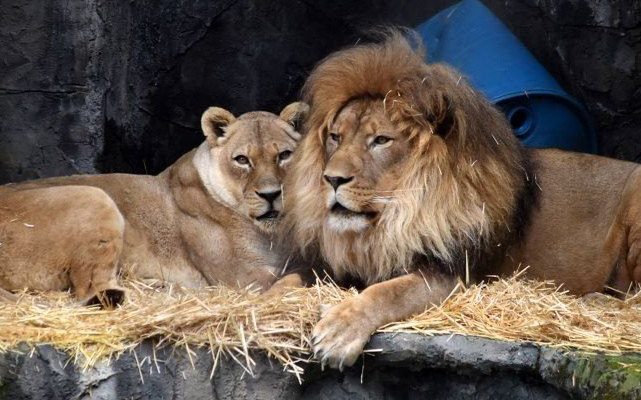
San Francisco Zoo & Gardens will send its last two African lions to a sanctuary in Colorado next year. Jasiri, an 11-year-old male, and Marvella, a 12-year-old female, are going to the Wild Animal Sanctuary in Keenesburg, a decision the zoo reached in October after a year of looking.
The reason is a spine. Jasiri was born at the zoo in 2015 and diagnosed at a year old with a congenital spinal condition that affects his strength and coordination. Corrective surgery carried too much risk, so he has instead had physical therapy and dedicated veterinary care for his whole life. What he needs is flat ground, and the place he lives does not have any.
Why a 1940s building became the problem
The Lion House was built by the Works Progress Administration in the 1940s, and its outdoor grottos are uneven, rocky plateaus. That is hard terrain for a lion whose back legs do not fully cooperate, and both animals are entering their senior years: African lions under human care typically live 15 to 20 years.
The zoo looked for somewhere else on its own 100 acres to put them. It concluded that building a new lion habitat was not feasible at this time, and that no other existing area could house big cats safely and securely. The Lion House has also been earmarked to house giant pandas in future, though the zoo says that arrival has not yet been officially confirmed.
Why a sanctuary rather than another zoo
This is the part worth slowing down on, because the word sanctuary does a lot of work in this field and it is not loose here.
The zoo worked through the Association of Zoos and Aquariums Species Survival Plan for African lions, the cooperative program that decides where individual animals go. The SSP set a condition: the receiving facility had to be either an accredited institution or a sanctuary the SSP itself had vetted and approved. That narrowed the field immediately.
It narrowed further because of what was being asked. Jasiri and Marvella are a bonded pair, and the zoo wanted them moved together.
“Because of the age and health of Jasiri, who suffers from a genetic spinal condition, and our desire to move him with our female, Marvella, as a bonded pair, our options were limited as we found that most accredited zoos could not accommodate two older animals,” said Roger Sweeney, the zoo’s chief animal officer. “We made the decision to further explore the sanctuary option, and 10 times out of 10, the Wildlife Animal Sanctuary came up as the best facility.”
What the zoo says tipped it: the Keenesburg site has spacious enclosures and flat, naturalistic surfaces, it is well funded, it has a history of working with other accredited zoos, and its staff can continue the physical therapy and rehabilitation Jasiri already receives.
The lions are not being given away
The transfer is a loan. San Francisco Zoo & Gardens keeps ownership of both lions, and under the agreement the sanctuary is required to provide the zoo with reports and updates on how the pair are faring. That is a mechanism rather than a courtesy: it means somebody in San Francisco stays responsible for knowing the answer.
Marvella came to the zoo in 2023 from the Lee Richardson Zoo in Kansas. Jasiri has never lived anywhere else.
The zoo says big cats will return eventually, in a new habitat, and that these two will probably not be the ones to fill it.
“In the future, when we bring back our Big Cat program in an all-new, modern habitat, we will likely not bring back these lions, however, we want to keep that option available,” Sweeney said.
Where do lions stand as a species?
The IUCN Red List assessed the lion globally in May 2025 and lists it as Vulnerable, with the population decreasing. That assessment replaced a 2023 one, and the current entry publishes no global count of mature individuals, so there is no Red List number to give you today.
Neither Jasiri nor Marvella is part of that picture in a breeding sense. They are two aging animals whose remaining years are the whole of the question, and this decision was made on ground surface and companionship rather than on genetics.
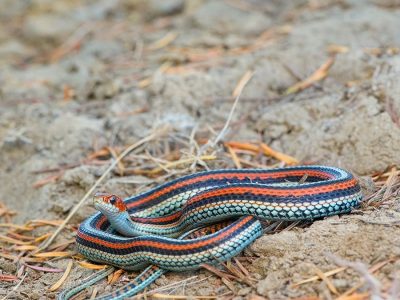
San Francisco Zoo & Gardens has had a busy conservation year otherwise, including the first release of head-started San Francisco garter snakes into the wild in San Mateo County.
The zoo’s own framing of the move is the one worth keeping: even in old age, animals should be given choice, comfort and control over their lives. For a lion who cannot manage rock, flat ground is choice.
Source: San Francisco Zoo & Gardens, November 13, 2026.
Quick answers
- Where are San Francisco Zoo's lions going?
To the Wild Animal Sanctuary in Keenesburg, Colorado, next year. Jasiri, an 11-year-old male, and Marvella, a 12-year-old female, move together as a bonded pair, and the zoo retains ownership of both under a loan agreement.
- Why is the zoo moving them?
Jasiri was diagnosed at a year old with a congenital spinal condition and needs flat surfaces to move safely. The 1940s Lion House has uneven, rocky outdoor grottos, and the zoo concluded it could not build or adapt another big cat habitat on site at this time.
- Will San Francisco Zoo have lions again?
The zoo says it intends to bring back a big cat program in an all-new habitat in future, and that it will likely not bring these two lions back when it does, while keeping that option open.