Sixty-two San Francisco garter snakes born at the San Francisco Zoo have been released into the wild in San Mateo County. It is the first release of its kind for this animal, and every snake had its genetics read before anyone decided where to put it.
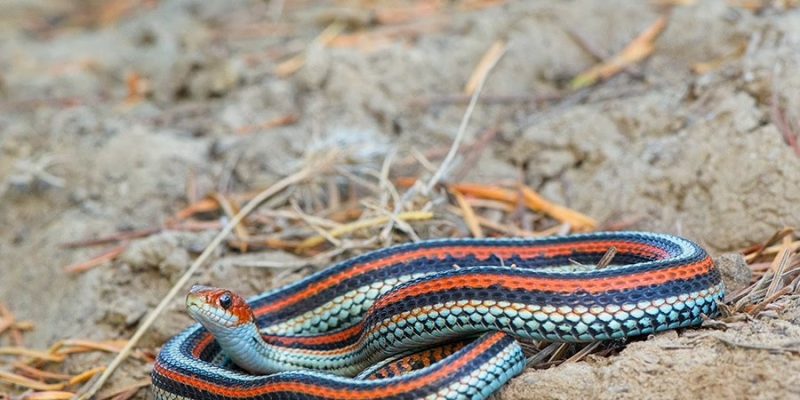
The San Francisco garter snake lives in San Mateo County and a small corner of Santa Cruz County, and nowhere else on Earth. It is also, by wide agreement among the people who work on it, one of the most striking snakes in North America: turquoise and black stripes down the flanks, a band of orange red running the length of the back, and a red head. Those two facts together are the problem. An animal that beautiful, confined to one county, attracts collectors.
What is head-starting, and why does a snake need it?
Head-starting is the practice of raising young animals in human care through the stretch of life when they are most likely to be eaten, then releasing them once they are big enough to have a fighting chance. For a snake born at roughly the length of a pencil into a landscape full of things that eat pencils, those first months are almost the entire risk.
The mechanics here are specific. In 2025, biologists from the U.S. Geological Survey collected gravid females, meaning pregnant ones, from a healthy population inside a Midpeninsula Regional Open Space District preserve and brought them to the San Francisco Zoo. Garter snakes bear live young rather than laying eggs, which is the reason this approach works at all: there is no clutch to incubate and no nest to disturb. The mothers gave birth at the zoo, went back to the preserve they came from, and the zoo’s conservation team raised the offspring until they reached a size that could better withstand predation and competition.
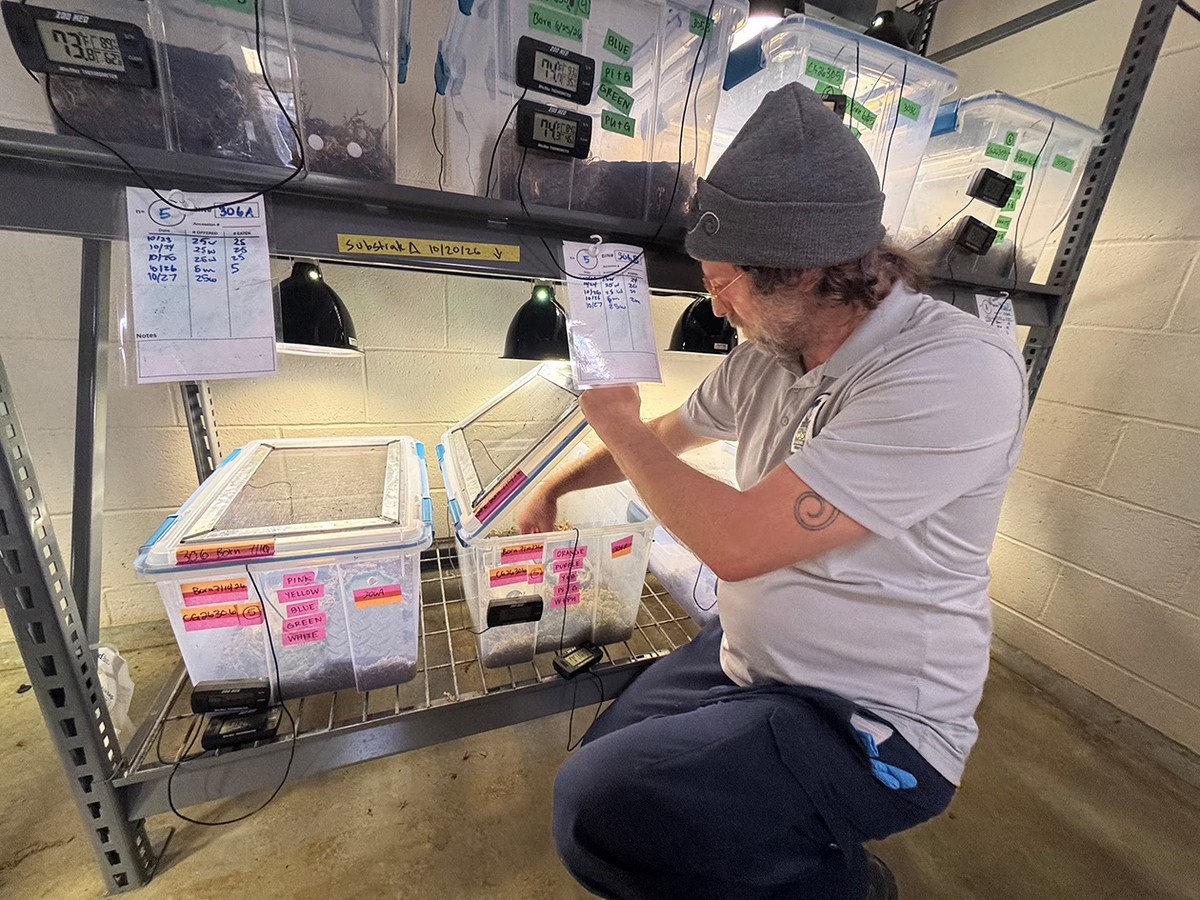
The rearing room is not glamorous. It is a shelf of labeled tubs, a row of thermometers, heat lamps, and a sheet on the wall recording how many food items were offered to each animal and how many were eaten. That record is the program.
The genetics decided the destinations
Before release, every snake born at the zoo was genetically tested, and the results determined where it went. About a third were returned to the area their mothers came from, to limit the cost to the host population. The remaining two thirds were distributed among other populations that needed both animals and genetic variety.
That is the part worth slowing down on. Low genetic diversity is one of the named threats to this animal, alongside drought, disease, declining prey, invasive species, vehicle strikes and illegal collection. A release that put all 62 snakes in one convenient spot would have added numbers without touching the underlying problem. Reading each animal first turns a release into a breeding plan.
Site selection drew on the same discipline. A statewide survey for snake fungal disease, run by the California Department of Fish and Wildlife and funded in part by a federal State Wildlife Grant, fed into the decision about which sites were safe to stock.
“This important milestone would not have been possible if not for all the scientific data collected ahead of time that were integral in making decisions about collection and release sites,” said Laura Patterson, the department’s statewide amphibian and reptile conservation coordinator.
The release locations are not being disclosed, for the same three reasons that put the animal on the list in the first place: collection, road mortality and disease.
What counts as recovered
The target is unusually explicit, and it is worth printing because almost no recovery story states one. For the San Francisco garter snake to come off the endangered species list, there must be at least ten viable, self-sustaining breeding populations, each holding at least 200 snakes. That is 2,000 animals in ten separate places, each reproducing on its own.
Against that, 62 is a first installment. More than 130 additional young were born at the zoo in 2026 and are being raised now for a second release planned in 2027. Post-release monitoring of this year’s animals is what will shape how the next round is run.
“By providing these young snakes with a safe environment during their most vulnerable stage of life, we’re giving them a stronger start in the wild,” said Dr. Rochelle Stiles, director of field conservation at San Francisco Zoo and Gardens.
The work is spread across eight named agencies and organizations: Midpen, the San Francisco Zoo, the USGS, the National Park Service at Golden Gate National Recreation Area, the U.S. Fish and Wildlife Service, the state wildlife department, the Golden Gate National Parks Conservancy and the San Francisco Recreation and Park Department. Habitat restoration led by several of them is improving conditions for the threatened California red-legged frog as well, which matters directly here, because the frogs are what the snakes eat. The zoo has a long record on that half of the equation too, having released its 10,000th California red-legged frog earlier this year.
One note on the listing
The announcement describes the San Francisco garter snake as a critically endangered species. Critically Endangered is a specific IUCN Red List category, and the Red List does not apply it here, because it has never assessed this animal at the subspecies level at all. Its only relevant assessment covers the full species, the common garter snake Thamnophis sirtalis, which it lists as Least Concern, assessed in 2007 with a stable trend.
The listing that actually governs this animal is the American one, and it is as serious as the zoo’s wording suggests. The U.S. Fish and Wildlife Service lists Thamnophis sirtalis tetrataenia as Endangered, with a listing date of March 11, 1967, which puts it among the very first animals the federal government ever protected by name. Nearly sixty years later, only a couple of thousand are estimated to remain.
Sixty-two of them went back out this fall, each one carrying a destination somebody had calculated.
Quick answers
- How many San Francisco garter snakes were released?
Sixty-two, born and raised at the San Francisco Zoo and released this fall at carefully selected sites in San Mateo County. It is the first release from a head-starting program for this animal.
- What is head-starting?
Raising young animals in human care through the stretch of life when they are most vulnerable, then releasing them once they have reached a size that can better withstand predation and competition for prey.
- Where did the snakes come from?
In 2025, U.S. Geological Survey biologists collected gravid, meaning pregnant, females from a healthy population inside a Midpeninsula Regional Open Space District preserve. The mothers gave birth at the San Francisco Zoo and were returned to the wild, and the zoo raised the young.
- Why was every snake genetically tested before release?
The results determined where each snake went. About a third were returned to the area their mothers came from, and the remaining two thirds were distributed among populations that needed both animals and greater genetic diversity.
- Where were the snakes released?
The locations are not being disclosed, to protect the snakes from illegal collection, vehicle mortality and exposure to disease.
- What would it take to take the species off the endangered list?
At least ten viable, self-sustaining breeding populations, each containing at least 200 individual snakes.
- Is the San Francisco garter snake endangered?
The U.S. Fish and Wildlife Service lists Thamnophis sirtalis tetrataenia as Endangered under the Endangered Species Act, with a listing date of March 11, 1967. The IUCN Red List has no assessment at the subspecies level; its assessment of the full species, the common garter snake, is Least Concern.
- What happens next?
More than 130 additional young were born at the San Francisco Zoo in 2026 and are being raised for a second release planned in 2027.