
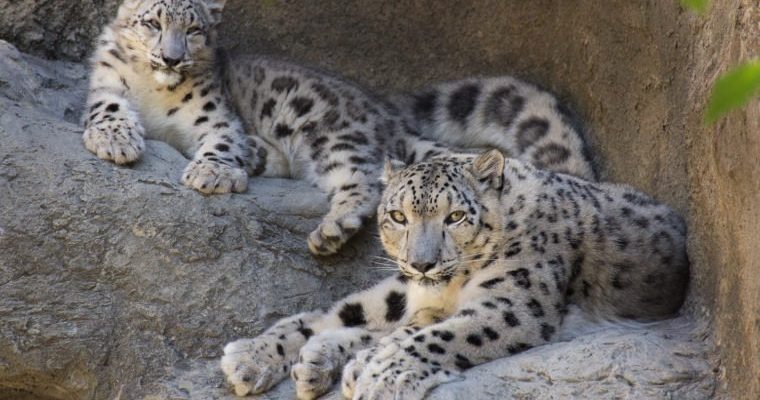
A snow leopard cub named Coconut was born at the Sacramento Zoo on May 6, 2018, with defects affecting his eyes, his rear legs and his chest. On October 24 he went under anesthesia for a rare eyelid surgery, the end point of five months of work that started the week he was born.
What he was born with
Coconut was one of two cubs, and the first snow leopard birth at the zoo since 2006. His mother Misha was five and a first-time parent; his father Blizzard was six. The second cub declined within days and did not survive, and initial exams pointed to severe birth defects including a cleft palate.
Coconut himself came through the first exam well. At four days old he weighed 1.35 pounds with a strong heart and lungs.
“I was pleased by how robust and vibrant the cub appeared at its first evaluation,” said Dr. Jenessa Gjeltema, the associate veterinarian who performed it.
As he grew, his back legs splayed outward in a pattern keepers of dogs and cats know as swimmer’s syndrome. He also had eyelid colobomas, gaps in the lid margin, an ocular deformity documented before in snow leopards under human care.
Physical therapy, three times a day
The zoo, its veterinary team and specialists from the UC Davis School of Veterinary Medicine built a treatment plan around one constraint: whatever they did had to let the cub stay with his mother.
That constraint shaped everything. Coconut got physical therapy three times a day, walking on surfaces with real traction such as grass, compacted mulch and high-friction rubber flooring, supported by a rear-lifting harness that raised his hips and put his back legs underneath him.
Doing that to a snow leopard cub in a maternity den, several times daily, without distressing a first-time mother, is not primarily a veterinary problem. It is a relationship problem. Keepers credited the trust they had already built with Misha for making the sessions possible and low-stress for both animals.
Getting a cat ready for surgery
Coconut had months of daily eye drops and periodic examinations by UC Davis specialists before the decision to operate was made in late September.
The preparation that matters most was not medical. Keepers trained him to accept voluntary injections through operant conditioning, meaning the cat presents himself and holds still rather than being restrained.
That training pays off far past one surgery. A big cat who will accept an injection can be sedated calmly, examined regularly, treated when something goes wrong and moved between facilities without the procedure itself becoming the emergency. It is the difference between an animal that can receive medical care and one that has to be overpowered to get it.
Why this is worth reading about years later
Coconut is a useful case because nothing here was heroic in the dramatic sense. It was a harness, a floor with grip, eye drops, a training protocol and a mother who was left alone enough to raise her cub.
Snow leopards are listed as vulnerable, and a cub born to a first-time mother in an AZA population is worth this kind of effort. The care Sacramento described is the ordinary, unglamorous version of what modern zoo veterinary medicine actually looks like.
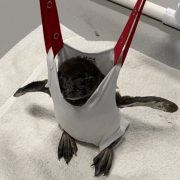
Other institutions run the same playbook when a cub arrives needing more than the usual: OdySea Aquarium built a support sling for a penguin chick that could not sit up, on the same logic of intervening while leaving the parents in charge.