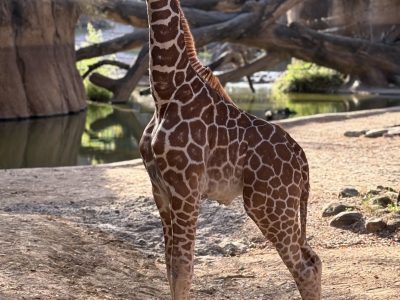

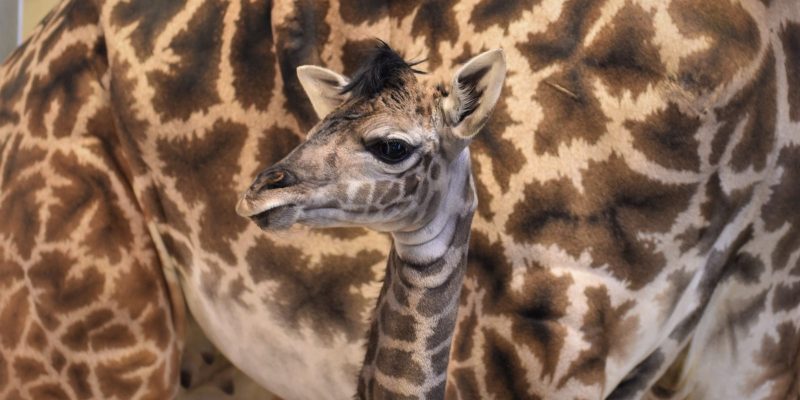
A female Masai giraffe calf was born at the Sacramento Zoo on the evening of September 20, 2020, to a mother named Shani. She is the 20th giraffe calf born at the zoo since the species arrived there in 1964.
The first hour
Giraffes are born into a drop of about six feet, because the mother gives birth standing. A newborn can be six feet tall and weigh as much as 150 pounds, and within minutes it is standing on its own.
That speed is not a party trick. A calf that cannot follow the herd within the day is a calf that gets left behind, and the species has been selected hard for getting upright fast.
Zookeepers monitored Shani around the clock before the birth. Veterinarians ran a routine neonatal check afterward, a weight and a brief physical, and mother and calf spent their first stretch bonding in the giraffe barn with periodic access to the side yard.
Which giraffe is which
The birth brought the zoo to five giraffes: one post-reproductive reticulated female, one male Masai, two female Masai including Shani, and the calf.
Masai is the largest giraffe subspecies, found in southern Kenya and Tanzania. The quickest way to tell it from a reticulated giraffe is the spots. Reticulated spots are sharp-edged polygons separated by clean white lines; Masai spots are darker, irregular, and edged like oak leaves. Gestation runs 14 to 15 months, and in the wild a female leaves the herd to give birth alone in a secluded place.
A managed population, and a field program
The Sacramento Zoo is one of 34 institutions managing 131 Masai giraffes in the Association of Zoos and Aquariums population.
The number is worth pausing on. A managed population of 131 across 34 facilities averages fewer than four animals per zoo, which is why breeding recommendations are coordinated centrally rather than left to individual institutions. At that scale every calf measurably changes the genetics available to the whole program.
The zoo also partners with the Wild Nature Institute, a field research organization working on giraffes in their range. That pairing is the standard shape of modern giraffe work: a managed herd in North America and monitoring of wild animals in East Africa, where the actual population trend is decided.
Giraffe births remain a reliable measure of how a hoofstock program is doing. The Fort Wayne Zoo’s 22nd calf arrived under the same kind of SSP framework.