
You cannot tell a male African penguin from a female by looking. That sounds like a footnote. It is the reason a decade of body condition data carried an asterisk.
SANCCOB described the fix in March 2026: a dataset built since 2017 that links morphometric measurements to biological sex, with the sex confirmed by necropsy.
The problem
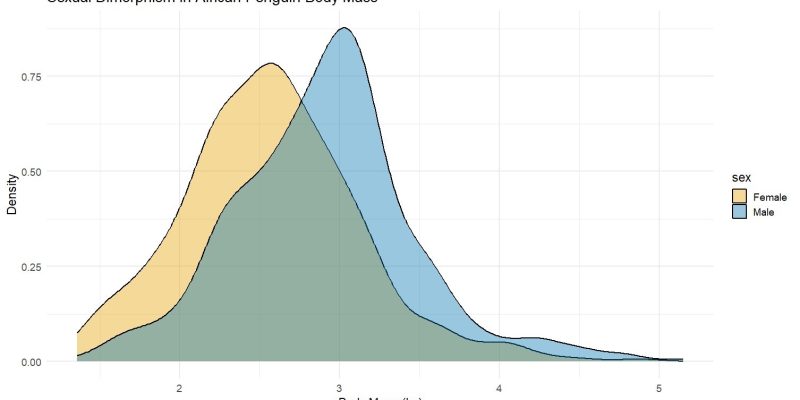
African penguins show subtle sexual dimorphism. Males are generally heavier with larger beaks, but the ranges overlap enough that field identification is unreliable. Body mass is the primary indicator of a bird’s condition, and without confirmed sex, every mass figure carries a margin of uncertainty that propagates into everything built on top of it.
For a rehabilitation hospital that means admission triage. For a monitoring program it means the population trend estimates that underpin policy arguments, including the fishing closure case that reached the Pretoria High Court.
The fix, and what it costs
Since 2017 SANCCOB has been systematically measuring birds and then confirming sex through necropsy, building a reference dataset that lets measurements taken on a live bird predict its sex with known confidence.
It is worth being plain about what that method involves. The confirmed-sex half of the dataset comes from birds that died. A rehabilitation center handles a great many of those, and the choice being made here is whether that fact produces knowledge or is simply absorbed.
Why this is the kind of work that needs an institution
Nine years of measurements is not a project. No grant cycle runs that long, and nothing publishable happens for most of it.
It requires an organization that will still be there in year nine, with the same protocols and the same people checking them. That is what stable institutional funding buys, and SANCCOB’s funding base is unusually institutional: more than forty accredited zoos and aquariums appear on its supporter wall.
SANCCOB names no funder for this specific piece of work, and we are not going to imply one. What is fair to say is that long-run datasets exist where long-run funding does, and the same pattern shows up in the decade of aerial surveys behind the New England Aquarium’s right whale work.
Source: SANCCOB.