
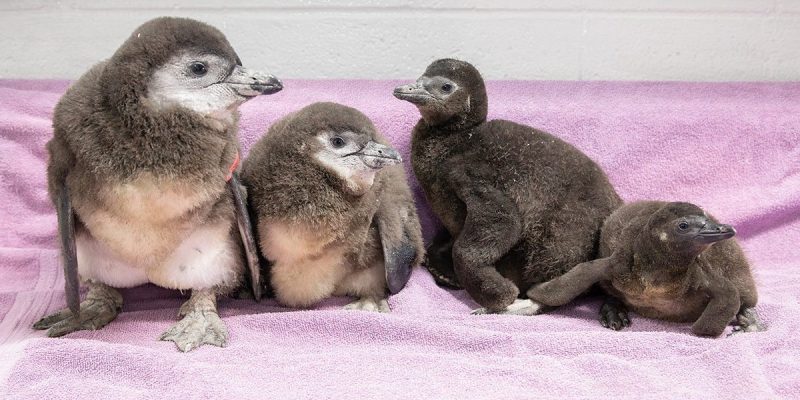
Four African penguin chicks have hatched at South Africa’s National Zoological Garden in Pretoria, and a fifth and sixth may be on the way: a second pair laid two eggs last week. The zoo announced the hatchings on October 9, the day before International African Penguin Awareness Day, which this year runs under the theme #NotOnOurWatch.
The colony holds 14 birds and is breeding again. One chick has started leaving the nest and no longer looks much like its parents. African penguin chicks grow a blue-gray juvenile coat roughly 20 to 30 days in, which is why keepers call them baby blues, or simply blues. The black-and-white plumage everyone recognizes arrives only after the first major molt. The other three chicks are still in their nests and still too small for visitors to see.
Why four chicks in Pretoria matter to a bird that lives at the coast
The African penguin (Spheniscus demersus) is a flightless seabird of the southern African coast, and it is in serious trouble. The IUCN Red List classifies it as Critically Endangered, which is the category the zoo uses as well, so nothing is owed in correction here. The National Zoological Garden puts the number remaining in South Africa at fewer than 10,000 breeding pairs, and names the pressures as competition with commercial fisheries for the same small fish, habitat degradation, pollution and oil spills, and climate-related effects on the ocean the birds feed in.
Pretoria is about as far from that ocean as a South African city gets. The zoo’s argument is that the distance is a matter of geography rather than responsibility, and the mechanism it points at is ordinary municipal litter.
“Although we live inland and may feel far removed from the ocean, we still have a responsibility to protect it. What we do here matters. Something as simple as throwing litter into a river can have consequences far beyond where we live. We all have a part to play, so please do not litter,” says Elsie Bavarian Briedenhann, Conservation Officer and Trainer: Fur Seals and Penguins at the National Zoological Garden.
Waste dropped into a Gauteng river or a stormwater drain travels downstream, and some of it eventually reaches the sea. The zoo’s suggested actions are correspondingly unglamorous: keep litter out of waterways, cut unnecessary single-use plastic, dispose of waste properly, and turn up to local clean-ups.
How the colony is actually run
The husbandry detail is the part a reader can rarely get anywhere else, and it is specific. Every bird carries a colored tag on one flipper, and which flipper is itself the record: males are tagged on the right, females on the left, so a keeper can identify an individual at a glance and still read the colony as a group. The penguins are hand-fed three times a day on pilchards, with vitamins added to the fish.
And the enclosure is heated. This is the detail that tends to surprise people, because the popular image of a penguin is an Antarctic one. African penguins are a warm-water species native to the coastal waters of southern Africa, so the zoo runs heat lamps rather than refrigeration. Incubation takes about 38 to 42 days, and both parents share it, as they share the feeding afterwards.
Is any zoo outside South Africa funding this?
Not as far as we can establish, and here that is the ordinary answer rather than a troubling one. The National Zoological Garden of South Africa is itself the zoological institution in this story. It is operated by the South African National Biodiversity Institute, a public body; the chicks hatched in its own colony; the staff caring for them are its own. We looked for an accredited overseas zoo or aquarium underwriting this particular colony and did not find one named.
That makes it a different shape from most African penguin coverage, which usually runs through the seabird rehabilitation sector. When we traced the money behind SANCCOB’s African penguin work, more than forty accredited institutions turned up on a published supporter wall. The Dyer Island rescues at Struisbaai ran through a different set of partners again. Pretoria’s four chicks are in-house work by a state zoo, which is worth saying plainly, because it is the kind of contribution that never appears in an international funding table.
What visitors can see, and when
From Friday, October 9, public visitors and school groups can see the penguin colony. On Saturday, October 10, the zoo marks African Penguin Awareness Day with an animal talk, games, enrichment activities and a penguin feeding demonstration. The three youngest chicks stay in their nests and out of public view. The older one may well be out exploring.
The zoo is separately running an R27 admission promotion on the 27th of each month, which is not tied to the penguin programming but falls in the same season.
Source: the National Zoological Garden’s own announcement, Penguin chicks bring hope as NZG marks African Penguin Awareness Day, published October 9, 2026.
Quick answers
- How many African penguin chicks hatched at the National Zoological Garden?
Four. One has begun leaving the nest and the other three are still in their nests and too small for visitors to see. A second breeding pair laid two eggs the week before the October 9, 2026 announcement.
- How many African penguins does the zoo hold?
Fourteen. Each bird is individually identified by a colored flipper tag, and the flipper carries the sex: males are tagged on the right, females on the left.
- How is the African penguin assessed on the IUCN Red List?
As Critically Endangered. That is the same category the National Zoological Garden uses in its own announcement, so no correction is owed. The zoo puts the number remaining in South Africa at fewer than 10,000 breeding pairs.
- Why does a penguin enclosure need heat lamps?
Because African penguins are not a polar species. They are native to the warm coastal waters of southern Africa, so the zoo provides heat lamps rather than refrigeration. The birds are hand-fed three times a day on pilchards with added vitamins, and incubation takes about 38 to 42 days with both parents sharing it.
- What does an inland zoo have to do with a coastal seabird?
Litter. Waste thrown into a river or a stormwater drain in Pretoria travels downstream and some of it reaches the ocean the penguins feed in. The zoo asks visitors to keep litter out of waterways, reduce single-use plastics, dispose of waste responsibly and join local clean-ups.
- Which zoo or aquarium funds this penguin colony?
No overseas institution that we could verify. The National Zoological Garden of South Africa is itself the zoological institution here: it is operated by the South African National Biodiversity Institute, the chicks hatched in its own colony and its own staff care for them. We looked for an accredited external funder and did not find one named.
- What is happening for African Penguin Awareness Day?
The day is observed on Saturday, October 10, 2026 under the theme #NotOnOurWatch. The zoo is running an animal talk, games, enrichment activities and a penguin feeding demonstration. Public and school visits to the colony opened on Friday, October 9.