
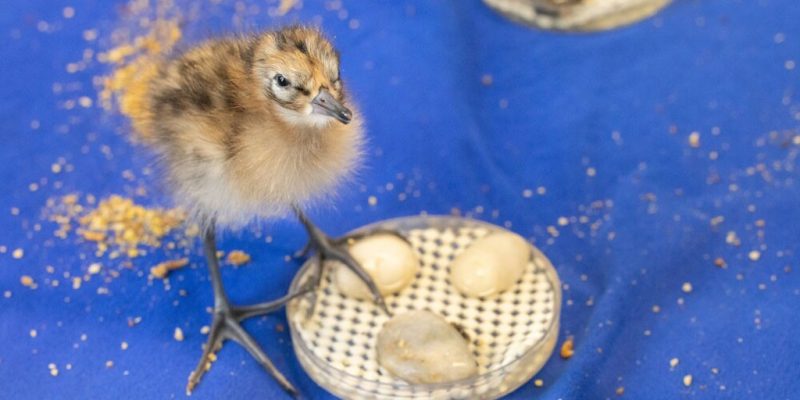
In 2024, conservationists pulled a clutch of black-tailed godwit eggs out of flooded wetlands in Cambridgeshire, where the nests were washing out, and hatched them by hand at WWT Slimbridge in Gloucestershire. Those chicks are now two years old. They have paired with other birds at Slimbridge and laid eggs of their own, which means the rescued clutch has become a breeding generation. Natural England has put more than 650,000 pounds behind what comes next.
Why this particular clutch matters
The technique is called headstarting, and WWT describes its own version as a first of its kind: eggs are incubated artificially, the hatchlings are protected through their first vulnerable days, and the result is three to four fledged chicks from each nest instead of the one or none that a flooded or predated wild nest produces.
The numbers behind it are the reason to take the second generation seriously. WWT says 235 hand-reared birds have been released into the wild across two phases of the work, Project Godwit and Godwit Futures, and that this lifted the breeding population on the Ouse Washes by 800 percent. In 2017 there were three breeding pairs there. In 2024 there were 25. Slightly over half of the headstarted birds, 51 percent, have come back to the Ouse and Nene Washes after release, which WWT says is comparable to the return rate of chicks reared in the wild.
That is what separates this from a funding announcement. The method has already moved a population, and the birds raised under it are now raising birds.
What the 650,000 pounds pays for
The money comes from Natural England’s Species Recovery Programme. WWT will use it to keep breeding and rearing chicks at Slimbridge before releasing them, and to do detailed population modeling for future generations and assess potential release sites around the UK.
The RSPB takes the research half, working on population dynamics in the current UK breeding population. Alongside that, WWT, Natural England and the National Black-tailed Godwit Working Group will work on implementing the recommendations of a 10-year national action plan for the species.
Releases are planned in the Fens, where WWT says 95 percent of the UK’s breeding godwits currently live, near WWT Welney and the RSPB’s Ouse Washes reserve. There is also a second, unnamed UK site that could support a new breeding population.
“This funding represents a lifeline for a red-listed species that we believe can be brought back from the brink. Black-tailed godwits are birds that belong in the UK’s flood-busting, water purifying wetlands,” said Ellie Jones, Head of UK Wetlands at WWT. “By raising the next generation of godwits away from predators and researching what is stopping them fledging chicks in the wild, we are giving this species the best possible chance to recover across the UK.”
“Black-tailed godwits are one of the most threatened birds in England and are a high priority for continuing conservation action,” said Mike Shurmer of RSPB England.
How threatened is the black-tailed godwit?
This needs care, because two different lists get used interchangeably. The “red-listed” description WWT uses refers to the UK’s own assessment of birds of conservation concern, and it is a judgment about the British breeding population, which is small and concentrated. The global IUCN Red List is a separate assessment with its own categories, and a species can sit in different places on the two. We did not have a verified reading of the global assessment in hand for this piece, so we are reporting the UK framing as WWT’s, rather than attaching a worldwide category to it.
What is not in dispute is the direction of travel in Europe. WWT says almost half of Europe’s black-tailed godwits have disappeared in the last 25 years. Birds from the project, both headstarted and wild-reared, have been recorded in 10 countries outside the UK.
Natural England’s chair, Tony Juniper, put the work in the context of earlier recoveries: “For decades Natural England’s vital species recovery work has revealed how even the rarest of the rare can be brought back from the brink. The red kite, lady’s slipper orchid, pool frog, beaver and large blue butterfly are among examples that demonstrate the many opportunities at hand and what can be achieved for nature and wider society.”
Two other projects drew money from the same round: a 2.4 million pound study into the predation of wading birds, led by the British Trust for Ornithology, and work on native white-clawed crayfish led by the Royal Society of Wildlife Trusts.
The part supporters paid for
WWT notes that contributions to its 2024 Winter Appeal are what supported the original clutch through to adulthood at Slimbridge, through the pairing and the laying of the next generation of eggs. European rear-and-release work of this kind rarely turns on one funder: Nordens Ark’s lesser white-fronted goose releases and Chester Zoo’s Montseny brook newt releases both run on the same mixture of public money, institutional breeding space and small donations.
Source: WWT, with project figures from WWT’s black-tailed godwit project page.
Quick answers
- What is headstarting?
Eggs are taken from wild nests that are likely to fail, incubated artificially, and the hatchlings are protected through their first vulnerable days before release. WWT says the method yields three to four fledged chicks from each nest, and describes its godwit version as a first of its kind.
- Has it worked?
By WWT's figures, yes. It says 235 hand-reared birds have been released across Project Godwit and Godwit Futures, lifting the Ouse Washes breeding population by 800 percent, from three pairs in 2017 to 25 in 2024. It says 51 percent of headstarted birds have returned to the Ouse and Nene Washes, comparable to chicks reared in the wild.
- What is new in 2026?
Two things. The clutch rescued from flooded Cambridgeshire wetlands in 2024 is now two years old, has paired with other birds at WWT Slimbridge and has laid the next generation of eggs. And Natural England has awarded more than 650,000 pounds from its Species Recovery Programme to continue the breeding, the research and the search for release sites.
- Where will the birds be released?
In the Fens, where WWT says 95 percent of the UK's breeding godwits live, near WWT Welney and the RSPB's Ouse Washes reserve. WWT also refers to a second UK site, which it does not name, that could support a new breeding population.