
Forest Trailhead, the exhibit complex Woodland Park Zoo opened to the public in May 2026, has been awarded LEED Gold certification by the U.S. Green Building Council. It is the third building on the Seattle campus to earn a LEED rating, after Zoomazium and the West Entrance.
LEED, short for Leadership in Energy and Environmental Design, is the rating system most American institutional buildings are measured against, and it scores a finished building across energy, water, materials, site design and indoor environmental quality rather than on any single feature. Gold is the third of its four levels. The useful thing about a rating like this on a zoo exhibit is that it is awarded to the building as built, not to the intention described in a fundraising brochure.
What is actually in it?
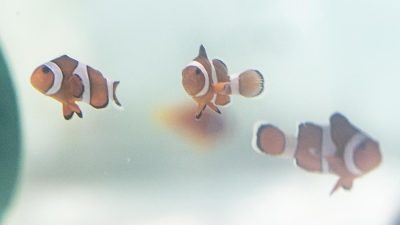
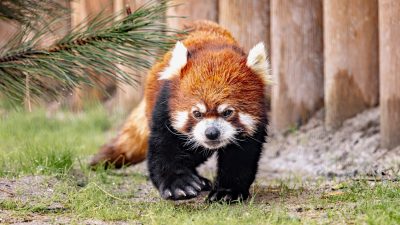
The complex is one acre of outdoor habitat wrapped around a 12,000-square-foot building. Inside and out it holds Matschie’s tree kangaroos (Dendrolagus matschiei) from Papua New Guinea, red panda (Ailurus fulgens) from Nepal, kea (Nestor notabilis), the alpine parrot of New Zealand, and more than 20 species of reptiles, amphibians and fish. The organizing idea is forest: each animal stands for a forest landscape somewhere in the world that is under pressure.
The zoo lists ten features behind the certification. On-site renewable energy and on-site stormwater management. Bird-safe glazing. Biophilic design, meaning a building laid out to keep daylight, planting and views of the outdoors in front of the people inside it rather than sealing them away from it. Sustainably sourced wood, high-efficiency HVAC, an integrated building management system, high-performance thermal glazing, and advanced lighting and controls.
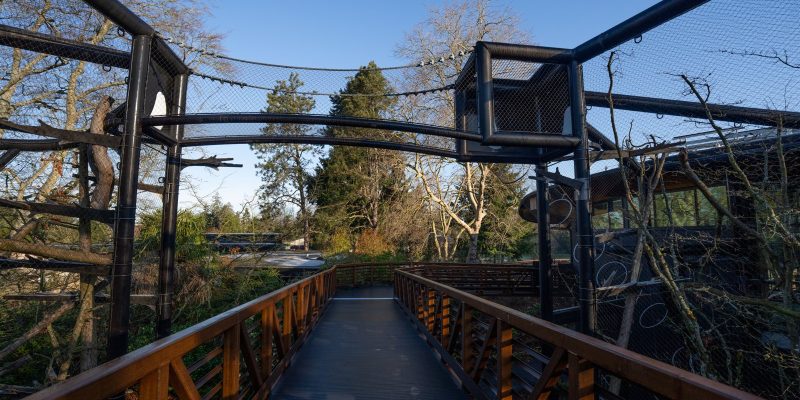
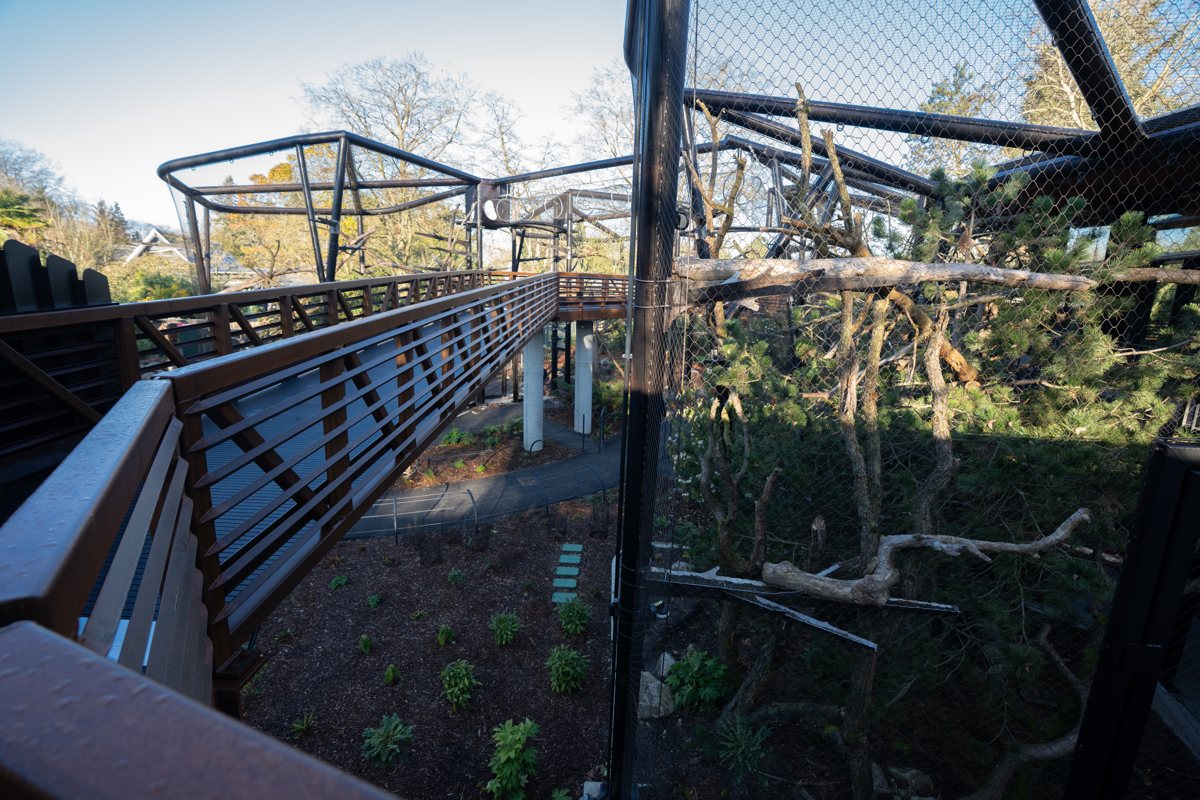
The tenth is the one a visitor can see without being told: existing trees were saved and built into the habitat rather than cleared. The elevated walkway threads between trunks that were standing before the exhibit was, and the mesh habitats are built around them.
Bird-safe glazing deserves its own sentence, because it is a specific product choice and not a general good intention. Ordinary architectural glass kills birds in large numbers, since a reflection of sky and trees reads to a flying bird as sky and trees. Bird-safe glazing carries patterns or coatings that break up that reflection at a scale birds can see. On a building full of birds, in a city on the Pacific Flyway, it is the detail that would be conspicuous by its absence.
Who built it, and what did they say?
LMN Architects was the design team and Sellen Construction the general contractor.
“Achieving LEED GOLD for Forest Trailhead is an exciting accomplishment for Woodland Park Zoo and truly emphasizes the zoo’s and community’s dedication to our core mission and sustainability,” said Sarah Valentine, the zoo’s Chief Advancement Officer. “This is a reflection not only of our dedicated zoo staff, designers and construction professionals, but also of the significant impact of the zoo’s donors and public partners who invested generously in our vision and whose gifts brought that vision to life.”
Ken Kroeger, Senior Project Manager at Woodland Park Zoo, tied the building back to what is in it. “These sustainability features reinforce what this incredible exhibit is all about, forest conservation,” he said. “From the lower-carbon wood construction used, to the salvaged materials and responsible stormwater management, every layer of Forest Trailhead has sustainability and forest conservation top of mind and will continue to uphold that precedent moving forward.”
The thirty-year program behind the tree kangaroos
The tree kangaroos are not a decorative choice. Woodland Park Zoo’s Tree Kangaroo Conservation Program has worked with communities in Papua New Guinea for 30 years on one of the last intact cloud forests in the world. A cloud forest is a mountain forest that sits in the cloud layer for much of the year and draws a large share of its water straight out of the air through its own foliage, which is why these forests support species that exist nowhere else and why a cleared slope does not regrow into the same forest.
The program’s method is the part worth knowing: it works through education, health care and livelihoods programming for the people who live in the forest, on the theory that a conservation area holds when the community around it is better off for its existing. Visitors to Forest Trailhead get that story alongside the animals, plus the work of people protecting forests from the Pacific Northwest to Nepal.
Green certifications are becoming a normal part of zoo construction rather than a novelty. The Detroit Zoological Society took a SITES Gold rating on its Erb Family Discovery Trails earlier this year under a sister standard aimed at landscapes rather than buildings. The two ratings measure different things, and a campus that collects both is making the same argument twice.
Details of the rating system are published by the U.S. Green Building Council, and the certification was announced in the zoo’s own release.
Quick answers
- What is LEED Gold?
A certification from the U.S. Green Building Council. LEED, for Leadership in Energy and Environmental Design, scores a finished building across energy, water, materials, site design and indoor environmental quality. Gold is the third of its four levels.
- Which building was certified?
Forest Trailhead at Woodland Park Zoo in Seattle, a one-acre outdoor complex wrapped around a 12,000-square-foot building, which opened to the public in May 2026.
- Is this the zoo’s first LEED building?
No. It is the third, after Zoomazium and the West Entrance.
- What earned the rating?
The zoo lists on-site renewable energy, on-site stormwater management, bird-safe glazing, biophilic design, sustainably sourced wood, high-efficiency HVAC, an integrated building management system, high-performance thermal glazing, advanced lighting and controls, and existing trees saved and built into the habitat.
- What is bird-safe glazing?
Glass carrying patterns or coatings that break up its reflection at a scale birds can see. Ordinary architectural glass kills birds because a reflection of sky and trees reads to a flying bird as sky and trees.
- Which animals live there?
Matschie's tree kangaroos from Papua New Guinea, red panda from Nepal, kea from New Zealand, and more than 20 species of reptiles, amphibians and fish.
- Who designed and built it?
LMN Architects was the design team and Sellen Construction the general contractor.