
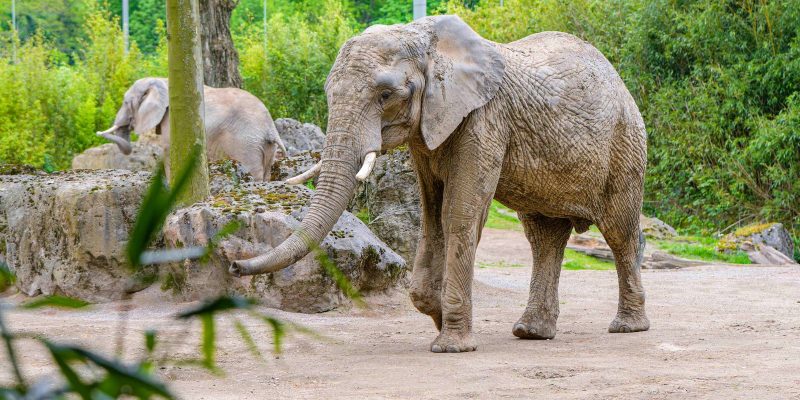
Zoo Duisburg’s three female African elephants left Germany on Tuesday, September 8, and arrived safely at Zoo Poznań in Poland the next day. Daisy, Saiwa and Etosha had been at the Duisburg zoo since the mid-1990s. Their departure closes the elephant house at the Kaiserberg, and it clears the ground for something else: a new savanna habitat, built where the elephants used to live, that is intended to bring giraffes back into public view.
What moved, and how
A crane lifted three transport crates onto two low-loaders, which covered the roughly 800 kilometers to Poznań across Tuesday afternoon. The elephants arrived on Wednesday. Three long-serving Duisburg keepers traveled with them and will stay in Poznań for some weeks to make the settling-in as easy as possible.
The move followed a recommendation from the European Endangered Species Programme, whose studbook for the elephants is kept by Dr. Arne Lawrenz at the Grüner Zoo Wuppertal. Preparation took about a year, and the zoo says training with the elephants was intensified over the past year for the journey.
“Tiertransporte sind immer aufwendige Vorhaben, die viele Herausforderungen mit sich bringen. Grundlage für den erfolgreichen Transport war das enge Vertrauensverhältnis zwischen den Elefanten und ihren Pflegern,” said curator Janine Riesener, who organized the transport. That is: “Animal transports are always demanding undertakings that bring many challenges with them. The basis for the successful transport was the close relationship of trust between the elephants and their keepers,” in a statement translated from German.
Why did Duisburg give up its elephants?
The zoo is direct about the reason. Keeping elephants at the current site is not, in its own words, forward-looking. The area available does not meet the requirements for holding the animals long term, and Duisburg says that even if nothing else changed, the enclosure would have to be rebuilt completely at a different spot in the grounds and made significantly larger, even if every bordering strip of land were used.
“Natürlich vermissen wir unsere Elefanten schon jetzt, der Abschied fällt uns schwer,” said zoo director Astrid Stewin, or “Of course we already miss our elephants, and the goodbye is hard for us,” in a statement translated from German. She said Poznań offers “eine moderne, tiergerechte Haltung,” a modern and species-appropriate setting, and that the animals’ welfare was clearly the focus of the decision to hand them on.
Duisburg describes the Poznań elephant facility as among the largest and most modern of its kind in Europe, with expansive naturalistic habitats, water, and places for the animals to withdraw. Poznań’s director, Piotr Przyłucki, said preparations there had also taken more than a year: “Nun verfügen wir über ein gut ausgestattetes Elefantengehege und erfüllen alle Tierschutzanforderungen,” or “We now have a well-equipped elephant enclosure and meet all animal welfare requirements,” in a statement translated from German.
What happens to the space they left
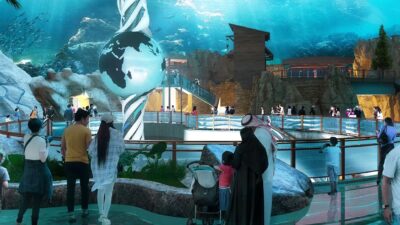
This is the part that makes it a construction story rather than a departure. The footprint of the current elephant facility, which was itself the former giraffe enclosure, plus some smaller adjacent path areas, is earmarked for a new savanna habitat. The existing giraffe house stays where it is. Duisburg says the change creates the conditions for giraffes to be watched at the Kaiserberg again.
Elephants are not out of the plan either. The zoo says a new elephant facility is intended as a future project, on a different part of the grounds, within its masterplan, and that first discussions have already taken place. Its own phrasing about the departure is that an era is ending “vorerst,” meaning for now.
The release gives no cost for the savanna habitat, no construction start or completion date, and no figure for how many giraffes the zoo expects to hold. None of that was stated, and we are not going to estimate it. Other European zoos have published costed timelines for work on this scale, as Wilhelma did with its 2035 masterplan, so the detail may follow.
Where the elephants are now
Poznań posted its own notice on September 9, the day after the animals arrived. The interior of its elephant house is closed to visitors, because the new arrivals need several weeks to acclimate and the zoo wants to minimize any additional stimuli that could make that harder. Poznań’s resident African savanna elephants, Kizi and Ninio, are being shown on the large paddock on the eastern side of the elephant house, or on the smaller paddocks in the southern part of the complex.
Transfers between accredited zoos on breeding-program advice are routine, and ZooReviews has covered the same mechanism in North America when Pittsburgh Zoo moved elephants. Less routine is a zoo saying plainly that its own enclosure is not good enough, and then reorganizing a section of its map around that judgment.
Source: Zoo Duisburg and Zoo Poznań.
Quick answers
- Where did Zoo Duisburg's elephants go?
Daisy, Saiwa and Etosha went to Zoo Poznan in Poland. They left Duisburg on Tuesday, September 8, 2026 and arrived the next day, after a road journey of roughly 800 kilometers on two low-loaders. Three long-serving Duisburg keepers traveled with them and are staying in Poznan for some weeks.
- Why did the zoo give them up?
Zoo Duisburg says keeping elephants at the current site is not forward-looking: the area available does not meet the requirements for holding them long term, and the enclosure would have to be rebuilt elsewhere in the grounds and made significantly larger even if every bordering strip were used. The move followed a European Endangered Species Programme recommendation.
- What is being built in their place?
A new savanna habitat, on the footprint of the elephant facility plus some smaller adjacent path areas. The existing giraffe house stays, and the zoo says the change creates the conditions for giraffes to be watched at the Kaiserberg again. No cost, start date or completion date was stated.
- Will Duisburg keep elephants again?
The zoo says a new elephant facility is intended as a future project on a different part of the grounds, within its masterplan, and that first discussions have taken place. It describes the current departure as ending an era vorerst, meaning for now.