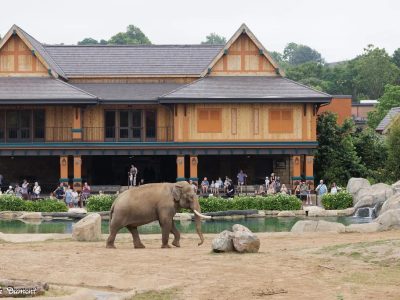

The Wilder Institute’s Calgary Zoo opened Asian Highlands on July 15, 2026: three new habitats built around a single idea, that a mountain is not one place but a stack of them.
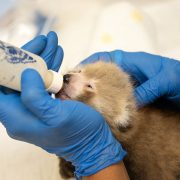
Snow leopards and red pandas return to the zoo in the new space, joined by Sichuan takin, a species making its Calgary debut. The three occupy different elevations of the Eastern Himalayan ecosystem, and that is the organizing principle of the exhibit rather than a coincidence of geography.
Reading a mountain vertically
Grouping by altitude is a more demanding idea than grouping by country. It asks a visitor to notice that the takin browsing in forest and the snow leopard on the rock face and the red panda in the bamboo are not simply three animals from Asia, but three answers to three different sets of conditions on the same slope.
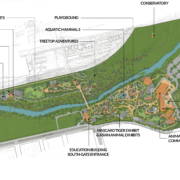
Asian Highlands is the first phase of Imagine Asia, a longer redevelopment of the zoo’s Asian collection.
“Asian Highlands marks an exciting milestone,” said Dr. Kyle Burks, president and CEO. “As the first phase of a broader journey to reimagine our connection to Asia’s wildlife and landscapes, it brings together exceptional animal care, conservation storytelling, and meaningful opportunities for guests to learn and engage.”
Complexity and choice
The zoo describes each habitat as designed to support animal welfare while reflecting the environments the species depend on, with larger spaces offering greater complexity and choice, and better opportunities for guests to see natural behavior.
Those two goals are usually in tension and here they align. An animal given more places to be will use them, and an animal using its space is doing something worth watching. The failure mode of older cat exhibits was the opposite: a bare yard where the only available behavior was pacing at the front.
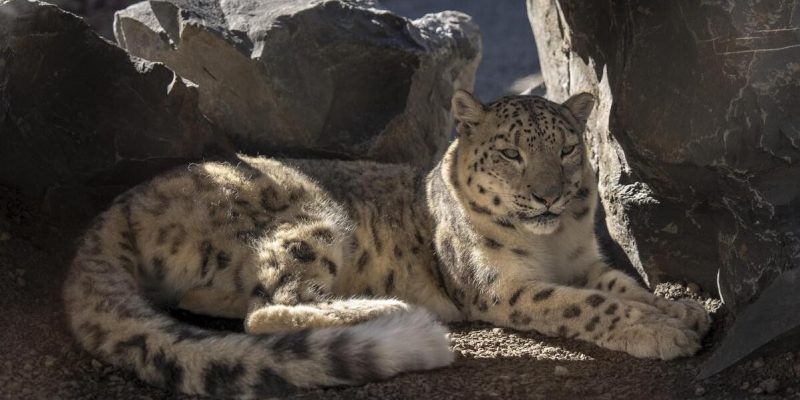
The snow leopards have two interconnected habitats within Kingdon Snow Leopard Ridge, funded by a gift from David Kingdon, with new viewing areas built closer to the animals.
The zoo behind it
The Calgary Zoo is a 125-acre park founded in 1929, Canada’s most visited zoo, home to more than 4,000 animals across over 100 species. It operates under the Wilder Institute, which runs the organization’s conservation work.
Construction on Imagine Asia is substantial enough that the zoo’s West Gate has been closed since the 2025 season and is expected to stay closed until at least 2028 or 2029, a reminder that a project on this scale is measured in years of disruption, not a ribbon-cutting.
Building for altitude and terrain rather than for a map is becoming the standard approach to big-cat habitat: Busch Gardens built two rotating yards for lions and hyenas on the same reasoning about choice and complexity.