
There are almost no scientifically grounded welfare criteria for fish. Two of the largest aquariums in the Netherlands and a research university have started a four-year project to build some.
Diergaarde Blijdorp, Koninklijke Burgers’ Zoo and Wageningen University and Research announced ZOOVIS on September 24. The premise is blunt: a growing body of research shows fish experience their environment consciously and respond to changes in their conditions, and the tools to measure whether they are doing well barely exist.
Why is there nothing to measure fish welfare with?
Because the field grew up around mammals and birds. A keeper assessing an elephant or a parrot has decades of behavioral literature, recognized stress indicators and published welfare frameworks to work from. For a reef fish there is very little of that.
The result is that aquariums make daily decisions about light, flow and temperature on a mixture of husbandry experience and inference, which is not the same as evidence. ZOOVIS is an attempt to close that gap rather than an attempt to prove the current answers were right.
What they are actually studying
The variables are the ones an aquarium controls every day: water quality, current, light, day and night rhythms, and temperature. The question is what each does to the welfare of the animals living in it.
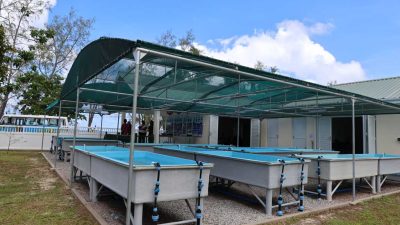
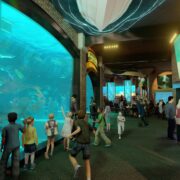
The two sites are deliberately different. At Blijdorp the work centers on the North Sea species in the Oceanium. At Burgers’ Zoo it is tropical coral reef species in the Ocean, an eight million liter aquarium. Between them the project covers cold temperate and tropical reef systems, which is a wider spread than either could manage alone.
The methods are the interesting part
Wageningen leads the scientific side and is developing the instruments as it goes: behavioral analysis using cameras, research into underwater sound, and analysis of water and fish samples.
Underwater sound is the one worth pausing on. Aquarium life support is noisy, pumps and filtration run constantly, and fish hear. Whether that matters, and how much, is close to unstudied in a display setting.
What comes out of it
The stated goal is to make fish welfare visible, measurable and improvable, and then to turn the findings into practical changes rather than leaving them in a journal. The partners describe it as laying the groundwork for a new standard in assessing fish welfare.
That is a large claim, and four years is enough time to test it. It is also the kind of work that only two big public aquariums can do, because the animals, the systems and the daily records already exist at the scale a study needs.
Burgers’ Zoo has appeared here before for its seagrass aquarium and for the reopening of its Desert hall.
The project is a joint undertaking of the two aquariums and Wageningen University and Research.