A Kemp’s ridley sea turtle that could not find food in front of its own face has been released back into the Atlantic after two sessions in a pressure chamber. The New England Aquarium says it is the first documented success treating a brain injury in a sea turtle with hyperbaric oxygen therapy, and the first documented attempt of any kind.
The turtle, nicknamed Young Frankenstein, stranded on Cape Cod in December 2025 after being cold-stunned, which is hypothermia in a reptile that has stayed in water too cold for too long. It arrived at the aquarium’s Sea Turtle Hospital through a rescue partnership with Mass Audubon’s Wellfleet Bay Wildlife Sanctuary that is now more than 25 years old and handles hundreds of turtles a year.
What was wrong
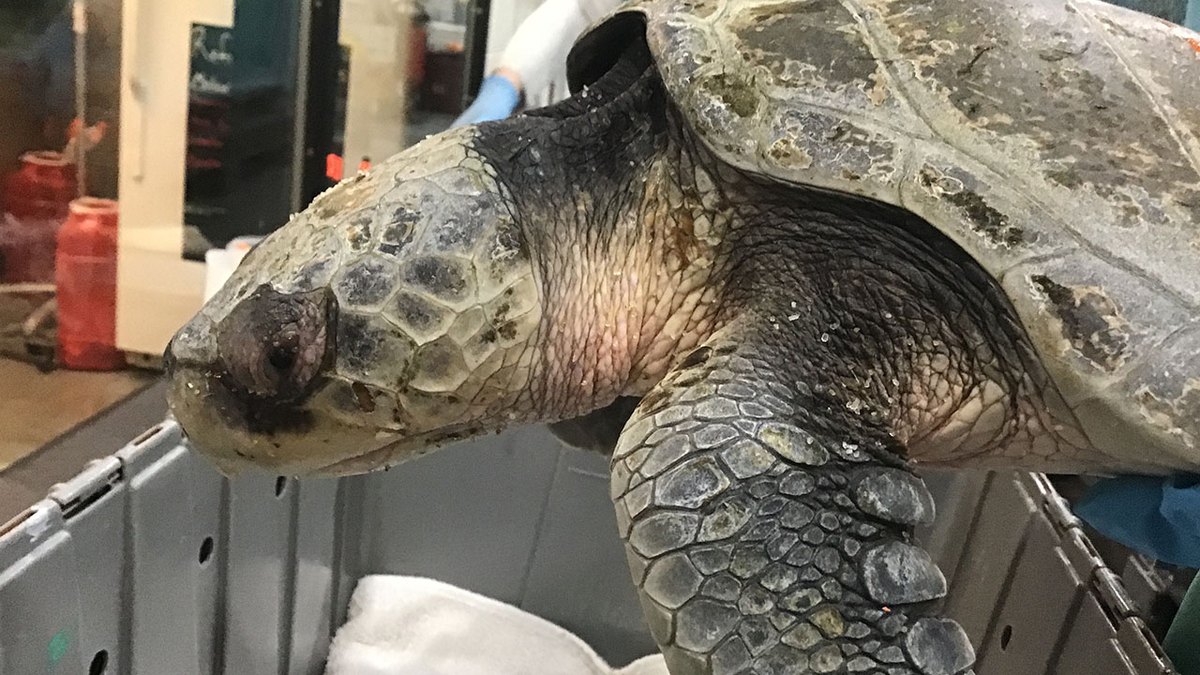
On intake the lungs were badly affected and the animal was barely breathing. “The turtle ended up having to be intubated after they first arrived,” said Dr. Melissa Joblon, the aquarium’s director of animal health. The breathing recovered. The turtle did not.
What remained was harder to treat: inattention, trouble swimming normally, and an inability to track food moving through the water. The team’s working diagnosis was a hypoxic brain injury, meaning brain tissue damaged by a period without enough oxygen, which fit the intubation history exactly. “Brain damage was our biggest concern,” Joblon said.
Steroids, antibiotics, fluid and nutritional support and hundreds of hours of rehabilitation followed. By July the turtle was, in Joblon’s words, stable but not improved. Seven months in, a hospital that releases hundreds of turtles a year had one it could keep alive and could not fix.
The pressure chamber
The aquarium turned to Dr. Stephanie Kube, a veterinary neurologist who sits on its board and owns the Advanced Veterinary Specialty Center in Walpole, Massachusetts. Her suggestion was hyperbaric oxygen therapy, twice a week.
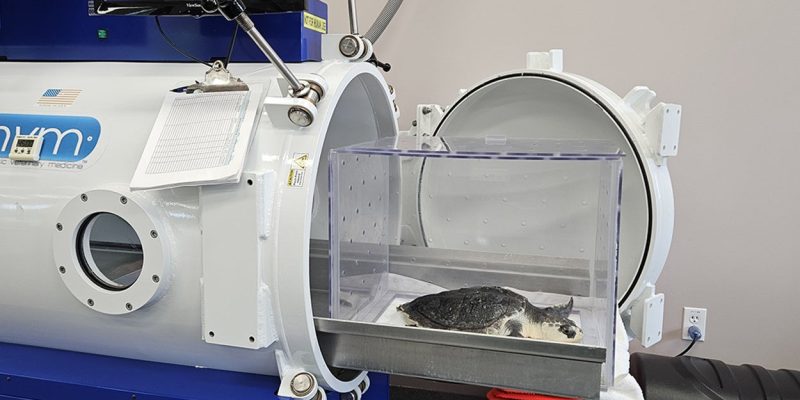
A hyperbaric chamber holds air at two to three times normal atmospheric pressure. Under that pressure the lungs load more oxygen into the blood than they otherwise could, and the blood carries more of it to tissue that has been short. In sea turtles the treatment already had a track record for decompression sickness and for joint disease. Nobody had published an attempt to use it on a damaged turtle brain.
“The idea is that the treatment leads to an increase in circulation and oxygen directly to areas of the brain that were previously depleted,” Joblon said. “It decreases inflammation overall and helps the brain heal.”
Two treatments
The change came faster than anyone had reason to expect. By the second session the turtle began foraging and eating on its own, after seven months of being unable to do either. Two weeks later it was medically cleared for release.
“It was remarkable to see the drastic improvement in Young Frank’s ability to navigate and forage for food, even after just two treatments,” Joblon said.
In early September a crowd gathered on a beach in Dennis, Massachusetts, for the aquarium’s last sea turtle release of the season, and the turtle went back into the water there. “We’re thrilled to see this turtle respond so well to hyperbaric oxygen therapy,” said Kube. “Watching a patient recover and return home is exactly why we do what we do.”
Why this one animal is worth the effort
Kemp’s ridley is the sea turtle with the least room to spare. It is listed as endangered under the US Endangered Species Act, has been federally protected since 1970 and is on Appendix I of CITES, the strictest tier of the international wildlife trade treaty. Nesting fell from tens of thousands of females in the mid-twentieth century to a record low of 702 nests in 1985, which represented fewer than 250 nesting females worldwide. Protection pushed nesting up by roughly 15 percent a year until 2009, when the growth stopped abruptly, and the numbers have moved sideways since.
Around 95 percent of the world’s Kemp’s ridley nesting happens on a stretch of coast in Tamaulipas, Mexico. The juveniles are the ones that turn up in New England, following warm water north through the summer and then getting caught by the temperature drop in the hook of Cape Cod, which is the geography behind every cold-stunning season the aquarium works. Our coverage of the aquarium’s Kemp’s ridley transport to South Padre Island is here, and the New York Aquarium’s release of a Kemp’s ridley named Pancake is here.
The aquarium’s own account is here, and NOAA Fisheries’ Kemp’s ridley species page, with the listing status and the nesting record, is here. Cold-stunning season on Cape Cod begins again in November.
Quick answers
- What was wrong with the turtle?
A hypoxic brain injury, meaning brain tissue damaged by a period without enough oxygen. The Kemp’s ridley stranded on Cape Cod in December 2025 after being cold-stunned, arrived with severe lung changes and had to be intubated. After its breathing recovered it remained inattentive, could not swim normally and could not track food in the water.
- What is hyperbaric oxygen therapy?
Treatment inside a sealed chamber holding air at two to three times normal atmospheric pressure. The lungs load more oxygen into the blood than they otherwise could, which raises oxygen delivery to tissue that has been short of it and reduces inflammation.
- Had it been used on sea turtles before?
Yes, for decompression sickness and joint disease. This was the first documented attempt to use it on a brain injury in a sea turtle, and the first documented success.
- How quickly did it work?
By the second twice-weekly session the turtle began foraging and eating on its own, after roughly seven months of being unable to. It was medically cleared for release two weeks later.
- What is cold-stunning?
Hypothermia in a sea turtle that has stayed in water too cold for too long. Juvenile Kemp’s ridleys follow warm water north into New England through the summer and get caught by the temperature drop in the hook of Cape Cod, which is why the New England Aquarium runs a cold-stunning season every autumn.
- How endangered is the Kemp’s ridley?
It is listed as endangered under the US Endangered Species Act, has been federally protected since 1970 and is on Appendix I of CITES. NOAA Fisheries records a low of 702 nests in 1985, representing fewer than 250 nesting females worldwide. Nesting grew about 15 percent a year until 2009, when growth stopped, and has fluctuated since.