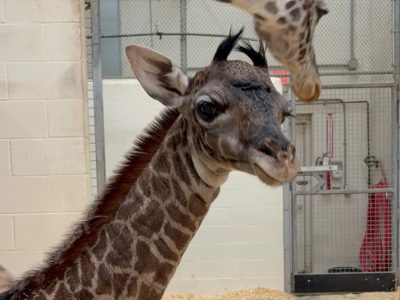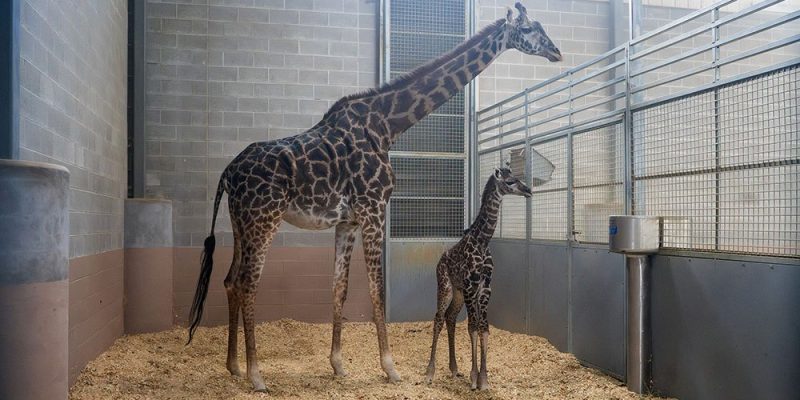
A male Masai giraffe calf was born at the Potawatomi Zoo in South Bend, Indiana, on Monday 16 November. He arrived six feet two inches tall and weighing about 179 pounds, which for a newborn giraffe is unremarkable. For this zoo it is a first: he is the first male giraffe to be bred and born here.
His mother is Zindzhi, for whom this is a fourth calf. His father is Kellan, for whom it is a first.
How is the calf doing?
Well, and the zoo is being deliberate about not getting ahead of itself.
“The calf was up and nursing within a few hours of being born, which is a good sign. However, we’re always cautious with newborn animals, even big newborns like a giraffe. Their health and wellbeing are fragile, so we’ll keep a close eye on him over the next few weeks and months.”
That is Josh Sisk, executive director of the Potawatomi Zoo. The calf has had his first veterinary check and the zoo says he appears to be thriving. Zindzhi came through the birth healthy.
Standing and nursing inside a few hours is the benchmark keepers watch for, and the reason it matters is mechanical. A giraffe is born while its mother is standing, so the calf falls roughly six feet to the ground and then has to work out how to operate a set of legs longer than most adult humans are tall. Calves that manage it quickly tend to keep managing. Gestation runs 14 to 15 months.
This one will nurse for nine to twelve months and start taking solid food at around four.
Can visitors see him?
On the right day. The calf may be visible in the giraffe barn, and outside when the weather allows, but while he is this young his outdoor access is limited to sunny days above 60 degrees. In an Indiana November that is not most days. When the herd does go out, the local NBC affiliate WNDU runs a giraffe camera that anyone can watch.
“As the first male giraffe to be bred and born here at the Zoo, this calf marks an exciting milestone for us. We welcome this new opportunity to educate visitors about giraffes and give them a new opportunity to see a giraffe grow up every step of the way, right here in South Bend.”
Sisk again. Watching one particular animal grow up is a different proposition from meeting one, and it is the thing a zoo close to home can offer that a once-a-year trip somewhere larger cannot.
What makes a Masai giraffe a Masai giraffe?
The coat, mostly. Masai giraffes are the largest of the giraffes, native to southern Kenya and Tanzania, and they are told apart by their blotches: jagged and irregular, with ragged edges like torn paper, where a reticulated giraffe carries clean-edged polygons divided by pale lines. Adult males reach 18 to 19 feet and 2,500 to 3,000 pounds, so the calf currently in the barn has roughly twelve feet of growing ahead of him.
On conservation status, a note about where these figures come from. The zoo describes Masai giraffes as endangered in the wild and decreasing, puts the world giraffe population at fewer than 90,000, and cites an IUCN estimate of about 35,000 Masai giraffes. We checked the Red List at the species level, and Giraffa camelopardalis is assessed as Vulnerable, which matches the zoo’s wording for giraffes overall. The Masai giraffe is assessed separately from the species, and we were not able to open an assessment under that name through the route we use, so the Masai-specific category and the 35,000 figure are reported here as the zoo’s rather than restated as ours. The U.S. Fish and Wildlife Service keeps its own species profile for the giraffe for readers who want the American regulatory picture.
None of which changes what is standing in the barn. Two days before this calf was born, the Cincinnati Zoo put a giraffe birth on a live camera and almost 8,000 people watched it happen. South Bend’s version is quieter and much slower, and it runs for years: a male giraffe growing up in public, in a city that has never had one before.
Quick answers
- When was the giraffe calf born at the Potawatomi Zoo?
On Monday 16 November 2026, to mother Zindzhi and father Kellan. He is Zindzhi's fourth calf and Kellan's first, and the first male giraffe to be bred and born at the zoo.
- How big is a newborn giraffe?
This calf was about six feet two inches tall and weighed roughly 179 pounds at birth. An adult male Masai giraffe reaches 18 to 19 feet and 2,500 to 3,000 pounds.
- Can visitors see the new giraffe calf?
Sometimes, in the giraffe barn or outside when the weather allows. While he is this young his outdoor access is limited to sunny days above 60 degrees. WNDU runs a giraffe camera for when the herd is outdoors.
- How do you tell a Masai giraffe from other giraffes?
By the coat. Masai giraffes carry jagged, irregular blotches with ragged edges, where a reticulated giraffe has clean-edged polygons separated by pale lines. They are the largest of the giraffes.