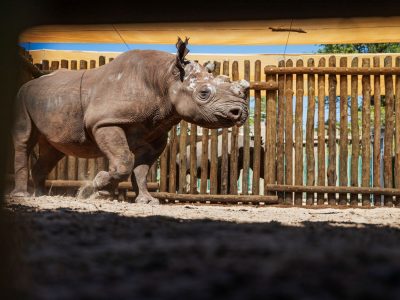

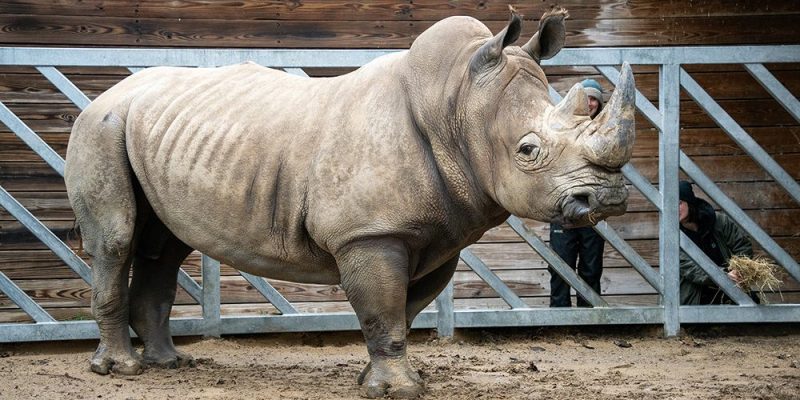
A 5,200-pound southern white rhino named Frankie arrived at the Potawatomi Zoo on April 2, 2026.
Frankie is 24 years old and stands about seven feet at the shoulder. He came from Brevard Zoo in Florida on a recommendation from the Southern White Rhinoceros Species Survival Plan, the program that manages the species across institutions accredited by the Association of Zoos and Aquariums. The South Bend zoo marked his arrival with an event on April 25.
What a non-breeding male is for
Housing a male rhino outside a breeding program does more than it might appear. It frees space at other zoos to continue breeding work and artificial insemination research, and it puts a rhinoceros in front of visitors who have never stood near one.
From 500,000 to fewer than 30,000
At the start of the 20th century an estimated 500,000 rhinos of all species lived across Africa and Asia. Fewer than 30,000 wild rhinos remain today across five species.
Southern white rhinos are the exception to that trajectory. Conservation work moved them from critically endangered to the least endangered rhino species in the wild. The zoo argues that keeping up that work matters for more than the animals themselves, since protecting megafauna protects the range they live across. Poaching and habitat loss remain the biggest threats.