
Monterey Bay Aquarium opens Ocean in Motion / La Danza del Mar on Saturday, November 7, a bilingual gallery built on a simple premise: that a child who has waddled like a penguin and twisted like a seahorse will care about the real animal in a way that reading a label never produces. The centerpiece is a much-expanded habitat for African penguins, a species the IUCN Red List now places in its highest threat category.
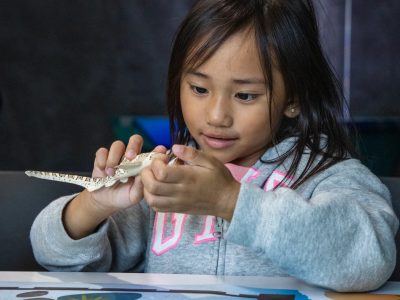
The exhibition is designed with two- to six-year-olds in mind and open to everyone. Its organizing idea is mimicry. Shapes in the floor cue visitors to hop from rock to rock, seagrass towers invite them to hold on and twist, and digital silhouettes ask them to flap and shake a tail. Each prompt sits beside a living exhibit where the animal is doing the same thing.
“The main theme of this exhibit is building empathy with ocean life in kids through movement, so we’ve selected endearing animals that move in fun ways,” said Monterey Bay Aquarium CEO Jenny Gray. “By inviting children to move their bodies like a penguin or a leaping blenny and mirror their behavior we’re activating their brain’s empathy engine through play, and creating a deep and joyful connection with ocean life.”
What will you actually see?
Four set pieces, in sequence.
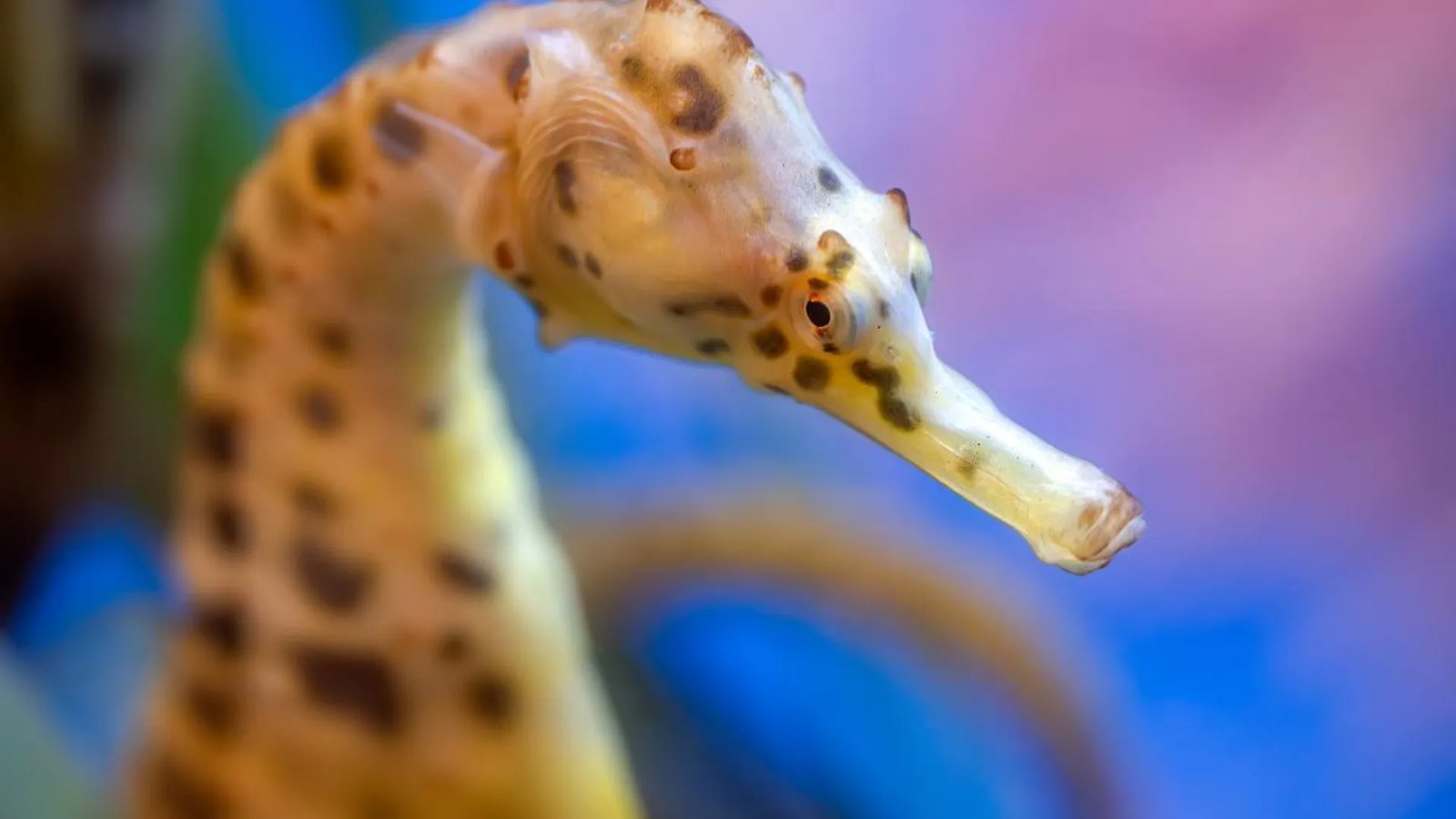
Big-belly seahorses. Oversized seagrass towers run toward the ceiling, and guests are encouraged to grab a cluster the way a seahorse does. A few steps on, a living exhibit holds dozens of seahorses holding, twisting and wrapping their tails around bright-green strands.
Leaping blennies. A blenny is a small, blunt-headed fish, and the leaping kind spends much of its life out of the water, clinging to wet rock and hopping between stones as the sea washes over it. That is a strange thing to watch and almost impossible to picture from a description, which is why the aquarium built a large open-top exhibit that puts dozens of them at eye level, leaping, hopping and sometimes flopping across the wet stones.
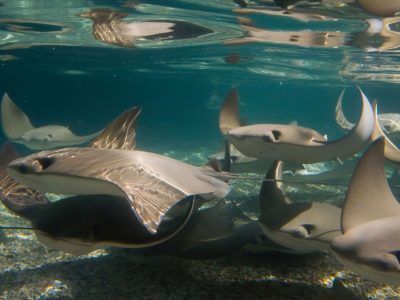
Coral community. One of the gallery’s largest single exhibits runs 20 feet of reef with a custom-built wave machine pushing a ripple through the water. Bluespotted ribbontail rays glide up and over the structure, and clownfish nestle and peek out from among anemone arms. Alongside it, a coral-themed play area lets children climb up, over and through, with the primary pathway kept fully accessible.
African penguins. Projections of waddling and swimming birds lead into the expanded habitat that anchors the gallery, where penguins dive, preen, waddle and rest on a rocky beach.
Why the penguin habitat is the part to watch
The release describes the African penguin as critically endangered, and the assessment agrees. Spheniscus demersus is listed by the IUCN Red List as Critically Endangered under criteria A3bce+4bce, in an assessment by BirdLife International last completed on July 4, 2024. The Red List puts the global population at 19,800 mature individuals and the trend at decreasing. That is a small enough number that every managed population, and every visitor who leaves caring, is worth counting.
The gallery is explicit about what it wants that caring to attach to. As visitors watch the birds, the interpretation turns to a changing climate and to overfishing, and to what people can do about the odds this species faces.
Who paid for it
Monterey Bay Aquarium is a nonprofit and says so plainly: the exhibit was funded by members and donors, with leadership gifts from the Acton Family and from Connie and Bob Lurie, and the penguin habitat sponsored by the Susie and Gideon Yu Family. Admissions and memberships carry the rest of the aquarium’s science, education and policy work.
“We wanted to create an experience where children connect with live animals through movement and play,” said Vice President of Exhibitions Emily Saich. “Early in this project, we engaged with young children and their adults to ground our design in the movements and words children would intuitively express in relation to each animal.”
That detail is worth pausing on. The labels throughout are written in a children’s book voice with the animals as the characters, so a caregiver can read them aloud and the child can answer from the animal’s point of view. It is a small piece of design that tells you the gallery was tested on its audience before it was built for them.
Planning a visit
Ocean in Motion / La Danza del Mar opens to the public on Saturday, November 7, 2026. Members see it first at preview events ahead of the public opening. Tickets and visit planning are on the aquarium’s own announcement, and the penguin and coral reef cams stream year round for anyone who cannot get to Cannery Row.
For more on the species at the center of this gallery, see our reporting on the accredited institutions funding African penguin rescue in South Africa, and on Monterey Bay Aquarium’s surrogate sea otter program.
Quick answers
- When does Ocean in Motion / La Danza del Mar open?
Saturday, November 7, 2026. Monterey Bay Aquarium members see it first at preview events before the public opening.
- What animals are in the new Monterey Bay Aquarium exhibit?
Big-belly seahorses, leaping blennies, bluespotted ribbontail rays, clownfish, cuttlefish and African penguins in a much-expanded habitat.
- Who is the exhibit designed for?
It was designed with children aged two to six in mind, and the aquarium says it is welcoming to visitors of all ages and abilities.
- Is the African penguin endangered?
The IUCN Red List assesses Spheniscus demersus as Critically Endangered, in a July 2024 assessment that puts the population at 19,800 mature individuals and falling.