
Scientists at the Smithsonian’s National Zoo and Conservation Biology Institute and the Smithsonian Tropical Research Institute have mapped the places in Panama where a fungus that has emptied the country’s streams of frogs cannot easily get a foothold. The point of the map is practical: it tells conservationists where to put captive-bred harlequin toads so the animals have a chance of staying alive.
The work was published on September 30 in the Journal for Nature Conservation, as “Identifying climatic disease refuges from the fungal skin pathogen Batrachochytrium dendrobatidis for Harlequin toads (Atelopus spp.) in Panama” (doi:10.1016/j.jnc.2026.127387). Carrie Lewis, a doctoral candidate at George Mason University, is the lead author.
What the fungus did
The disease is chytridiomycosis, usually shortened to chytrid, and it is caused by a skin fungus, Batrachochytrium dendrobatidis. It has moved through Central and South America since the 1970s and is now effectively everywhere in the region. Harlequin toads, the species in the genus Atelopus, took the worst of it. The Smithsonian says the fungus is believed to have driven numerous neotropical frogs to the brink of extinction, harlequin toads among them, and conservationists have been breeding several of these species under human care while they work out what to do next.
Breeding them has turned out to be the easy half. Putting them back has not.
“We have tried releasing captive-bred harlequin toads back into the wild and experienced high losses due to the amphibian chytrid fungus that persists in the environment,” said Brian Gratwicke, a conservation biologist at NZCBI and the paper’s senior author. “By mapping climatic refuges, we finally have a tool to rank potential release sites, allowing us to select places where the released animals have the best chance of survival.”
Why a map can help at all
Chytrid is present across almost the whole historic range of Atelopus, so there is no clean escape. But the fungus is not equally dangerous everywhere or all year. Its severity rises and falls with temperature and humidity, in much the way human influenza has a season. That variation is the opening.
A climatic refuge, in this sense, is not a place without the pathogen. It is a place where the climate is wrong for the pathogen for most of the year and right for the frog. Working from earlier models of where chytrid occurs and when it bites hardest, the team built new suitability maps and looked for the overlap.
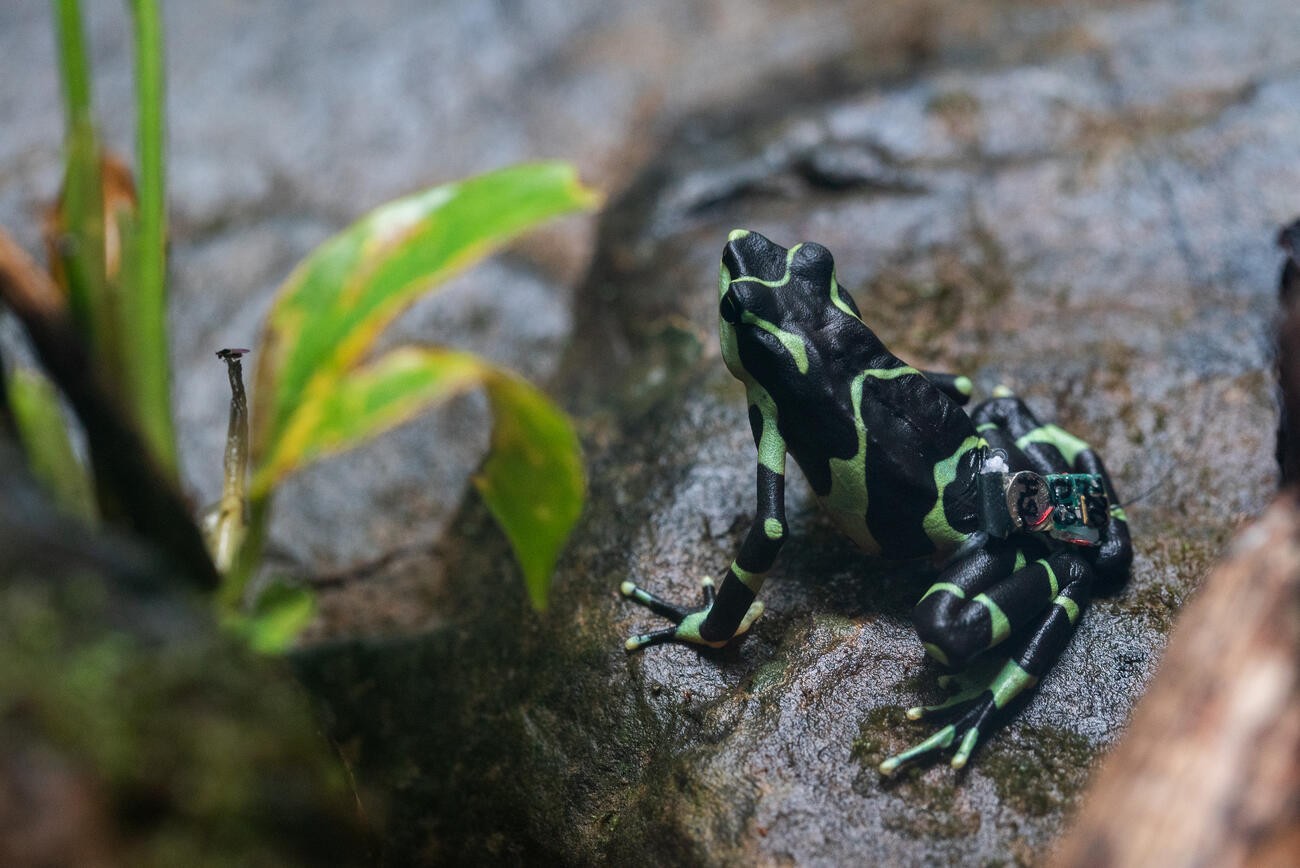
The pattern in the existing wild populations is the part that makes the case. Most harlequin toad species that still persist in Panama are found only at sites where more than 80 percent of seasons were unsuitable for medium and high intensity infections. One species broke the rule: the variable harlequin toad (Atelopus varius) was found at sites that suit the disease, which fits other evidence that the species has evolved some resistance to it.
The map points backward as well as forward
The same maps that rank release sites also mark places where wild populations nobody has checked may still be hanging on.
“Our ability to identify climate refugia is critical if we hope to locate populations that might have disappeared from most places in their former range,” said Lewis. “These persisting populations could provide a source of genes to bolster populations under human care and provide opportunities to augment wild populations.”
That is a genuinely useful thing for a zoo to want. Captive amphibian populations founded from a handful of animals run low on genetic variation quickly, and a rediscovered wild population is worth more to the long-term project than another year of breeding the same lineage.
What happens next, and the catch
The number of refuges available right now is limited. The models also forecast areas that are suitable for the disease today and may stop being suitable as the climate shifts, which adds options later. The researchers are careful to say the same shifting climate works against frogs adapted to cool mountain habitat, so the ledger is not one-sided.
“Guided by these climate refugia and Atelopus habitat-suitability maps, we have already begun surveying potential sites for habitat suitability and potential release trials,” said Roberto Ibáñez, a staff scientist at STRI and a co-author. “These tools will allow us to experimentally test the climate refugia hypothesis through future release trials.”
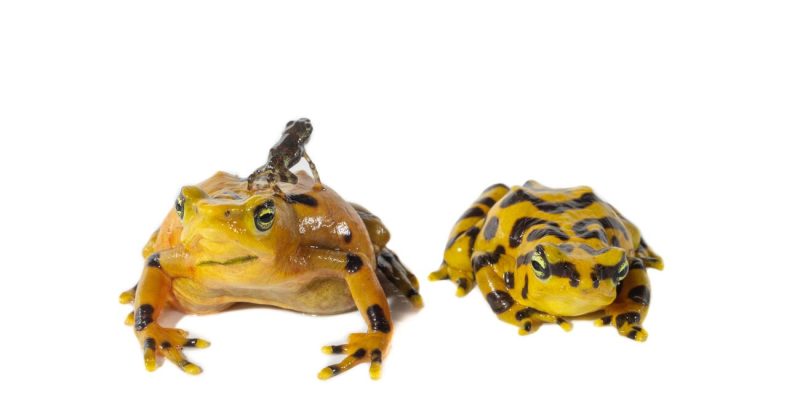
The animals in question are not marginal cases. Atelopus varius, Atelopus certus, Atelopus limosus and the Panamanian golden frog (Atelopus zeteki) are all listed as Critically Endangered on the IUCN Red List. Every species this map is being built for is already in the Red List’s highest category of risk.
What is a climatic refuge?
It is a location where the climate is unsuitable for a pathogen for most of the year while remaining suitable for the host animal. For harlequin toads that means cool, wet forest where the temperature and humidity sit outside the range in which chytrid infections turn severe. Identifying one does not eradicate the fungus; it stacks the odds for an animal being released into it.
The Smithsonian has built this kind of long-horizon work into its field program before, including the scimitar-horned oryx research herd in Virginia that supports reintroduction in the Sahel. The pattern is the same: breed the animal, then spend years working out where on earth it can actually survive.
For a visitor, the nearest version of this story is a glass front with a very small, very bright frog behind it, in a room kept deliberately clean. That frog is a hedge against a bad outcome, and the maps published this week are the beginning of the argument for letting some of them go home.
Quick answers
- What did the Smithsonian researchers find?
They mapped places in Panama where the climate is unsuitable for the amphibian chytrid fungus for most of the year but still suitable for harlequin toads, so captive-bred frogs can be released where they have the best chance of surviving.
- What is chytrid?
Chytridiomycosis, a disease caused by the skin fungus Batrachochytrium dendrobatidis. It has moved through Central and South America since the 1970s and is now effectively everywhere in the region.
- What is a climatic refuge?
A location where the climate is unsuitable for a pathogen for most of the year while remaining suitable for the host animal. It does not eradicate the fungus; it improves the odds for a released animal.
- Where was the research published?
In the Journal for Nature Conservation on September 30, 2026, under the title "Identifying climatic disease refuges from the fungal skin pathogen Batrachochytrium dendrobatidis for Harlequin toads (Atelopus spp.) in Panama", doi:10.1016/j.jnc.2026.127387. Carrie Lewis is the lead author.
- Which harlequin toad resists the fungus?
The variable harlequin toad (Atelopus varius) was the one species found at sites that suit the disease, which fits other evidence that it has evolved some resistance.
- How threatened are these frogs?
Atelopus varius, Atelopus certus, Atelopus limosus and the Panamanian golden frog (Atelopus zeteki) are all listed as Critically Endangered on the IUCN Red List.