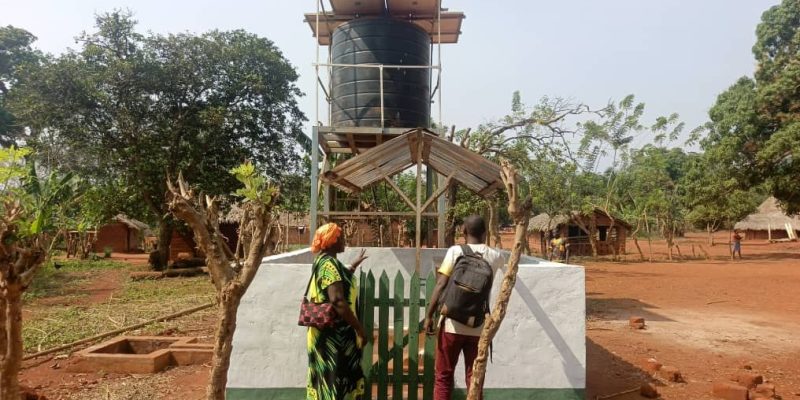
The village of Agoumar, in the Rafaï commune of the Central African Republic, has an extended medical center. It was paid for entirely by the sale of carbon credits generated by not cutting down the forest next door, and the decision to spend the money on a clinic rather than on anything else was made by a committee of local volunteers, traditional leaders and religious leaders.
That is the short version of a mechanism African Parks described in an article published in October, and it is one of the few places where the phrase community benefit in conservation finance resolves into a building you could walk into.
What is being sold, exactly?
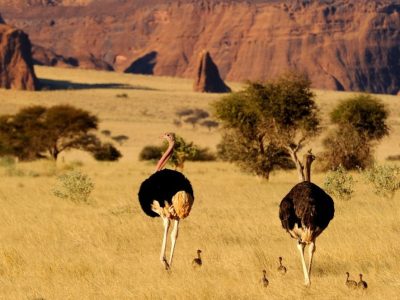
Chinko is 64,000 square kilometers of continuous wilderness in the eastern Central African Republic. Open woodland savannah covers more than half of the conservation area and closed-canopy forest accounts for well over a quarter. Both store carbon, and both release it when the vegetation is cleared or degraded.
The Chinko Carbon Project measures the emissions avoided by conserving that landscape, against a modeled projection of what would have happened without the project. Those results are independently verified before any credit is issued, and the credits are then sold. African Parks states that well over 90 percent of gross revenue from the sales is reinvested in the country.
Hassan Moudjiaye, African Parks’ Liaison Assistant for the Community Fund Office, put the origin of it plainly: “It is the result of environmental protection activities set in motion through collaboration with local communities. Our forest plays a very important role in reducing greenhouse gas emissions. We want to transform our forests into an answer to global concerns.”
Who decides where the money goes?
The community share runs through the Chinko Community Fund, established within the carbon project’s framework and extended to the larger landscape by a ministerial decree in January 2026.
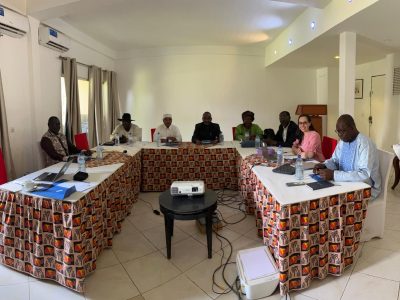
Revenue is apportioned between qualifying communities on stated criteria: how close a community is to the Chinko Conservation Area, how much of each commune’s area is committed to conservation, and the demographic make-up of each community. Spending is then decided by committees drawn from civil society volunteers, traditional and religious leaders, and representatives of different interest groups, with monitoring of every funded initiative and of the technical assistance African Parks itself provides.
Jean Fidèle Kamodoussa, Secretary General of the Agoumar Community Fund Management Committee, described the choice his committee made: “We chose the extension of the Agoumar medical center as a priority project for the Community Fund because the population keeps growing, and the previous center did not have the capacity to deliver the necessary care.”
Marcel Kogoro, Mayor of Rafaï and Authorising Officer of the commune’s Community Fund Management Committee, was franker about the starting point: “When we first heard about carbon credits, the idea seemed quite far-fetched… but today, it is becoming a reality.”
These remarks were published in English by African Parks. The organization publishes in both English and French and did not provide the original wording, so we are quoting its English text as published rather than presenting a translation of our own.
Why this is worth watching
Carbon finance in protected areas has a credibility problem, and most of it comes down to two questions: whether the avoided emissions are real, and whether anyone living on the land sees any of the money.
The first question is answered by the verification step, which is standard and which the market polices. The second is the one that usually goes unanswered, and it is the one Chinko is attempting to answer in public, with named committees, stated allocation criteria and projects you can point at. Whether the structure holds over a decade is a different question from whether it exists, and only the second is settled.
Kamodoussa framed the trade in terms the committee’s own slogan supplies: “By protecting the forest, we are contributing to the development of our country, exactly as it says in the slogan of the Community Funds Committee: To protect the forest is to build the community.”
Does any zoo or aquarium fund this work?
No, and in this case the funder is on the record. African Parks’ strategic funding partners page names Bel Group, the French food company behind several of the world’s best-known branded cheeses, as a partner funding the Chinko Conservation Area through the purchase of VCS carbon credits, first issued in 2023.
We checked African Parks’ strategic funding partners page, its government partners page and its general partners page. The supporters named across all three are private foundations, family philanthropies, the Dutch Postcode Lottery, the European Union, the Elephant Crisis Fund and corporate partners. No accredited zoo or aquarium appears on any of them.
That is worth stating rather than skipping. The AZA reported that in 2025 its 235 accredited and certified facilities spent approximately $372.4 million on conservation across 139 countries, and the zoological world is a genuine funder of African field conservation. It is not the funder here. A cheese company buying verified carbon credits is, which is a different model and the whole point of the project. We covered the related question of whether intact habitat can be made to pay for itself when African Parks moved to get paid for every square kilometer that stays intact.
What happens next
The people running the project are now working on the part that money cannot buy, which is participation by the generation that will inherit it. Simon Pierre Gbake, Sub-prefect of Rafaï, has argued that supporting the Chinko Conservation Area and its biodiversity is a shared duty across the whole community.
For a reader in the United States, the useful takeaway is narrower than the climate framing suggests. A forest that stays standing in the Central African Republic now has a revenue line attached to it, that revenue has a published allocation formula, and the first thing the people nearest the forest chose to buy with it was a bigger clinic. African Parks’ full account is on its stories page.
Quick answers
- What is the Chinko Carbon Project?
It measures the emissions avoided by conserving the Chinko Conservation Area, 64,000 square kilometers of woodland savannah and closed-canopy forest in the eastern Central African Republic, against a modeled projection of what would have happened without it. Results are independently verified before credits are sold.
- How much of the revenue stays in the country?
African Parks states that well over 90 percent of gross revenue from credit sales is reinvested in the Central African Republic.
- Who decides how the community share is spent?
Committees made up of civil society volunteers, traditional and religious leaders and representatives of different interest groups. Revenue is apportioned between communities on stated criteria: proximity to the conservation area, the share of each commune committed to conservation, and demographic make-up.
- What has the fund actually built?
The extension of the medical center in the village of Agoumar, in the Rafai commune, was funded entirely by the Chinko Community Fund. The committee chose it because the population was growing and the existing center could not deliver the care needed.
- Who buys the credits?
African Parks names Bel Group, the French food company behind several well-known branded cheeses, as a partner funding the Chinko Conservation Area through the purchase of VCS carbon credits, first issued in 2023.
- Do any zoos or aquariums fund this work?
No. We checked African Parks' strategic funding partners page, its government partners page and its general partners page, and no accredited zoo or aquarium appears on any of them. The AZA reported that in 2025 its 235 accredited and certified facilities spent approximately $372.4 million on conservation across 139 countries, but none of that is documented as reaching Chinko.