
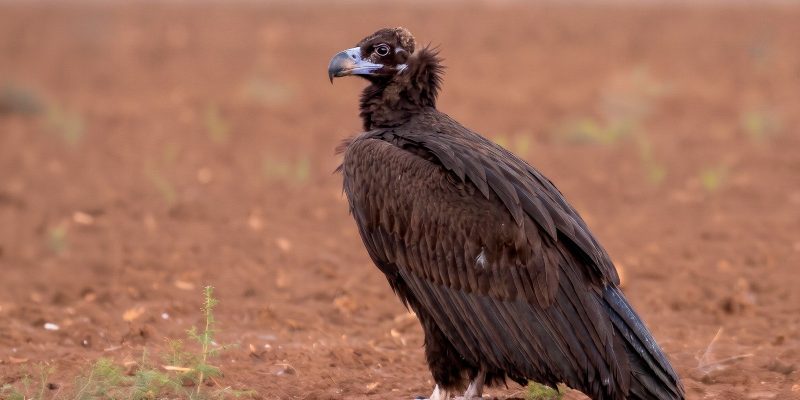
A young cinereous vulture, one of the rarest birds to turn up in Israel, is standing, eating and putting on weight at the Wildlife Hospital at the Ramat Gan Safari. A week ago she was on the ground in a cut field in the Harod Valley, too weak to get far, with people walking up to her to take photographs.
The reports started accumulating in a birdwatchers’ WhatsApp group: a young cinereous vulture in the valley, photographed sitting in a harvested field, and in some of the pictures people were standing very close. On Saturday, after a close-range photograph was posted on Facebook, several worried birders forwarded it to Tzukit Raviv, a volunteer with the Israel Nature and Parks Authority’s wildlife ambulance network.
Finding her took local knowledge
Raviv knew the fish ponds at Nir David well enough to work out from the photograph where the bird was. With help from the fishery manager she went into the area, located the vulture and saw that she was weak. After consulting Ohad Hatzofe, the Authority’s avian ecologist, three more people came out to the field: Itamar Donitza, Yehonatan Ben Simon, an ecologist and a volunteer with the same network, and Asaf Ozen, who researches vultures at Tel Aviv University.
Every time they got close the bird took off and came down again a few dozen meters away. Ben Simon caught her at last light.
“היא עדיין הצליחה לעוף למרחקים קצרים, אבל כבר בשטח היה ברור שהיא זקוקה לטיפול וטרינרי. עקבנו אחריה עד שהצלחתי להגיע אליה ולתפוס אותה, על מנת להעביר אותה לטיפול”, Ben Simon said, which translates as: “She could still fly short distances, but out in the field it was already clear that she needed veterinary care. We followed her until I managed to reach her and catch her, so that we could take her in for treatment.” The translation from the Hebrew is ours.
She was driven to the Wildlife Hospital, which the Authority runs together with the Safari in Ramat Gan. Four other animals went along on the same trip, all of them waiting at Raviv’s for a lift: a Bonelli’s eagle, a pelican, a black stork and a hedgehog.
“רק כשתפסנו אותה ראינו כמה היא רזה, וכמה טוב שהתעקשנו. כף הרגל שלה הייתה בגודל כף היד שלי”, Raviv said: “Only when we caught her did we see how thin she was, and how good it was that we insisted. Her foot was the size of my palm.” That translation is ours as well.
What the hospital found
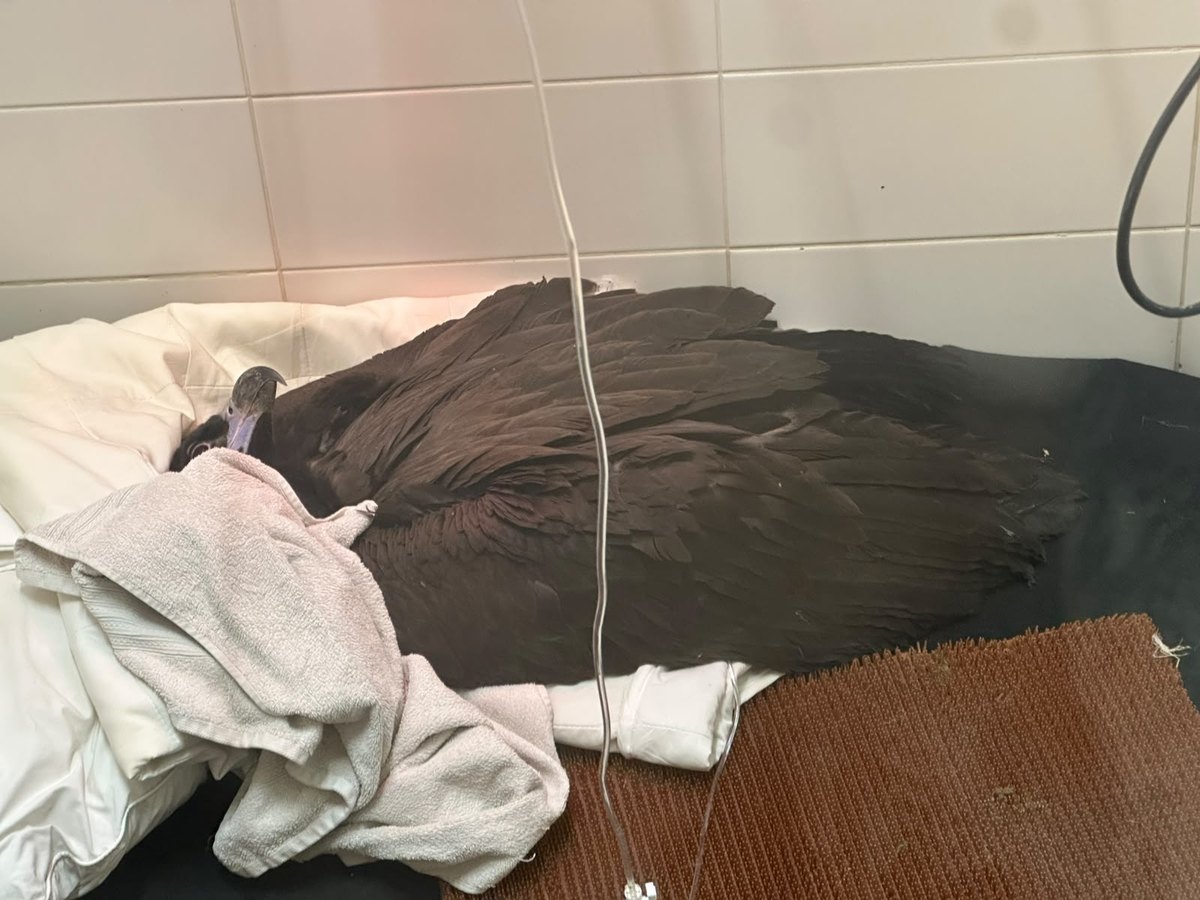
The medical team gave her emergency care on arrival: warming, fluids and supportive treatment. The question hanging over any vulture brought in weak is poisoning, which is the single biggest killer of vultures across their range, and the laboratory work came back clean.
“To our great joy, the laboratory tests showed no evidence of poisoning, and today she is already feeling much better,” said Ruti Shaviro, a veterinarian at the Wildlife Hospital at the Safari. “She is standing, eating with a good appetite, alert, spreading her wings, preening herself, and she has already gained a significant amount of weight. We will go on looking after this special guest devotedly, in the hope that very soon she will be strong enough to spread her wings again in the wild.” This quote was given in Hebrew and the translation is ours.
No release date has been set, and the Authority has not given one. What it has said is that she is gaining weight.
Why this bird is a rare sight
The cinereous vulture is one of the largest birds of prey in the world. Its wingspan reaches about three meters and it feeds mainly on carcasses, in the same way as the griffon vulture. Its range runs from southern Europe across to central Asia. In Israel it once nested in the Galilee. Today it is a very rare visitor, and a handful of individuals turn up in the country from time to time, including in winter.
On the global assessment the species is not as scarce as its Israeli status suggests, and the two statements are measuring different things. The Authority’s description of it as one of the rarest birds in Israel is about this country. The IUCN Red List, through BirdLife International, which is the Red List Authority for birds, assesses the cinereous vulture worldwide as Near Threatened, last assessed in 2021 under criterion C1, with a population of 16,800 to 22,800 mature individuals and a decreasing trend. Numbers are rising in parts of Europe and falling in the Asian strongholds. A bird can be close to unheard of in one country and merely declining across its whole range, and both of those are true here.
Who paid for this
We look for the accredited zoos and aquariums behind conservation work in this region, because the money is often the only part of the chain that gets published. In this case the zoological institution is not a distant donor at all. The Wildlife Hospital is run by the Israel Nature and Parks Authority together with the Safari in Ramat Gan, the vulture is in its care, and the veterinarian treating her is on its staff. That is as direct as the connection gets.
Beyond that, we looked for an outside accredited zoo or aquarium funding this particular rescue and did not find one. The search was done by volunteers in the Authority’s own network, and nothing published about it names a zoo donor. The Authority is a government body, which is a different kind of actor again. For scale on what the sector does spend, the Association of Zoos and Aquariums reports that 235 accredited and certified facilities put roughly $372.4 million into conservation across 139 countries in 2025. No published breakdown separates out what any one region receives, so we are not going to estimate one.
The network that moved her
The wildlife ambulance network is a volunteer corps that helps the Authority move injured and sick wild animals to the Wildlife Hospital. It operates around the country and uses waystations where an animal can get initial care before the onward journey. It is also the reason this bird is alive: the photograph reached a volunteer who recognized the location, and she went and looked.
It is worth saying what the Authority asks of the public here, because this story began with people walking up to a sick bird to photograph it. Keep your distance from wild animals, and do not approach, touch or feed them, not even for a picture. If you come across a wild animal, give it room and let it carry on. If it is injured, in distress or a danger to people, call the Authority’s hotline on *3639 rather than handling it yourself.
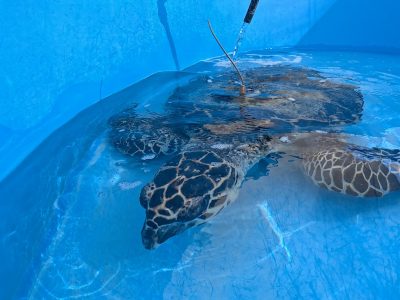
This is the second animal we have followed through the Authority’s care in two days. Yesterday we wrote about Amit, a hawksbill turtle netted off Eilat, who went back into the gulf after about a month of rehabilitation. The vulture is at the earlier end of the same road.
Quick answers
- What happened to the vulture?
Birdwatchers reported a young cinereous vulture on the ground in a cut field in the Harod Valley over about a week. A volunteer with the Israel Nature and Parks Authority’s wildlife ambulance network located her near the fish ponds at Nir David, found her weak, and a small team caught her at last light and took her for treatment.
- How is she now?
Standing, eating with a good appetite, alert, preening and spreading her wings, and she has gained a significant amount of weight. Laboratory tests showed no evidence of poisoning. No release date has been set.
- How rare is the cinereous vulture in Israel?
It once nested in the Galilee and is now a very rare visitor, with a handful of individuals turning up from time to time, including in winter. Globally the IUCN Red List assesses the species as Near Threatened, last assessed in 2021, with 16,800 to 22,800 mature individuals and a decreasing trend.
- What should I do if I find an injured wild animal in Israel?
Keep your distance and do not approach, touch or feed it, including for photographs. If the animal is injured, in distress or a danger to people, call the Israel Nature and Parks Authority hotline on *3639 rather than handling it yourself.