
In a village on the edge of Rwanda’s Volcanoes National Park, the person running the local arm of a mountain gorilla conservation program is a widow who was elected to the job by her neighbors. Her name is Latifa, and the Dian Fossey Gorilla Fund has published an account of how she got there and what she has done with it.
Her husband died and left her the sole provider for three children and a household. “Being a widow pushed me to take full responsibility,” she says. “Through that experience, I discovered strength and abilities I did not even know I possessed.”
Elected by the village
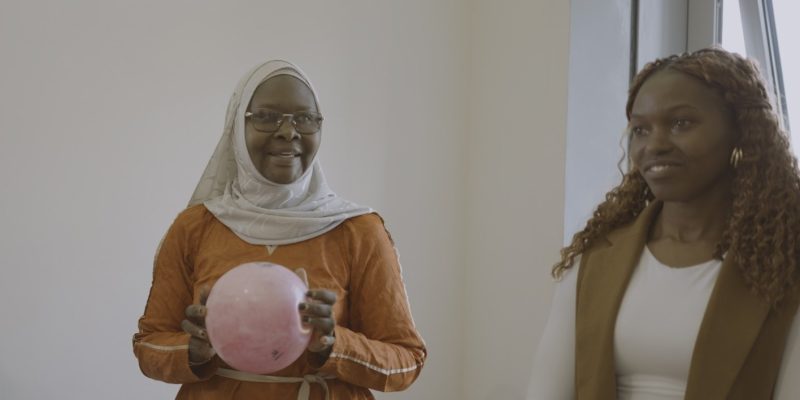
Her village chose her as a Community-Based Facilitator for the Fossey Fund’s Village Vitality Project, on the strength of her commitment and her ability to get people working together. The role is not symbolic. She makes sure the women in the village are in the room when decisions get made, helps them work out what the community needs, and gets their ideas into the process. She also started Sasa Neza, an initiative that encourages women to take charge of their household environments and improve their living conditions.
The Village Vitality Project is built to work this way. It was launched with Spark Microgrants and the Government of Rwanda, and it gives villages direct grants rather than prescribing what they should do with them. Each participating village elects leaders, at least half of them women, who run regular community meetings. The village works out its shared priorities, writes a proposal with a workplan, budget, timeline, risk plan and success measures, and on approval receives a $10,000 seed grant, paid 70 percent in the first year and 30 percent in the second. The Fossey Fund provides technical support across the two years, and villages keep meeting at least monthly after that.
The conservation logic is straightforward. Families in villages bordering the park depend directly on its natural resources for food, fuel and income, and when other options are thin the pressure falls on the forest. Better livelihoods and more schooling mean less of that pressure on the habitat the mountain gorillas need.
Mentoring, and one conversation
Latifa also mentors through the Fund’s Girls in Conservation program, encouraging girls to stay in school. “I enjoy mentoring young girls because I have two daughters of my own and have loved watching them grow,” she says. “Empowering young girls is something I am truly passionate about.”
The example the Fund gives is a girl in her community who failed her national examinations and was thinking about leaving school. She went to Latifa, who told her not to let one setback decide her future and to stay in school. The girl kept studying.
“When I see that my advice can encourage a girl to keep going, it gives me the strength to continue,” Latifa says. Her view is that girls take their cue from what women do rather than what they are told. “Learning from other women encourages girls. When they see what women have achieved, they gain the confidence to follow their own dreams.”
Who paid for this
We trace the accredited zoos and aquariums behind conservation work in this region, because the funding is often the only part of the chain that gets published, and this one needs stating carefully.
The Village Vitality Project’s named partners are Spark Microgrants and the Government of Rwanda. No zoo or aquarium is named as a funder of this project, and we are not going to imply one.
There is a real zoo relationship with the Fossey Fund, and it is worth recording precisely because it is easy to overstate. Partners In Conservation, which is based at the Columbus Zoo and Aquarium, has worked with the Dian Fossey Gorilla Fund since 1991, supporting mountain gorilla protection and community programs and helping build a library and learning center at Bisate, near Volcanoes National Park. That is long-standing support for the organization and for community work in the same area. It is not, on anything published, support for the Village Vitality Project specifically, and general support for an organization is not the same as funding a particular piece of its work. So the Columbus Zoo is named here as what it is, a durable funder of the Fund’s community programs, and this article carries no facility attached to it.
For scale, the Association of Zoos and Aquariums reports that 235 accredited and certified facilities spent roughly $372.4 million on conservation across 139 countries in 2025. No published breakdown isolates what any one region receives, so we do not estimate one.
What this is and is not
This is a profile the Fossey Fund published about one of its own facilitators, so it is the organization’s account of its own program. It carries no independent evaluation, no figures on how many villages have been funded or what the projects have produced, and no measurement of the effect on forest use. Those numbers would make a stronger story, and we would run them.
What it does show is the shape of the argument that field organizations in the region keep making, which is that gorillas get safer when the people next to them have more options. In October we wrote about the Fund’s summer camp at Nkuba and Biruwe in the Democratic Republic of the Congo, which is the same reasoning applied to children several hundred kilometers away.
Quick answers
- What is the Village Vitality Project?
A village-level livelihoods program run by the Dian Fossey Gorilla Fund with Spark Microgrants and the Government of Rwanda, in villages bordering Volcanoes National Park. Villages design their own project and receive a $10,000 seed grant.
- How is the grant paid out?
In two phases, 70 percent in the first year and 30 percent in the second, with technical support from the Fossey Fund across the two years. Participating villages elect leaders, at least half of them women, and keep meeting at least monthly.
- What does this have to do with mountain gorillas?
Families in villages bordering the park depend on its natural resources for food, fuel and income. The program is built on the premise that better livelihoods and more schooling reduce the pressure on the forest habitat the gorillas depend on.
- Does an accredited zoo fund this project?
No zoo or aquarium is named as a funder of the Village Vitality Project. Partners In Conservation, based at the Columbus Zoo and Aquarium, has supported the Fossey Fund and its community work near Volcanoes National Park since 1991, but that is support for the organization rather than for this project.