The warning arrived before the heat did. On October 6 the United States National Oceanic and Atmospheric Administration published its weekly experimental four-month coral bleaching outlook, the model that tries to say where reefs will cook before they cook. Nature Seychelles read the western Indian Ocean panel of it and, ten days later, asked the world for something that does not yet exist in Africa: a coral bank.
The organization says the outlook points to substantial marine heat stress across the western Indian Ocean through January 2027. NOAA labels the product experimental and rebuilds it every Tuesday, so it is a probability and not a schedule. For reefs that have already bleached repeatedly, a probability is enough to act on.
What a coral biobank actually is
The idea borrows its shape from agriculture. A seed bank does not try to keep every field alive. It keeps the genetic material of the crop somewhere else, in conditions it controls, so that a field can be replanted after it is lost. A coral biobank does the same thing with living corals and with frozen coral sperm and larvae: species by species, lineage by lineage, held off the reef so the reef can be rebuilt from them.
Nature Seychelles makes the comparison itself. “We see more monitoring and more reports but we cannot keep watching our reefs die and hope the next bleaching event will spare what remains,” said chief executive Dr Nirmal Jivan Shah in the organization’s statement. “We must protect surviving reefs and accelerate restoration, but we must also save the coral species and genetic diversity that could disappear forever. A coral biobank would do that.”
The word biobank is doing real work in that sentence, and it is worth separating from restoration. Restoration grows corals to put them back on a reef that still exists. Biobanking assumes some of those reefs will not exist, and keeps the material anyway.
Seychelles already built the hard part
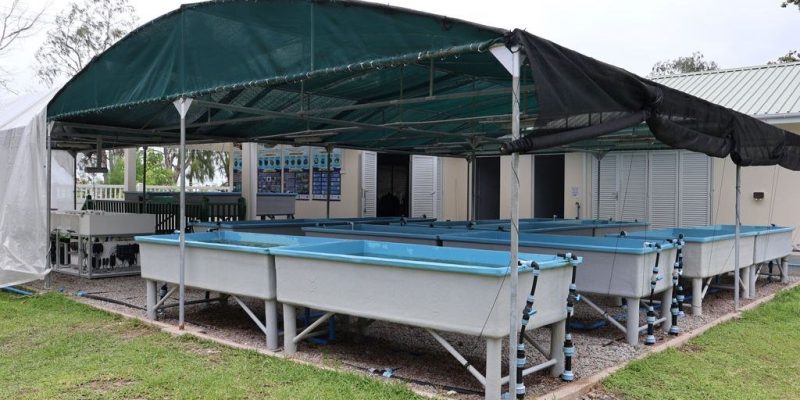
The claim underneath the appeal is that the country is not starting from zero. The Assisted Recovery of Corals facility on Praslin island, which we wrote about when it produced 65,000 corals from a single spawning season, has kept and propagated sexually reproduced corals on land under controlled conditions. Nature Seychelles describes it as the first facility of its kind in Africa.
It also says, in the same release, that the facility’s future is threatened by uncertain funding. That is the whole argument compressed into one sentence: the infrastructure exists, the expertise exists, and the money arrives in project-length pieces that end before the next crisis begins.
The appeal is timed at two meetings. The United Nations Biodiversity Conference, COP17, opens in Armenia on October 19. The climate conference, COP31, follows in Türkiye in November. “World leaders are meeting to discuss biodiversity loss and climate change while countries like Seychelles are losing the ecosystems these agreements are supposed to protect,” Shah said. “We need funding for practical measures like coral biobanking.”
The network already exists, and it has no African node
Nature Seychelles points at the Smithsonian Institution and at CORDAP, the G20 Coral Research and Development Accelerator Platform, as the places where coral biobanking is gaining ground. Both are real, and both are further along than the appeal suggests.
CORDAP funds a project called Establishing the Global Coral Cryopreservation Network, led by Dr Mary Hagedorn, with 1,499,922 dollars committed from January 2024 to June 2027. It is building five regional hubs that it calls coral fertility clinics, along with standardized larval cryopreservation methods and a shared biorepository database. The hubs are in Hawaii, Florida, Curaçao, Mexico and Australia.
Read that list again. There is no node in Africa and none in the Indian Ocean. The facility Nature Seychelles calls the first of its kind on the continent sits outside the network it is pointing at.
Which zoo or aquarium pays for this
None that we can verify, and the near miss is the interesting part.
Nature Seychelles publishes its partners, and the list runs to the Adaptation Fund, the United Nations Development Programme, the Seychelles Conservation and Climate Adaptation Trust, Canon, and the Huawei and IUCN Tech4Nature project. No zoological institution appears on it. Searching from the institutions’ side found nothing attached to the Praslin facility either. We looked for accredited zoo or aquarium funding behind this work and did not find any, which is the same answer we reached about this organization in September and is worth stating rather than leaving blank.
The near miss is that accredited institutions are named inside the CORDAP project. The Smithsonian Institution is a supporting institution, and so are Taronga Conservation Society and The Florida Aquarium. They are funding and staffing the cryopreservation network. They are not funding Praslin, and we are not going to blur the two because the subject happens to be coral in both cases.
For scale on the sector, the Association of Zoos and Aquariums reports that in 2025 its 235 accredited and certified facilities spent approximately 372.4 million dollars on conservation across 139 countries. No published breakdown isolates the African share of that, so we will not invent one.
What to watch
Whether anything gets funded, and whether a sixth hub appears. The appeal asks the two conferences for money for practical measures rather than another round of monitoring, and the specific practical measure on the table is a facility that is already built and already short of funding. Seychelles has made a version of this argument before from a position that does not qualify for the usual aid, which we covered when its case for migratory birds ran into the same wall.
Source: Nature Seychelles, press release of 16 October 2026. CORDAP project details are from the platform’s own project page.
Quick answers
- What is a coral biobank?
A collection of living corals and frozen coral sperm and larvae, held off the reef so that species and genetic lineages survive even if the reef they came from does not. Nature Seychelles compares it to a seed bank for crops.
- How is that different from coral restoration?
Restoration grows corals to put back on a reef that still exists. Biobanking assumes some of those reefs will not exist, and preserves the genetic material anyway so that a reef can be rebuilt later.
- What triggered the appeal?
An experimental four-month coral bleaching outlook published by the United States National Oceanic and Atmospheric Administration on 6 October 2026. Nature Seychelles says it points to substantial marine heat stress across the western Indian Ocean through January 2027. NOAA rebuilds the product weekly and labels it experimental.
- What is the ARC facility?
The Assisted Recovery of Corals facility on Praslin island, run by Nature Seychelles, which has maintained and propagated sexually reproduced corals on land under controlled conditions. The organization describes it as the first facility of its kind in Africa, and says its future is threatened by uncertain funding.
- Who else is working on coral biobanking?
CORDAP, the G20 Coral Research and Development Accelerator Platform, funds a project called Establishing the Global Coral Cryopreservation Network, led by Dr Mary Hagedorn, with 1,499,922 dollars committed from January 2024 to June 2027. It is building five regional hubs in Hawaii, Florida, Curacao, Mexico and Australia. None of them is in Africa or the Indian Ocean.
- Which zoos or aquariums fund this work?
None that we could verify. Nature Seychelles publishes its partners and the list names the Adaptation Fund, the United Nations Development Programme, the Seychelles Conservation and Climate Adaptation Trust, Canon and the Huawei and IUCN Tech4Nature project, with no zoological institution among them. The Smithsonian Institution, Taronga Conservation Society and The Florida Aquarium are partners of the CORDAP network, which is a different project.
- Why do the dates of the conferences matter?
The appeal is aimed at them. The United Nations Biodiversity Conference, COP17, opens in Armenia on 19 October 2026, and the climate conference, COP31, follows in Turkey in November. Nature Seychelles is asking both for financing for practical measures rather than for more monitoring.