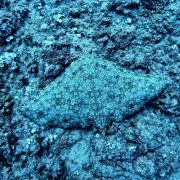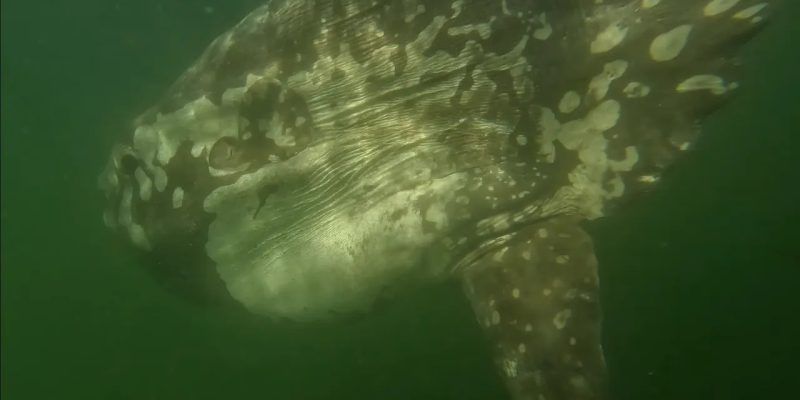
Cape Town’s summer brings a fish that looks like it was assembled from spare parts: a flat gray slab the size of a dining table, with no tail to speak of, a mouth fused into a permanent look of mild surprise, and skin you could sand a door with. On November 5 the Two Oceans Aquarium Foundation announced that sunfish season is opening and asked the public to help it track them, which is a smaller request than it sounds and a more useful one.
The ask is simple: if you see a sunfish in South African waters, alive at sea or washed up dead on a beach, send the Foundation a photo, a location, a date and a note on what it was doing.
What exactly is a sunfish?
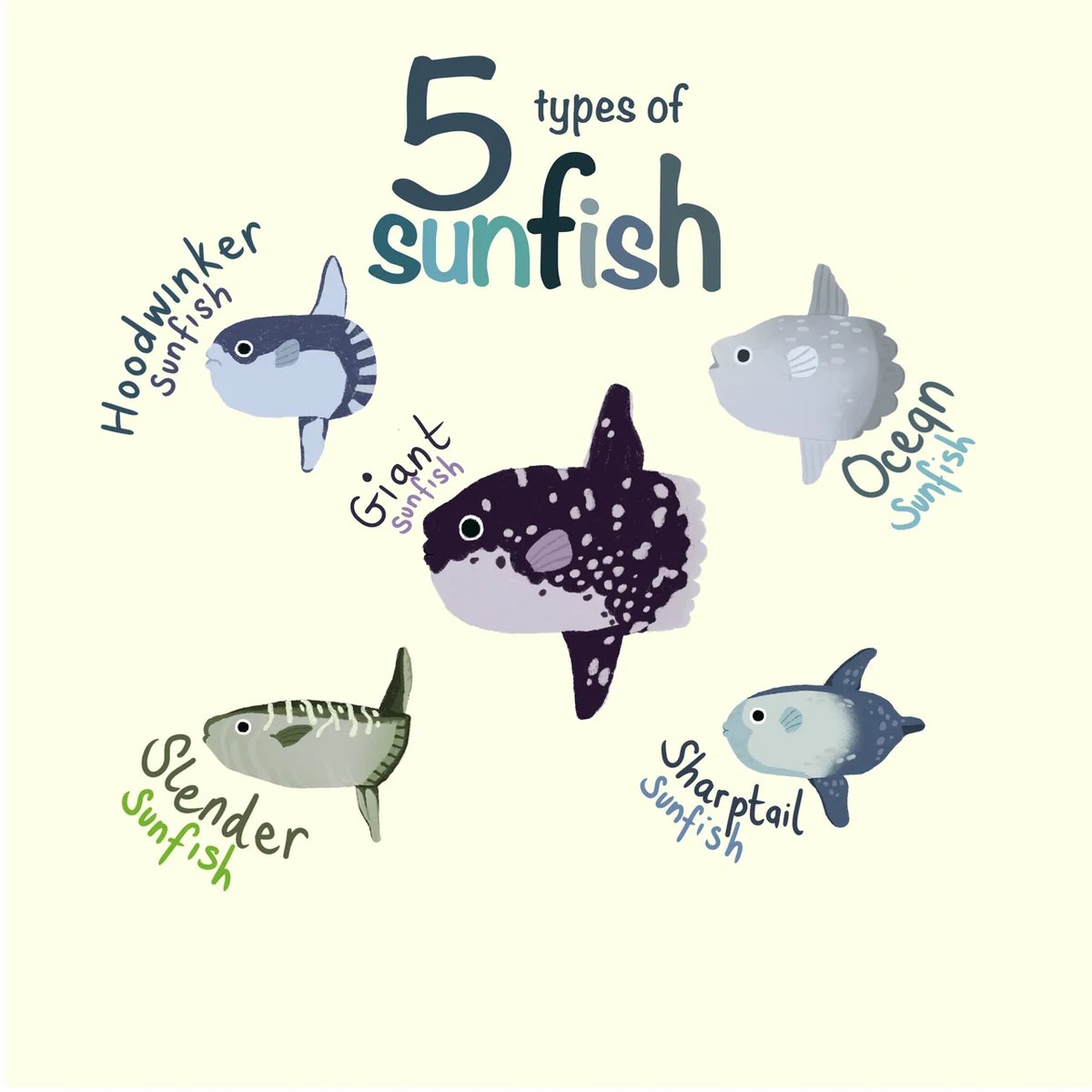
Sunfish are the family Molidae, and all five species that occur in South African waters turn up along the Western and Southern Cape coasts. They share an oval, disc-like body, tall dorsal and anal fins, and no conventional tail fin at all. In place of one they have a clavus, a stiff rudder-like flap formed where the body simply stops, which is why a sunfish steers by sculling its dorsal and anal fins rather than beating a tail.
The Foundation lists the five as the ocean sunfish (Mola mola), the heaviest known bony fish in the world and the one most often encountered; the giant sunfish (Mola alexandrini), distinguished by a pronounced head profile; the hoodwinker sunfish (Mola tecta), described only recently and recorded from South African and Chilean waters; the sharptail sunfish (Masturus lanceolatus), which carries a pointed extension in the middle of its clavus; and the slender sunfish (Ranzania laevis), the outlier, built long and streamlined rather than round.
Why does a sunfish need skin like sandpaper?
An animal that drifts in open water with no speed and no armor has to solve defense some other way, and the ocean sunfish solves it in three layers at once.
The outer surface is covered in tiny tooth-like structures that work much the way the dermal denticles of cartilaginous fishes do, though they are highly modified scales rather than true denticles. Their shape varies by species and by life stage, from sharp cones to small multi-cusped nubs, and the cumulative effect is a hide that feels like coarse grit. Under that, the skin itself reaches 7.3 centimeters thick in places, built as a dense elastic mesh of interwoven collagen. Over the top of both sits a heavy mucus layer that fends off parasites and pathogens.
It is not a complete defense. Close to 40 kinds of parasite have been recorded living on or inside ocean sunfish, including gooseneck barnacles found in one animal’s throat, and some of those parasites carry parasites of their own.
Why do they show up in Cape Town in summer?
Sightings peak between January and April, though the first animals can arrive as early as November or December. What draws them inshore is food and water temperature working together: blooms of gelatinous prey, and cold, nutrient-rich water rising toward the surface through upwelling.
Sunfish eat crustaceans, zooplankton and, above all, jellies, which they take by sucking in a mouthful of water and prey and pushing the excess out through mouth and gills. The mouth is tiny for the size of the animal and holds a beak formed from fused teeth; further back, pharyngeal teeth grip and grind. How they tolerate a diet of stinging prey is not settled, though a mucus-like lining in the digestive tract is the leading suspicion.
The same cold-water mechanism sets the calendar everywhere else they occur, which is why the season moves around the world. Mediterranean sightings cluster from late spring to early autumn as the water warms. Off Bali they run July to October on Indian Ocean upwelling, when animals that normally sit below 200 meters come shallow to visit cleaning stations.
The sunbathing that gives the family its name is thermal housekeeping. A sunfish that has been hunting as deep as 600 meters floats flat on its side at the surface to warm back up.
From a sesame seed to a tonne
Finding a mate is hard when you are solitary and the ocean is large, and sunfish answer that with volume. A female ocean sunfish can carry around 300 million eggs, released into open water for external fertilization, of which a vanishing fraction survives.
A newly hatched sunfish larva is about 2 millimeters long, roughly a sesame seed, and may school with others for protection before going solitary as it matures. Estimates put full adult size at around 25 years away. Some ocean sunfish pass a tonne.
What is the aquarium actually doing with the sightings?
This is where the request stops being a novelty. The Two Oceans Aquarium Foundation’s Marine Wildlife Management Programme monitors animals in the V&A Waterfront and the Port of Cape Town, and sunfish occasionally get themselves trapped in the harbor. When that happens the team guides or lifts them back out to open water.
Those rescues double as fieldwork. Where it is possible to do so, the team takes measurements and a small tissue sample before release, feeding research into the genetic diversity and distribution of sunfish species in South African waters. The public sightings project runs alongside that, in collaboration with the University of Cape Town, and it is the part that scales: a harbor rescue produces one animal’s data, while a season of reported sightings produces a distribution map.
The Foundation asks for photographs, a GPS pin where possible, the date and time, and a short note on any behavior that struck the observer as odd. Reports go to the Foundation by WhatsApp or email, or into its iNaturalist project.
What conservation status does the ocean sunfish carry?
The IUCN Red List lists the ocean sunfish, Mola mola, as Vulnerable. We are giving the category alone: the Red List’s species pages returned an access error from both machines we check from on the day this was written, so we are not printing an assessment year, criteria or trend we could not open and read for ourselves.
The Foundation’s own article makes no listing claim, which is the correct instinct for a piece whose point is that nobody yet knows where these animals go. That is also the honest case for the sightings project. The Aquarium’s recent work on tagging and releasing spotted gully sharks answers the same question from the other end, with transmitters instead of volunteers.
Sunfish season runs through to autumn, and the Foundation’s full guide, with its contact details for reporting, is on the Two Oceans Aquarium’s news page. If you are on the water in the Cape between now and April, you are a data point waiting to happen.
Quick answers
- When is sunfish season in Cape Town?
Sightings peak between January and April, though the first animals can appear as early as November or December. The Two Oceans Aquarium Foundation opened its 2026 sightings call on 5 November.
- How many sunfish species occur in South African waters?
Five: the ocean sunfish, the giant sunfish, the hoodwinker sunfish, the sharptail sunfish and the slender sunfish. All five turn up along the Western and Southern Cape coasts.
- Why does a sunfish have no tail?
It has a clavus instead, a stiff rudder-like flap formed where the body stops. A sunfish steers by sculling its tall dorsal and anal fins rather than by beating a tail.
- How big do ocean sunfish get?
Some individuals pass a tonne, which makes Mola mola the heaviest known bony fish. A newly hatched larva is about 2 millimetres long, and estimates put full adult size around 25 years away.
- What should I send if I see one?
Photographs, a location with a GPS pin if possible, the date and time, and a short note on anything odd about the animal's behaviour. The Foundation takes reports by WhatsApp or email, or through its iNaturalist project, and wants stranded animals reported as well as live ones.
- What conservation status does the ocean sunfish carry?
The IUCN Red List lists Mola mola as Vulnerable. We are giving the category alone, because the Red List species pages returned an access error from both machines we check from on the day this was written.