
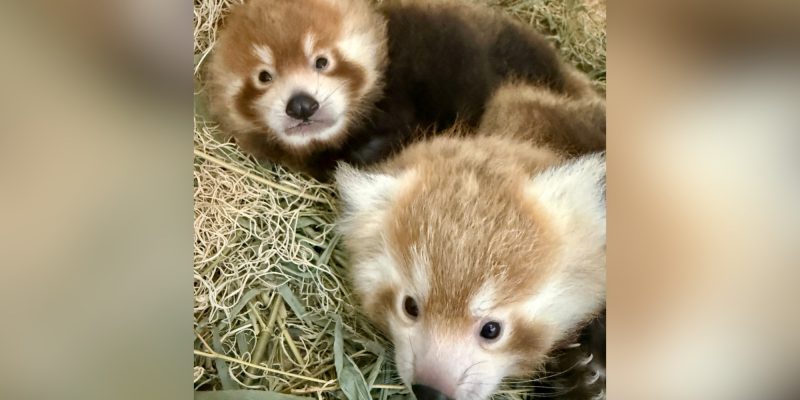
Two red panda cubs were born at the Buffalo Zoo on June 10, 2026. They are the 14th and 15th red pandas born there.
The zoo announced them on July 28. At nearly two months old their eyes were open and they were still in a climate-controlled nest box behind the scenes, monitored by camera. They do not yet have names or a confirmed sex.
The parents
Mom is Himalaya, 3, and dad is Mogwai, 5. This is their second litter in as many years.
Mogwai has been separated from the family and remains on exhibit, which sounds like a management problem and is not one. Red pandas are solitary by nature and males do not help raise young in the wild. Leaving him in would be the intervention, not taking him out.
“This adorable pair of cubs are a prime example of the Buffalo Zoo’s conservation mission, as we work to secure a brighter future for red pandas in our care and in the wild. Himalaya continues to do an incredible job caring for her two babies, and our dedicated animal care and veterinary teams have diligently monitored their progress along the way.”
Lisa Smith, president and CEO, Buffalo Zoo
An endangered animal most people think is fine
The red panda is listed as Endangered by the IUCN, with a decreasing population trend. It is not a small-population listing. The 2015 assessment rests on an estimated decline of roughly 50 percent over three generations, about 18 years, which is a different and in some ways worse kind of problem: the animal is not rare yet, it is falling.
The IUCN range is Bhutan, China, India, Myanmar and Nepal. The zoo’s announcement names Nepal, Bhutan and southern China; India and Myanmar belong on that list too.
Red pandas are also one of the more commonly misread animals in a zoo. They are not pandas, they are not bears, and the resemblance to a raccoon is convergent rather than familial. They sit in their own family, Ailuridae, with no other living members.
What happens next
The zoo has not given a date for when the cubs go on view, saying only that updates will come in the near future and that they will join Himalaya in the outdoor habitat when the time comes.
Zoo births of endangered species are running steadily this year across the network, from cotton-top tamarin twins in San Antonio to Amur leopard cubs in Helsinki.
Source: Buffalo Zoo; IUCN Red List.