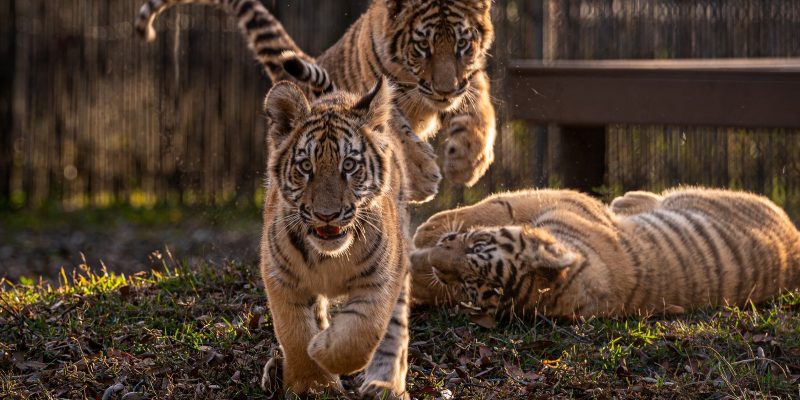
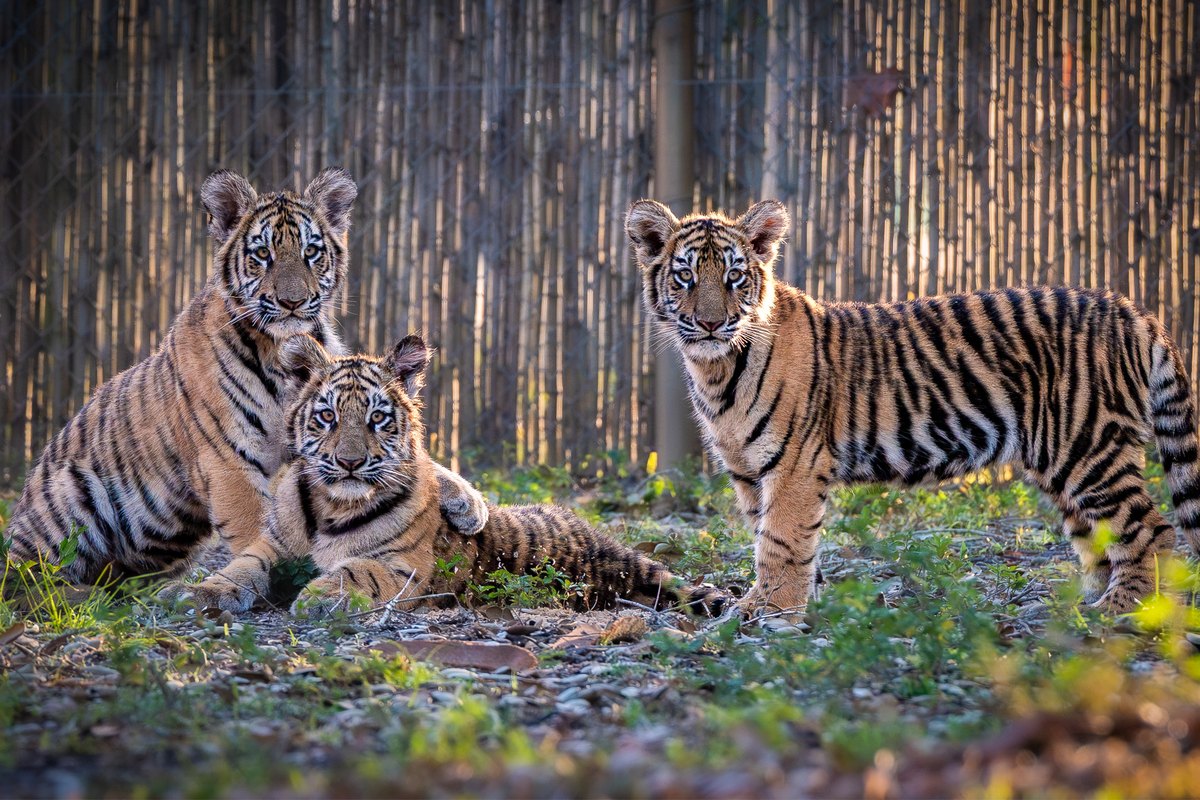
At 10:30 on the morning of Saturday, November 7, three Bengal tiger cubs walked into a habitat at the Gulf Breeze Zoo with a crowd waiting on the other side of the viewing areas. Arusha, Saber and Taj are siblings, born in June 2026, and their debut put tigers back in front of visitors at the Florida park.
The cubs had been at the zoo for several weeks before Saturday, settling in behind the scenes with the animal care team while the park dropped clues on social media: a close-up of a nose, then a pair of paws, then the news that three animals were coming, with one final audio clue. The reveal came on November 5, and the debut two days later.
Which cub is which
Saber and Taj are brothers. Arusha is their sister. All three came from the same June litter, which makes them roughly five months old at their first public appearance, and they behave accordingly. The zoo describes them chasing one another, working over anything new in the enclosure and investigating the viewing areas about as thoroughly as the guests were investigating them.
Their habitat sits across from the ring-tailed lemur exhibit. As with any young animal, the zoo notes that viewing is not guaranteed on a given day, because the cubs come out when their care schedule and their own inclination line up.
What a returning species means for a small park
Gulf Breeze Zoo is a drive-and-walk park on the Florida panhandle, off Highway 98, and it has built its recent record on breeding large mammals rather than on acquiring them: a second-generation southern white rhino calf, four reticulated giraffe calves in a single stretch, a Nile hippo calf. Tigers are a different kind of addition. These cubs arrived rather than were born here, and what is new is the species on the map.
“We’re thrilled to welcome tigers back to the Gulf Breeze Zoo,” said Hunter Hullett, the park director. “These three cubs are an exciting addition to our animal family, and we know our guests will enjoy watching them grow and develop their own unique personalities.”
How many tigers are actually left?
The zoo frames the cubs around conservation without putting a number on it, so here is the number. The IUCN Red List assesses the tiger, Panthera tigris, as Endangered, in an assessment carried out in December 2021 and published in 2022. It puts the global population at between 3,726 and 5,578 individuals across ten countries, and the subset that drives recovery math, mature individuals, at a best estimate of 3,140. The trend is still listed as decreasing.
Those are small numbers for an animal that occupies as much room in the public imagination as this one does, and they are the reason a tiger habitat at a mid-sized Florida zoo does work beyond the turnstile. Most people who come to care about tigers will meet their first one through a fence.
Eric Mogensen, chief executive of Zoofari Parks, which operates the zoo, tied the cubs to the park’s funding model: “A portion of every admission supports conservation efforts, including programs that directly help protect wild tigers and the ecosystems they depend on.”
Where did the cubs come from?
The zoo has not said, and we are not going to fill in the blank. The announcement names no studbook, no transfer partner and no breeding facility, and it does not say where the litter was born. What it does say is that the three are here, that they are five months old, and that guests can go and look at them. If the breeding background is published later, it is worth a follow-up.
Gulf Breeze Zoo opens daily at 9 a.m., which gives anyone making the trip for the cubs a comfortable margin on arrival. For more of what this collection has been doing lately, our report on its second-generation rhino calf Kipenzi covers the breeding side of the same park.
Source: Gulf Breeze Zoo, November 7, 2026.
Quick answers
- What are the names of the Gulf Breeze Zoo tiger cubs?
Arusha, Saber and Taj. Saber and Taj are brothers and Arusha is their sister, and all three came from the same litter born in June 2026.
- When did the Gulf Breeze Zoo tiger cubs go on view?
Saturday, November 7, 2026, at 10:30 a.m., when the three entered their habitat in front of guests for the first time.
- Where is the tiger habitat at Gulf Breeze Zoo?
Across from the ring-tailed lemur exhibit. The zoo notes that viewing is not guaranteed on a given day, because the cubs come out on their own care schedule.
- Were the cubs born at Gulf Breeze Zoo?
No. The zoo says they arrived and had been settling in for several weeks before the debut, and it has not said where they were born.
- How is the tiger listed by the IUCN?
The IUCN Red List assesses Panthera tigris as Endangered. Its assessment was carried out in December 2021 and published in 2022.
- How many tigers are left in the wild?
The IUCN assessment puts the global population at 3,726 to 5,578 individuals across ten countries, with a best estimate of 3,140 mature individuals. The trend is decreasing.