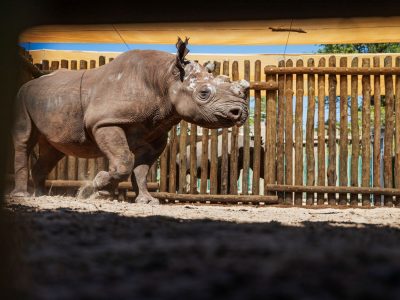

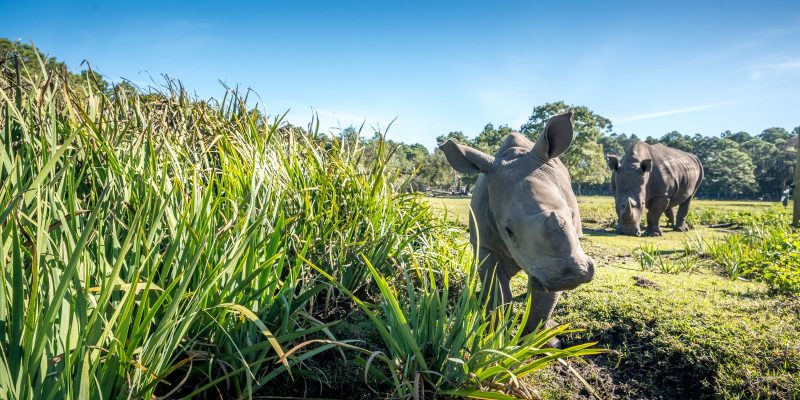
A southern white rhinoceros calf named Kipenzi was born at the Gulf Breeze Zoo on July 24, and she is the first rhino in the zoo’s breeding program to be born to a mother who was also born in it.
That is the part worth pausing on. Kipenzi’s mother, Khaleesi, was born at the Virginia Safari Park in 2015 to a female imported directly from South Africa. Kipenzi is the second generation raised in the United States from that line, and the first anywhere in Zoofari Parks, which operates all three facilities.
She is also only the third rhino calf ever born at the Gulf Breeze Zoo.
A big calf, and a first-time mother
“Kipenzi is sassy, spunky and very curious. She loves her mud wallows, morning zoomies and running with her mom,” said Adrianne Leopard, the Gulf Breeze Zoo’s general curator. “Rhino calves typically weigh between 80 and 140 pounds at birth and Kipenzi already weighs more than 200 pounds. Khaleesi is a phenomenal first-time mom and it’s truly an honor to be part of this journey.”
Kipenzi’s grandmother, Kya, is still in the program at the Virginia Safari Park.
“I watched Kya deliver Khaleesi and saw her first steps,” said Sarah Friedel, the Virginia Safari Park’s director. Khaleesi becoming a mother at Gulf Breeze closes a loop that started with an animal shipped out of South Africa.
Why second-generation births matter
A southern white rhino pregnancy runs about 16 months. That length is the central problem in rhino conservation: a species cannot outrun poaching losses at one calf every year and a half.
The wild population fell below 100 animals at the start of the twentieth century. A century of coordinated protection brought it back to roughly 16,800 across 11 African countries. Poaching remains the urgent threat against that number.
Zoofari Parks has imported young white rhinos from South Africa and Namibia in two separate efforts, specifically to widen the gene pool of the U.S. population rather than keep breeding the animals already here. A second-generation calf is the point of that work: it means the imported genetics are now reproducing on this side of the ocean.
Other collections are running the same play. Fresno Chaffee Zoo put its fifth white rhino calf on exhibit in January 2026, and Lion Country Safari in Florida has bred the species repeatedly.
With Kipenzi, the Zoofari Parks program has produced 12 calves. Several more females are expecting in 2026. The herds are split across the Gulf Breeze Zoo, the Virginia Safari Park and Texas Zoofari Park.