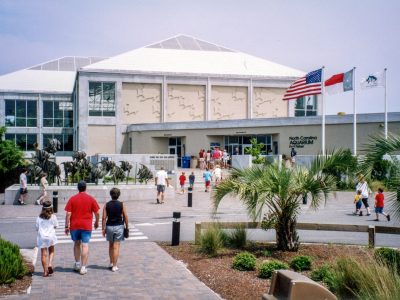

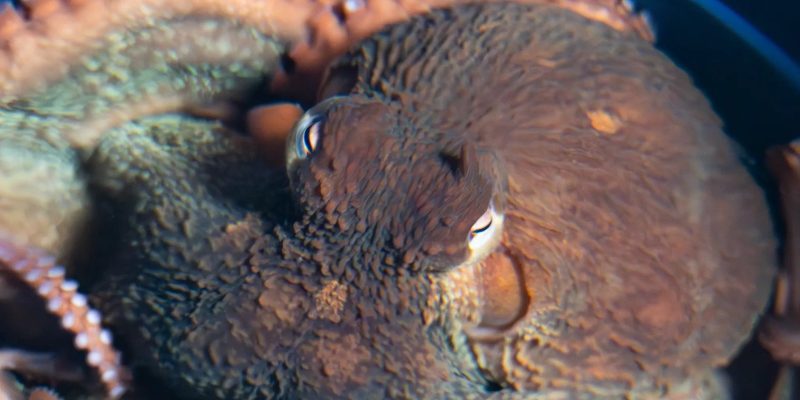
A giant Pacific octopus is on exhibit at the Virginia Aquarium & Marine Science Center in Virginia Beach. He is a juvenile male, he came from the Pacific Northwest, which is where the species naturally lives, and he is named Dan, after Dan Peterson, the previous board chair of the Virginia Aquarium Foundation, who finished his term in June 2026.
Dan’s habitat is in the Undersea Super Powers Gallery in the South Building, a room built around the question of how animals avoid being eaten, find a meal and hold their place in an ecosystem. An octopus is a strong argument for that theme. It can pour its whole body through a gap not much bigger than its beak, which is the only hard part it owns, and it can change color and skin texture well enough to disappear against rock.
You may have to work to find him
Here is the honest visitor advice, and the aquarium gives it in its own announcement: octopuses are nocturnal, and between that and the camouflage, guests should not be surprised if Dan is hard to spot. That is a feature of the animal rather than a flaw in the exhibit. Finding a well-hidden octopus is most of the fun, and the gallery is also showing other new arrivals, including milk conchs, angelfish and blue tangs.
Arms, not tentacles
The aquarium is using Dan to correct a piece of vocabulary almost everyone gets wrong. An octopus has arms, not tentacles. The distinction is real: a tentacle, in the sense a squid or a cuttlefish has them, is a longer specialized feeding limb with suckers bunched at the tip, while an octopus’s eight limbs carry suckers down their whole length and do everything, including tasting. Each sucker can taste and smell what it touches, which means an octopus investigating a shell is reading it chemically at the same time as it is holding it.
Octopuses are close relatives of squids and cuttlefish. In the wild they eat mostly crustaceans, and Dan’s diet runs to crab, lobster and shrimp along with bivalves, the two-shelled mollusks: scallops, mussels and oysters.
What enrichment looks like for an animal this smart
Dan gets food-based, cognitive, physical, sensory and social enrichment. In practice that means puzzle feeders, foraging activity, items he can touch and manipulate, and changes to what he can sense in his surroundings. Enrichment is not decoration. For an animal whose natural day is spent solving the problem of getting a hard-shelled meal open, an environment with nothing to work on is the thing that goes wrong, and a puzzle feeder is closer to normal life than an open dish is.
It is the same reason Birch Aquarium put two red octopuses on display in August with the same emphasis on problem-solving. Cephalopod exhibits live or die on whether the animal has something to do.
The Virginia Aquarium Foundation, the nonprofit that supports the aquarium, funds the acquisition of the animals in the collection, which is the thread connecting Dan to the man he is named for. The aquarium is owned by the City of Virginia Beach and operates as a city department, and it is an accredited member of the Association of Zoos and Aquariums and of the World Association of Zoos and Aquariums. It announced Dan on November 24. Earlier this fall the same building opened Mission Botanica, a climbable changing exhibit that runs to January 10.
Quick answers
- Where is the octopus on exhibit?
In the Undersea Super Powers Gallery in the South Building at the Virginia Aquarium and Marine Science Center in Virginia Beach.
- Why is he named Dan?
After Dan Peterson, the previous board chair of the Virginia Aquarium Foundation, who completed his term in June 2026. The Foundation funds the acquisition of the aquarium's animals.
- Do octopuses have arms or tentacles?
Arms. An octopus has eight arms carrying suckers along their whole length. Tentacles, in the sense that squids and cuttlefish have them, are longer specialized feeding limbs with the suckers bunched at the tip.
- Why might the octopus be hard to see?
Octopuses are nocturnal and camouflage well. The aquarium says in its own announcement that guests should not be surprised if he is hard to spot on exhibit.
- What does he eat?
Crustaceans including crab, lobster and shrimp, along with bivalves such as scallops, mussels and oysters.