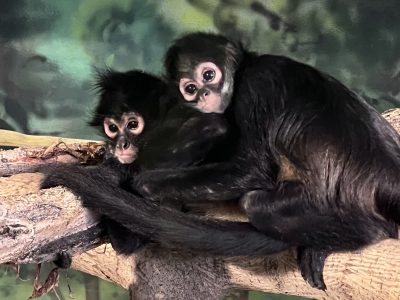

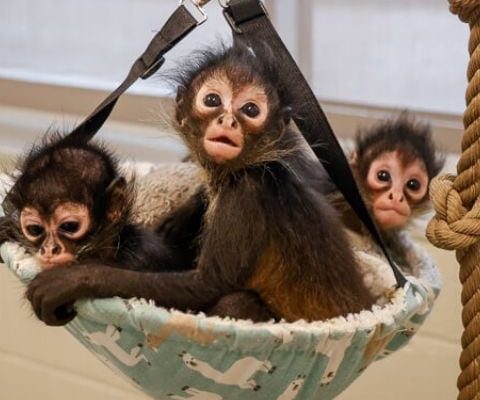
Three infant Mexican spider monkeys confiscated from the illegal pet trade have arrived at Nashville Zoo at Grassmere. Miso, Matcha and Mei (one male, two females) are just under two months old, and guests can already see them through the nursery windows.
How they got here
The three were taken from the wild as infants and sold into the pet trade before law enforcement confiscated them and transferred them to the U.S. Fish & Wildlife Service. From there they were placed with Nashville Zoo through the AZA Wildlife Confiscations Network, a national program launched in 2023 with USFWS that finds accredited homes for animals pulled out of the illegal trade.
The network exists because a confiscated animal is a logistical problem as well as a rescue. Law enforcement can seize a spider monkey; it cannot house one. Placing that animal somewhere equipped for its social, physical and behavioral needs is a separate job, and the network has now placed nearly 100 spider monkeys.
Because Miso, Matcha and Mei are still infants, the zoo’s veterinary team is caring for them at the HCA Healthcare Veterinary Hospital for the next several months, until they are old enough to be introduced to the zoo’s troop.
Nashville now has five
The zoo took in two other confiscated Mexican spider monkeys earlier this year, Mistletoe and Julia, which brings the total to five.
Those two are the reason this story has a good ending attached to it. Nashville has watched them hit one developmental milestone after another, from learning to navigate their habitat to forming strong bonds. They are the practical demonstration that a confiscated infant primate, given the right environment, expert care and the company of its own species, does more than survive. It recovers.
“Nashville Zoo is here to educate the public about the plight of these vulnerable animals, and the impacts humans have on their survivability,” said Dr. Heather Schwartz, director of animal health. “By utilizing our animal care experience, knowledge and care capacity, we are saving the lives of these confiscated animals as well as sharing their stories in hopes that more trafficked and illegal wildlife do not enter the country.”
Nashville is not the only accredited facility taking these animals in. Primarily Primates in Texas received trafficked spider monkeys through the same pipeline this year.
Why spider monkeys are trafficked at all
Mexican spider monkeys move heavily across the U.S.-Mexico border because there is demand for them as pets. Infants are usually taken after poachers kill their mothers, then smuggled hidden in vehicles, bags or crates, and they frequently arrive malnourished, dehydrated or injured.
They make impossible pets, which is the part worth saying plainly. In the wild they live in large, shifting social groups that demand constant interaction and mental challenge, and no house can reproduce that. Without it they develop serious behavioral problems.
Seeing them
Miso, Matcha and Mei are visible in the nursery windows during zoo hours while they grow. Three spider monkey infants in a hammock is not a sight Nashville has offered before, and the queue at that window is likely to be the best-spent five minutes of a visit this fall.