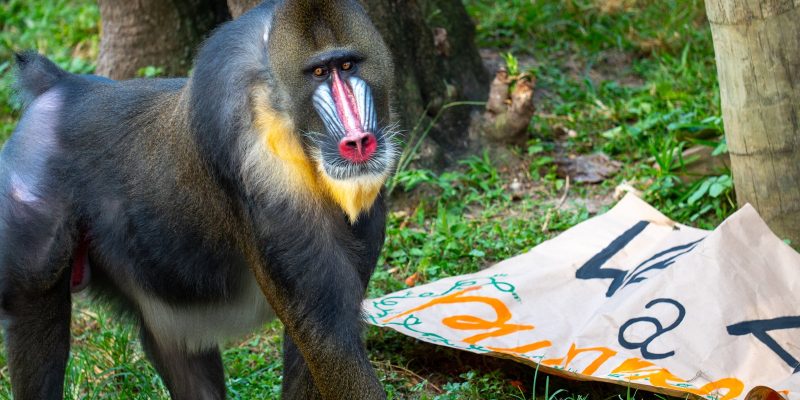
Audubon Zoo is expecting a mandrill. Lucy, who is 14, is pregnant for the first time, the father is a male named Obi, and the zoo announced it by handing both of them pumpkins stuffed with food and a paper banner to tear apart. The baby is due later this month.
Lucy and Obi arrived at the New Orleans zoo last year on a breeding recommendation from the Mandrill Species Survival Plan, the Association of Zoos and Aquariums program that manages mandrills across accredited institutions as one population rather than as a set of separate collections. This will be the first offspring for both of them.
What a first-time mandrill mother gets trained for
The interesting work here started well before the announcement. Lucy’s care team has been training her to accept ultrasounds, which is a voluntary behavior rather than something done to a restrained animal: she learns to present the right part of her body and hold still, and in exchange she gets to be monitored through a pregnancy without being sedated for it.
The rest of the preparation is slower and harder to photograph. Her keepers are building trust with a first-time mother so that after the birth they can watch closely enough to confirm the two things that matter most in the first days, which are that Lucy and the infant are bonding and that the infant is nursing successfully.
About mandrills
Mandrills live in the equatorial rainforests of West and Central Africa, and the adult males are the ones people recognize on sight: a scarlet stripe down the center of the nose, blue ridges either side of it, a yellow beard. Obi is the one in the photograph.
In announcing the pregnancy, Audubon described the species as vulnerable and named the pressures as habitat loss, encounters with people and hunting for bushmeat. The IUCN Red List, which is the assessment we would normally check that wording against, has been returning errors to us for several weeks, so we are reporting the category as the zoo’s own and will update it if the assessment reads differently.
It has been a busy autumn in New Orleans. The zoo has also added a Hartmann’s mountain zebra and released 14 Louisiana pine snakes into their native range.
No date has been given beyond “later this month,” and infant mandrills are small, so the first good look may take a while. The pumpkins, at least, are already gone.
Quick answers
- When is the baby due?
Later in October 2026. Audubon Zoo has not given a date beyond that.
- Who are the parents?
Lucy, who is 14 and is pregnant for the first time, and Obi. Both arrived at Audubon Zoo last year and this will be the first offspring for either of them.
- Why did they come to Audubon Zoo?
On a breeding recommendation from the Mandrill Species Survival Plan, the Association of Zoos and Aquariums program that manages mandrills across accredited institutions as a single population rather than as separate collections.
- What training has Lucy had?
Her care team has been training her to accept ultrasounds voluntarily, so she can be monitored through the pregnancy without sedation, and has been building trust with her so they can observe closely after the birth.
- What will keepers watch for after the birth?
Two things above all: that Lucy and the infant bond, and that the infant is nursing successfully.
- Where do mandrills live in the wild?
In the equatorial rainforests of West and Central Africa.
- How threatened are mandrills?
Audubon Zoo describes the species as vulnerable and names habitat loss, encounters with people and bushmeat hunting as the pressures. The IUCN Red List has been unreachable for several weeks, so we report that category as the zoo’s own rather than asserting it ourselves.