
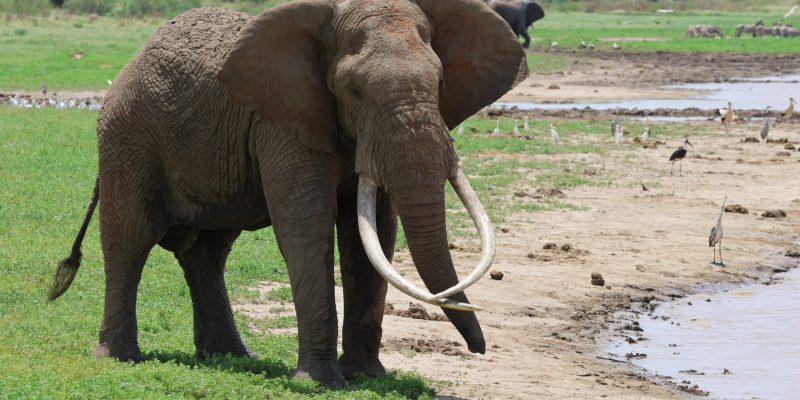
Putting water into a dry place looks like the simplest conservation decision there is. During a drought, when seasonal rivers and pans have gone, a borehole or a pumped waterhole is more water for animals that need it. It is hard to argue with.
Tsavo Trust spent a long essay in September arguing with it anyway, and the interesting part is that the organization making the case has built thirteen water structures of its own.
What the research says happens
The trust’s piece, published on September 11, assembles what the published work on African savannas has found about artificial water, and the pattern across it is consistent: adding permanent water does not simply raise the amount of water available. It changes where the animals are, and everything that follows from where the animals are.
Kruger National Park is the long case study. From the 1930s onward, more than 300 boreholes were drilled, around 50 earth dams built and rivers modified, with the aim of opening up country that had been too dry to use year round. It worked, in the sense that it changed how animals used the landscape. A later analysis of seven years of dry-season aerial census data across 13 large herbivore species found artificial waterholes acting as centers of activity and shaping herbivore distribution at landscape scale. Most grazing species clustered on them. Browsers and mixed feeders did not, and stayed associated with the major rivers.
That asymmetry is the first finding worth holding on to. A waterhole does not help every species equally. It favors the animals that must drink often, and barely touches the ones that can range away from surface water, so it shifts the balance between species rather than lifting all of them.
The ring around the water
Where animals gather, their effect on vegetation gathers too. Ecologists call the resulting pattern a piosphere: grazing, browsing and trampling at their most intense beside the water and tapering off with distance. The Kruger work found particularly high densities of large herbivores within 500 meters of artificial drinking points.
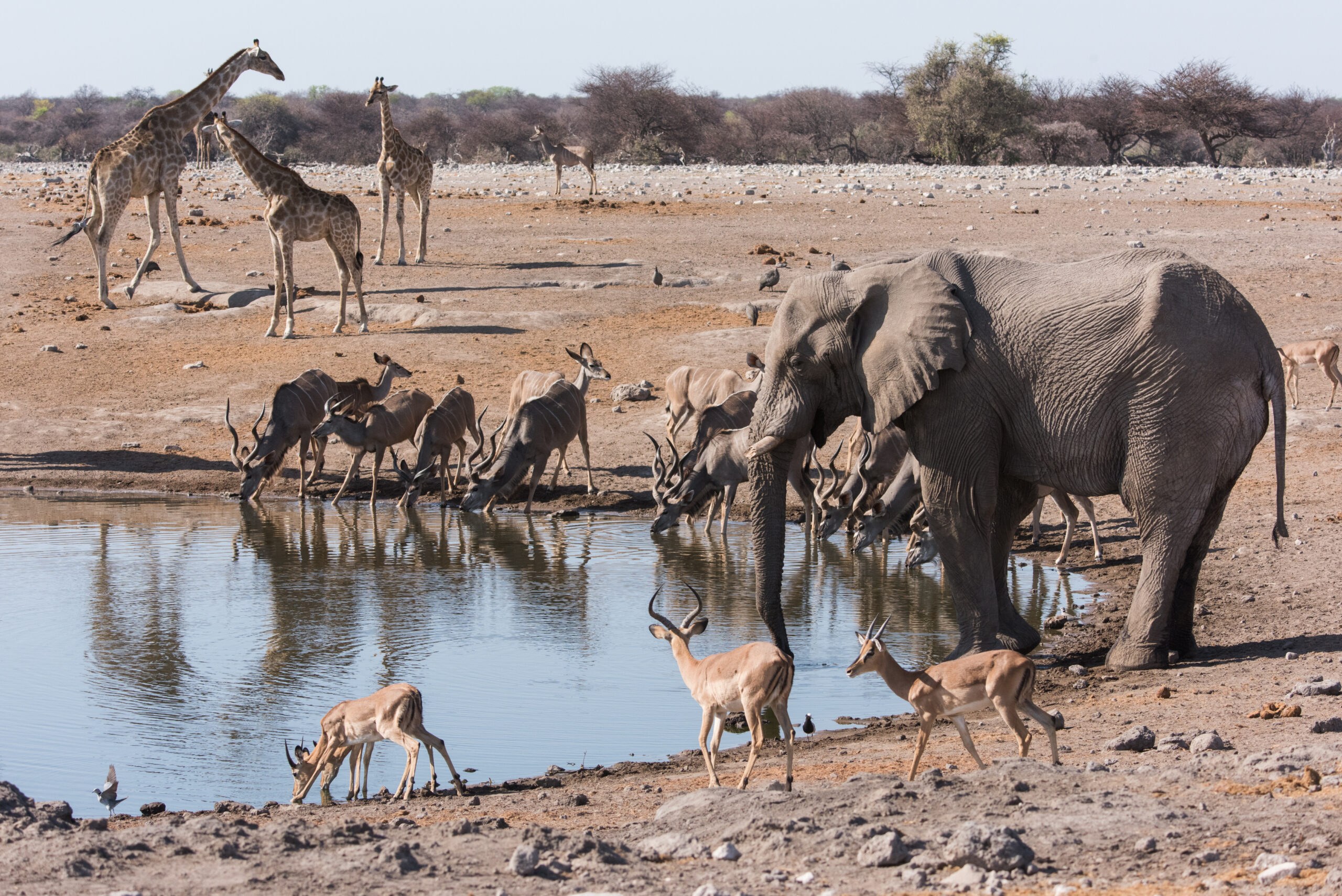
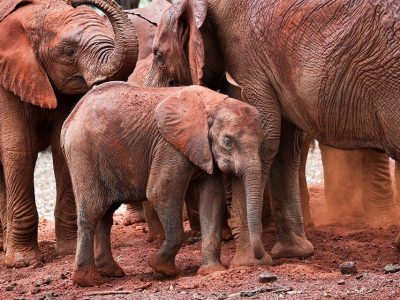
The African savanna elephant makes this larger than it sounds. Research in Zimbabwe’s Zambezi National Park looked at vegetation around pumped waterholes in high-elephant country and documented the relationship between proximity to permanent water and elephant impact on woody vegetation. A 2024 study in Botswana went further out: using satellite observations from 2002 to 2022 around a water point established in the Chobe Enclave, researchers found significant declines in woodland across distance bands running out to 10 kilometers, and concluded that continuous, poorly planned water provision can drive substantial change in savanna landscapes.
Ten kilometers is not an edge effect. It is a region.
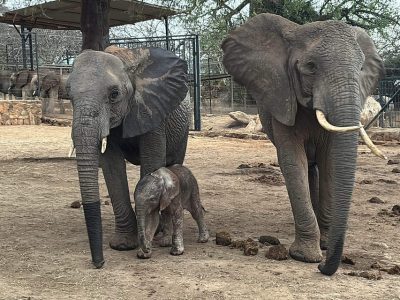
A Kruger study using movement data from 26 elephant breeding herds found the animals visited rivers more often than artificial waterholes overall, but that the waterholes let them use country further from rivers at a lower cost in walking. Across about a third of the area the monitored elephants covered, they used artificial water instead of a river. Elephants push over trees, disperse seeds and cut paths, so moving elephants moves all of that with them.
And the predators move too
Work at Hwange National Park in Zimbabwe found lion predation concentrating around water, with strong selection for kill sites within two kilometers of water at Ngamo Pan for most prey categories examined. Concentrate the prey and you have concentrated the opportunity.
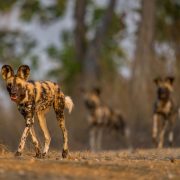
A 2025 study in Biological Conservation took it a step further and asked what that does to African wild dogs, which are effective hunters and are also subordinate to lions and robbed by spotted hyenas. The dogs did not simply avoid the places the bigger carnivores used. They used the same places at different times, and that separation in time got stronger close to waterholes. The researchers describe proactive avoidance of lions and probably leopards, and a mix of proactive and reactive avoidance of hyenas.
The waterhole, in other words, was not just a place to drink. It was a structure the whole carnivore community arranged itself around.
What stops this becoming a simple verdict is a companion result. Wild dogs could coexist with dominant carnivores in prey-rich areas with enough permanent water, given the right conditions, and a related 2024 study found dietary overlap between lions and wild dogs was highest in the area with the lowest waterhole density. Too little water concentrates competition over food. Too much concentrates encounters between competitors. Neither end of the scale is the good one, which is why the recommendation that came out of the work was to keep water provision varied rather than to maximize or eliminate it.
Kruger reached the same conclusion from the other direction. During the 1990s more than half its artificial waterholes were closed, on the view that a dense permanent network was flattening natural variation and favoring the commonest water-dependent grazers. The closures did not produce uniformly good results either. Some rare antelope populations kept declining.
Thirteen sand dams
Which brings the argument back to Tsavo, and to what the trust has actually built.
Between 2019 and 2023 Tsavo Trust constructed 13 sand dams for wildlife in the Tsavo national parks, five in Tsavo East and eight in Tsavo West. A sand dam is a low concrete wall across a seasonal watercourse. It does not stop the river; it slows it enough that the sand the river carries settles out behind the wall. When the rains end, the water is still there, held inside that bed of sand, shaded from evaporation and filtered by it. Elephants dig down to reach it, and other animals drink from the holes the elephants dug.
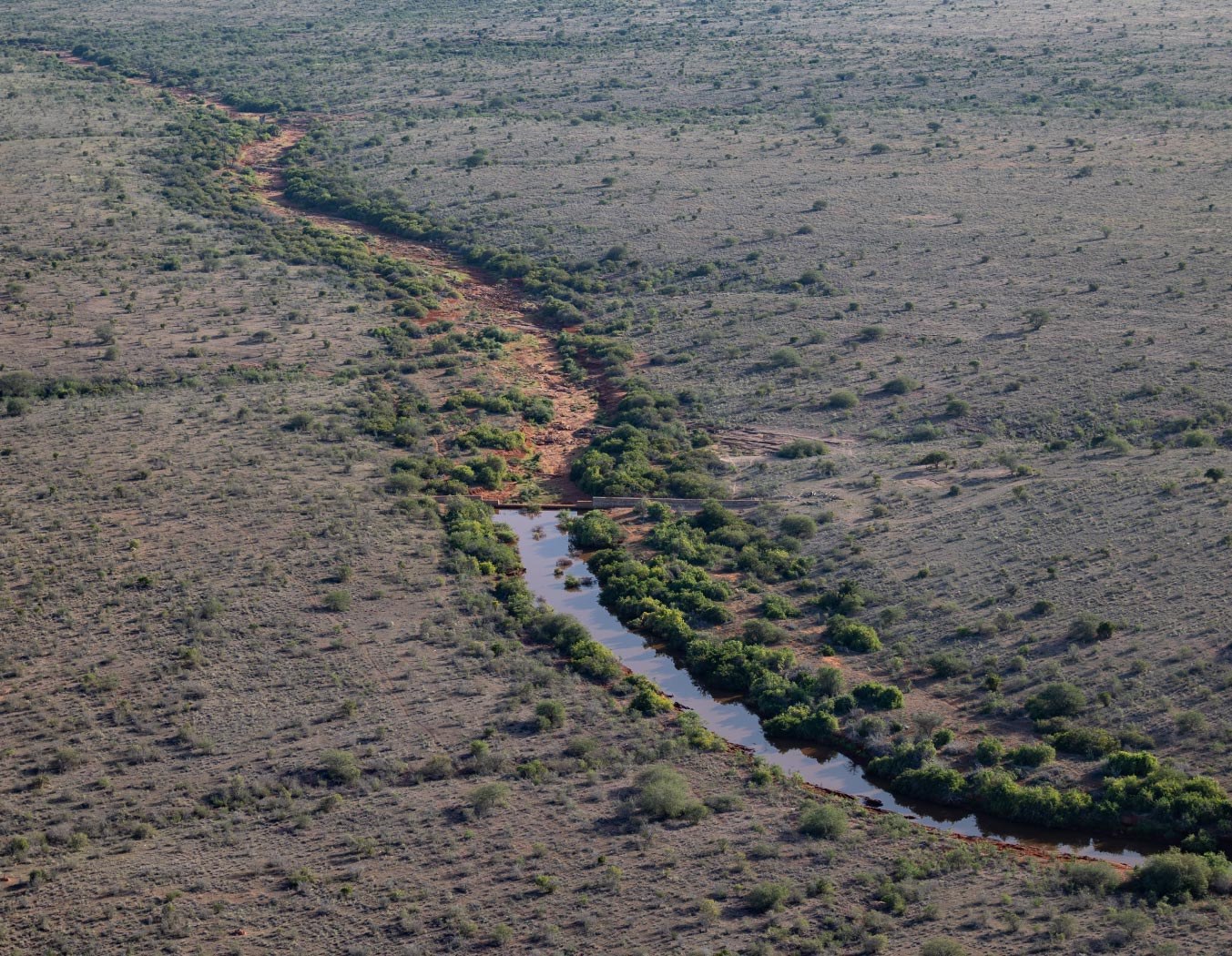
The trust’s own page on the project is unusually direct about why it chose this and not the obvious alternative. Sand dams, it says, do not create the desertification effect often associated with sinking boreholes in protected areas where elephant numbers are high. That is the piosphere, named in the trust’s own words, and the choice of structure is a choice to avoid it.
There is a research honesty here that is easy to miss. The trust says plainly that little work directly compares the ecological effects of sand dams with conventional permanent waterholes, and that whether sand dams can improve dry-season water while keeping more of the natural seasonality and spatial variation is an open question. It points at Ruaha in Tanzania, where wildlife used waterholes within sandy riverbeds including ones elephants had dug, and where researchers suggested that because those sources shift between years, the concentrated vegetation damage around a fixed point may be reduced. That is a plausible mechanism and not yet a measured result.
The plan is another 50 sand dams over ten years and beyond, at sites approved by the Kenya Wildlife Service, the National Environment Management Authority, environmental impact assessment and the Water Resources Management Authority. Building the first 13 created temporary work for at least 30 people from communities bordering the parks, for at least seven months.
Which zoo paid for this
None, on the evidence Tsavo Trust publishes about this project.
The sand dam project names its partners and they are the Kenya Wildlife Service, Sand Dams Worldwide and the African Sand Dam Foundation, with Tsavo Trust as the field-based partner handling oversight, monitoring and management of each construction. No zoo or aquarium appears among them.
This matters more than usual because a zoo does fund Tsavo Trust. Cheyenne Mountain Zoo has given the organization more than a million dollars since 2016, and by the zoo’s own October 2024 account that money is attached to elephants, rhinos, anti-poaching aircraft, a helicopter, a hangar, boreholes and operating costs. Boreholes are water. They are also, precisely, the intervention this project was designed as an alternative to. We looked for a zoo behind the sand dams and the nearest thing we found was zoo money attached to the other method.
One limit on that trace, stated rather than glossed: Tsavo Trust’s partners and supporters page carries about 40 logos, and 24 of them are published as unlabeled image files with no name attached in the markup. We identified the 16 that are labeled and none is a zoological institution. We cannot rule out that one of the unlabeled 24 is.
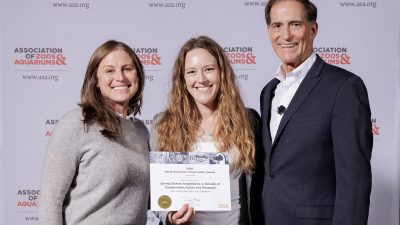
Yesterday we published a story about the same organization’s cats and the same zoo’s funding scope, and reached the same answer by the same route. For scale on the sector, the Association of Zoos and Aquariums reports that in 2025 its 235 accredited and certified facilities spent approximately $372.4 million on conservation across 139 countries, with no published breakdown of the African share.
A note on the species
On the IUCN Red List, the African savanna elephant, Loxodonta africana, is assessed as Endangered, the African wild dog, Lycaon pictus, as Endangered, and the lion, Panthera leo, as Vulnerable. Tsavo Trust states no category for any of them in this piece, so none of this is a correction. It is worth saying because an argument about where to put water is an argument about three threatened species at once.
Source: Tsavo Trust’s When we give wildlife water, what else do we change?, published September 11, 2026, and its Sand Dam Projects page, both read on October 5. The underlying studies from Kruger, Hwange, Zambezi, Chobe and Ruaha are summarized here as Tsavo Trust summarizes them. We did not open those papers, and the figures above are the trust’s rendering of them.
Quick answers
- What is a sand dam?
A low concrete wall built across a seasonal watercourse. It does not stop the river, it slows it enough that the sand the water carries settles behind the wall. When the rains end, water remains stored inside that bed of sand, shaded from evaporation and filtered by it. Elephants dig down to reach it and other animals drink from the holes they leave.
- How many sand dams has Tsavo Trust built?
Thirteen between 2019 and 2023, five in Tsavo East and eight in Tsavo West, with a plan for at least 50 over ten years and beyond. Building the first thirteen created temporary work for at least 30 people from communities bordering the parks, for at least seven months.
- What is a piosphere?
The ring of concentrated grazing, browsing and trampling around a permanent water point, most intense at the water and declining with distance. Research in Kruger National Park found particularly high densities of large herbivores within 500 meters of artificial drinking points.
- Why did Kruger close half its waterholes?
During the 1990s more than half of Kruger's artificial waterholes were closed, on the view that a dense permanent network was flattening natural variation and favoring the commonest water-dependent grazers. The results were not uniformly good either: some rare antelope populations continued to decline afterward.
- Does artificial water affect predators?
Yes. Work at Hwange National Park found lion predation concentrating around water, with strong selection for kill sites within two kilometers of water at Ngamo Pan. A 2025 study in Biological Conservation found African wild dogs separating from lions and hyenas in time rather than space, and that this separation grew stronger close to waterholes.
- So is providing water good or bad?
Neither, which is the point of the piece. Too little permanent water raises competition over food; too much concentrates encounters between competitors. The recommendation coming out of the Hwange work is to keep water provision varied across a landscape rather than to maximize or eliminate it.