On the morning of November 4, 2025, a search party from the Sheldrick Wildlife Trust spent more than an hour working through dense bush on the Wangalla Plains in Kenya’s Tsavo East before it found what it was looking for: an African savanna elephant calf barely a week old, distressed and pacing, sheltering among a herd of grazing plains game. One year later, that calf is a confident young elephant with a taste for dusting herself beside the water, and the Trust marked the anniversary on November 5 with an account of how she got there.
The Trust calls these anniversaries rescueversaries, and it publishes one for each orphan it pulls through. Wangalla’s is worth reading because the save turned on something that does not usually make it into a conservation story: one Keeper deciding not to go home.
What happened on the Wangalla Plains?
The search party found her deep in the bush, tucked in among a herd of zebra. The night before, lions had killed a buffalo nearby, and the Trust’s account suggests the orphan’s herd panicked in the confusion and left her behind. There were no elephants anywhere in the area by morning, which settled the question of whether she could be reunited, and the Kenya Wildlife Service called for a rescue.
Because she was so small, the extraction itself was straightforward. The team put a blanket over her head to cut down the stressful sights and sounds, drove her to the stockades at Voi, and waited for the Trust’s helicopter to fly her on to the Kaluku Neonate Unit. She was named Wangalla for the plains she was found on.
That she survived the night at all is the remarkable part. A calf that size is straightforward prey for every large predator that hunts that ground after dark.
Why is a neonate the hardest rescue to finish?
Getting an orphan out of the bush is the fast part. Keeping a days-old elephant alive for a year is the slow one, and the Trust is candid that every day of it is precarious.
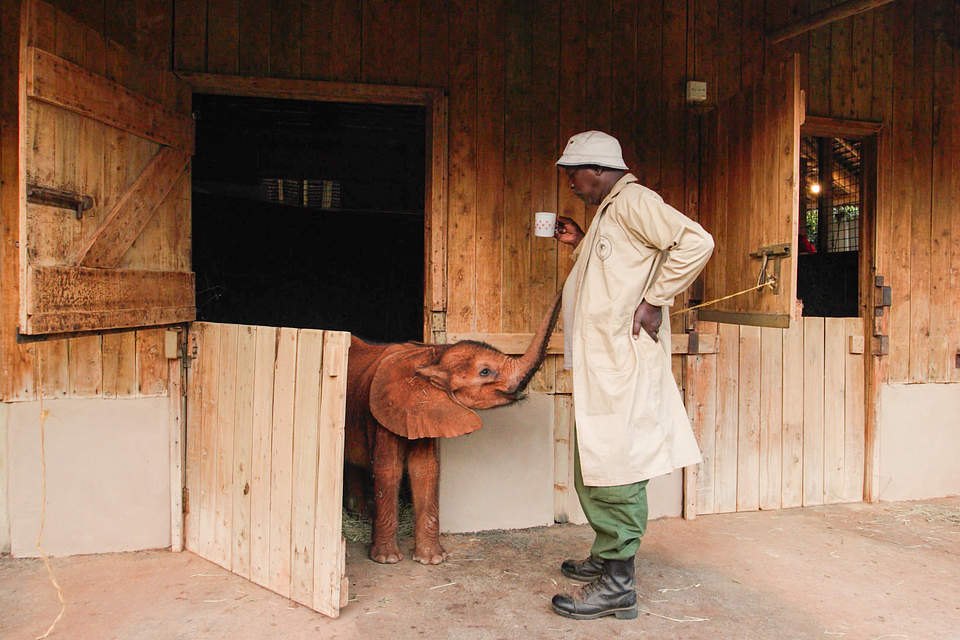
Wangalla’s hardest stretch was teething. She lost her appetite and her strength for several months, which in an animal this young is how things end. What carried her through was Misheck, one of the Trust’s most experienced Keepers, who took no time off for five months and spent the period coaxing her into sips of milk and hand-feeding her fresh greens. The Trust’s own verdict is blunt: she is alive because of him.
Who taught her to be an elephant?
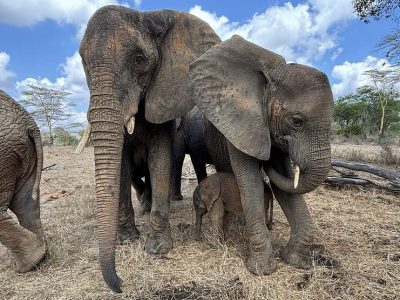
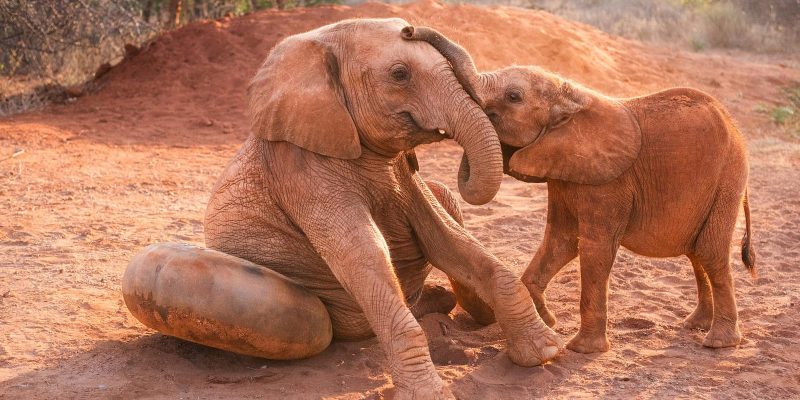
A human can keep a calf alive. Only another elephant can finish the job, and at Kaluku that work fell to Korbessa, an older orphan who took to Wangalla immediately and coaxed her out of her shell on daily walks into the bush. Two other orphans, Lamuu and Sibu, showed no interest at all, which is its own useful reminder that elephant nannying is a disposition rather than a reflex.
The interval between a calf being rescued and a calf being socially competent is visible in Wangalla’s year. In August a younger calf, Danisa, arrived, and Wangalla stopped being the baby of the herd. The two became inseparable, with Wangalla deciding where they browsed and Danisa following except at feeding time, when both of them shove to reach the milk first. When a third calf, Bumba, was introduced in the middle of October, Wangalla welcomed her. Danisa, newly displaced, did not.
Along the way Wangalla collected a set of habits the Trust clearly enjoys recording: standing in the middle of Kaluku’s resident vulturine guineafowl plucking grass while they peck around her, dusting herself at the edge of the pool belonging to a resident hippo called Musumbi, making a friend of a young one named Bumpy and trying to throw red dust over him, and wandering the compound after dark from Keeper to Keeper while they drink their evening chai.
What conservation status does the species carry?
The IUCN Red List lists the African savanna elephant, Loxodonta africana, as Endangered. Tsavo holds one of the largest remaining populations of the species. We are stating the category only: the Red List’s species pages answered with an access error from both of the machines we check from on the day this was written, so we are not printing an assessment date, criteria or population figure we could not open and read ourselves.
Worth noting for scale: a single orphan is not a population measure, and the Trust does not present it as one. What a rescueversary measures is whether one institution’s veterinary and husbandry pipeline works, start to finish, on the hardest case it gets.
Does any zoo or aquarium fund this work?
Not that we could verify. We looked for an accredited zoological institution behind the Sheldrick Wildlife Trust’s orphan program and did not find one. The Trust’s dedicated partners page returned a 404 when we checked it, and its main about page names no accredited zoo or aquarium. The Trust also publishes a position opposing the capture of infant elephants for captivity, which is a real tension in this story rather than something to write around, and we are not going to imply a connection that the organization itself has not made.
That matters because the expertise on display here is the same expertise zoos and aquariums spend careers building: neonate formula, round-the-clock feeding schedules, pain management, the judgment to know when a calf has stopped eating because of teeth rather than because it is dying. It is simply being applied by an organization that does not take zoo money. Our earlier piece on Murera’s second calf at Umani Springs traced the same funding question to the same answer.
Where is Wangalla now?
Still at Kaluku, still with Korbessa, and a few weeks short of her first birthday as an elephant rather than as a rescue. She now stands between the two youngest calves in the group while the nanny watches for trouble, which is roughly the job Korbessa was doing for her a year ago. The full account, with the Trust’s own photographs, is on the Sheldrick Wildlife Trust’s updates page.
Quick answers
- When was Wangalla rescued?
On the morning of 4 November 2025, on the Wangalla Plains in Kenya's Tsavo East. She was barely a week old. The Sheldrick Wildlife Trust published her first rescueversary account on 5 November 2026.
- How was she orphaned?
Lions killed a buffalo near where she was found the night before. The Trust's account suggests her herd panicked in the confusion and she was separated. No elephants were anywhere in the area by morning, so a reunion was not possible.
- What is a rescueversary?
The Sheldrick Wildlife Trust's term for the anniversary of an orphan's rescue. The Trust publishes one for each animal it brings through, which makes the anniversary a progress report rather than a birthday.
- Why is a neonate orphan so difficult to raise?
Teething is the usual crisis point. Wangalla lost her appetite and her strength for several months, and a Keeper named Misheck took no time off for five months, coaxing her into sips of milk and hand-feeding her fresh greens.
- What conservation status does the species carry?
The IUCN Red List lists the African savanna elephant, Loxodonta africana, as Endangered. We are giving the category alone, because the Red List species pages returned an access error from both machines we check from on the day this was written.
- Do any zoos or aquariums fund the Sheldrick Wildlife Trust?
Not that we could verify. The Trust's dedicated partners page returned a 404 when we checked it and its main about page names no accredited zoo or aquarium. The Trust also publishes a position opposing the capture of infant elephants for captivity.