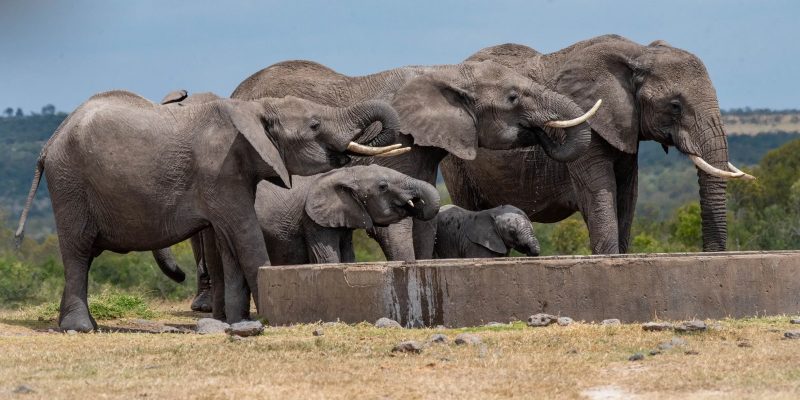
Ol Pejeta Conservancy has buried its water pipes three feet underground, which is deeper than the engineering requires. The depth is not about frost or traffic. It is about elephants, which will find a pipe carrying water across dry country and break it open to get at what is inside.
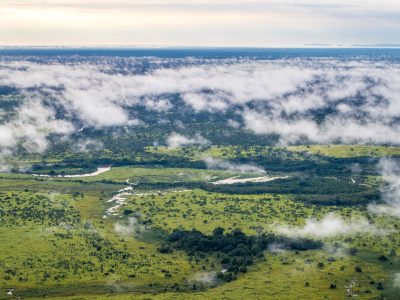
That detail is one of the more revealing lines in an account the Kenyan conservancy published on July 27, 2026, setting out where it has got to on a twenty-year Water Master Plan it adopted in 2019. The plan is not a conservation program in the usual sense. There is no species in it. It is pipework, boreholes, dams and meters, and it is the thing everything else on 90,000 acres of Laikipia depends on.
The problem was one river
For years Ol Pejeta drew most of its water from the Ngobit River, and the exposure that created ran in two directions at once.
Upstream, the conservancy controlled nothing: not the rainfall, not the land use, not the number of other users drawing from the same water. Downstream, communities depend on the Ngobit for their own supply and for rainfed agriculture, which meant that taking too much, or managing the abstraction badly, was not only a risk to Ol Pejeta. The question the conservancy says it put to itself was what happens if the river is not enough, and what could be done about it before a crisis forced the issue.
That was not a hypothetical. The Ngobit has run dry several times in recent years, which local accounts describe as a first in living memory.
What is actually being built
The answer was to stop depending on a single source. Four things are going in at once.
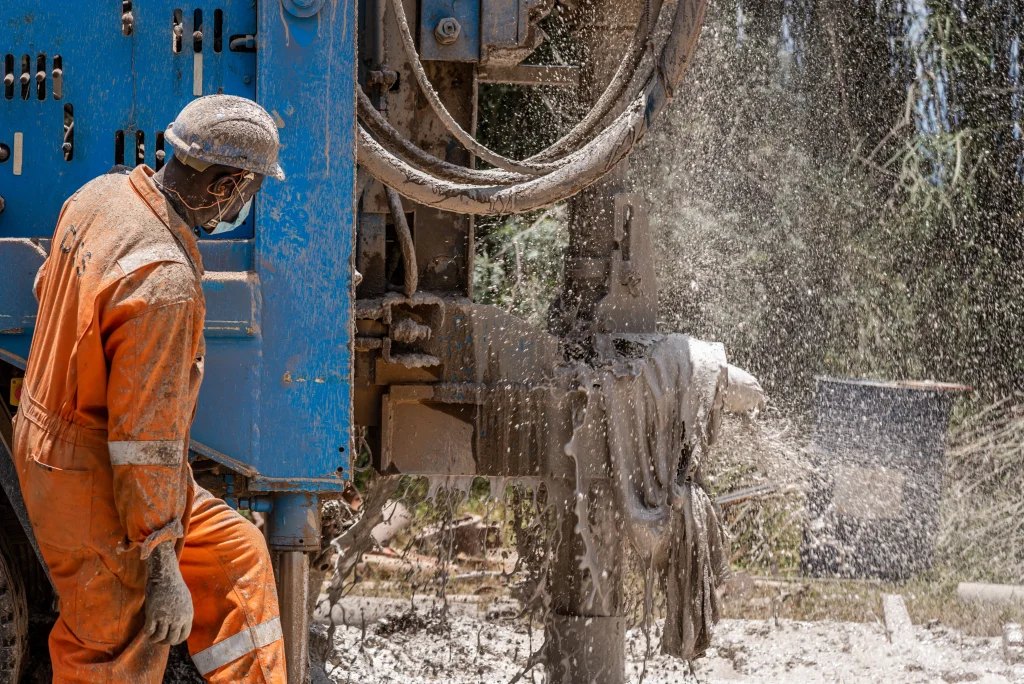
Boreholes. Existing boreholes are being rehabilitated and new ones drilled, which moves part of the supply underground where it is less exposed to a bad rainy season. The pumps run on solar, so they work through the day without grid power or diesel.
Dams. Old dams are being repaired and new ones built, which is a different strategy from the boreholes rather than a redundant one. A dam banks the surplus that falls in the wet season and holds it for the dry one. The conservancy gives a specific result: in February 2026, a month that would normally bring real water stress, it experienced none, and it attributes that largely to water banked behind dams.
Pipes. None of the stored water matters if it cannot reach an animal. The conservancy has built out a network moving water to storage tanks and to troughs across the property, and has set a target of replacing 60 kilometers of pipeline by the end of 2026. The three-foot burial depth is part of this: a pipeline an African savanna elephant can reach is a pipeline that leaks.
Meters. Smart meters and monitors are going in across the system to track levels in real time and flag damage or a blockage before it becomes a failure. On a network spread across a landscape this size, the early warning is most of the value.
Two constraints run through all of it. The abstraction is governed by regulatory limits, so the conservancy’s water security is not supposed to come at the expense of the people downstream, and every new building on the property, offices and guest lodges included, now has rainwater harvesting as standard. The stated principle is that a new structure should add to the water supply rather than only draw from it.
A note on the length of the plan
There is a small discrepancy in the published record worth flagging, since both numbers come from reputable places.
Ol Pejeta’s own July 2026 account calls this a twenty-year plan developed in 2019. The Grundfos Foundation, writing in December 2023 about a project it funded on the conservancy, described Ol Pejeta as having outlined “an ambitious 7-year water masterplan” covering additional boreholes and dams, pipeline upgrades and water recycling. The contents match; the horizon does not. We are going with the conservancy’s current wording, on the ordinary principle that the organization running the plan is the better authority on how long it runs, and noting the other figure so that a reader who meets it elsewhere knows where it came from.
Which zoos are paying for this?
We looked, and we could not verify any.
The named funder in the water program is the Grundfos Foundation, the Danish grant-making foundation attached to the pump manufacturer, which supported the solarization of the Ngobit borehole through Grundfos Kenya and its Community Engagement Grant. That project cut the conservancy’s diesel pumping from the river substantially and was framed around the 4,500 people living downstream. Samuel Mutisya, Ol Pejeta’s head of research and conservation, put the case for it in terms of the animals: “Water is the lifeblood of our Conservancy. Access to water impacts the distribution and health of animals, especially the Critically Endangered black rhino.”
Ol Pejeta’s own partners page names no accredited zoo or aquarium, and nothing in the published material on the water plan attributes any part of it to a zoological institution. That is a finding rather than a gap, and it is worth being precise about its scope: it means no zoo funding behind this water program, not that no zoo has a relationship with Ol Pejeta. The point stands only as far as the evidence does.
For the sector-wide figure: the Association of Zoos and Aquariums reports that in 2025 its 235 accredited and certified facilities spent approximately $372.4 million on conservation across 139 countries. No published breakdown isolates the African share, so we are not going to estimate one.
Why infrastructure is the story
Conservation coverage gravitates to animals, and water pipes do not photograph like an African savanna elephant. But a conservancy is in the end a place, and a place in Laikipia either has water in the dry season or it does not. The February 2026 result is the kind of evidence this sort of plan produces: not a headline, just a month in which nothing went wrong that normally would have.
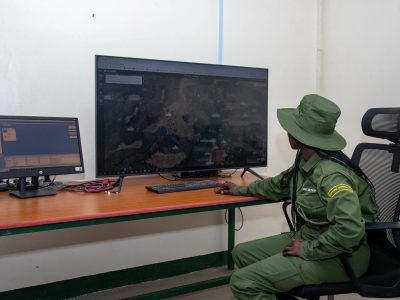
It also sits alongside the other quiet system Ol Pejeta has been building for roughly the same length of time, the one that watches the property rather than waters it. We covered that here: the room where Ol Pejeta watches 90,000 acres. Between the two of them, a fair amount of what the conservancy has spent the last seven years on is plumbing and software, which is an unglamorous answer to the question of what modern conservation management actually consists of, and probably the right one.
Quick answers
- Why does Ol Pejeta bury its water pipes three feet deep?
To keep elephants off them. An elephant that finds a pipe carrying water across dry country will break it open, so the conservancy buries the network deep enough that they cannot reach it.
- What is the Ol Pejeta Water Master Plan?
A twenty-year plan adopted in 2019 to end the conservancy's dependence on the Ngobit River, covering solar-pumped boreholes, repaired and new dams, a piped distribution network and real-time metering.
- Why was depending on the Ngobit River a problem?
Ol Pejeta controlled nothing upstream, and communities downstream rely on the same river for their water and for rainfed agriculture. The river has run dry several times in recent years.
- Has the plan produced a measurable result yet?
The conservancy says that in February 2026, a month that would normally bring real water stress, it experienced none, and attributes that largely to water banked behind its dams.
- How much pipeline is being replaced?
Ol Pejeta set a target of replacing 60 kilometers of pipeline by the end of 2026.
- Do any zoos or aquariums fund this work?
Not that we could verify. The named funder in the water programme is the Grundfos Foundation, which paid for solarizing the Ngobit borehole, and Ol Pejeta's own partners page names no accredited zoo or aquarium.