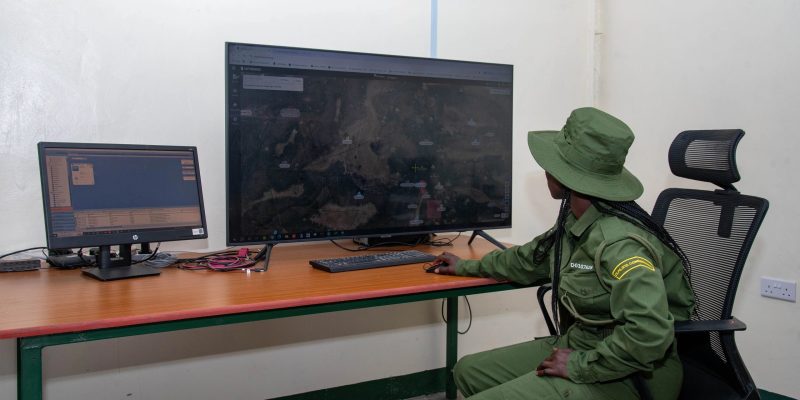
A ranger sits at a desk in a radio room at Ol Pejeta Conservancy in Laikipia, Kenya, in front of a screen showing a satellite map covered in small icons. Each icon is a thing that happened: a vehicle, a collared animal, a camera that saw movement, a report typed in by someone on foot. The conservancy calls the room its Digital Operations Room, and what it is doing there is watching roughly 90,000 acres at once.
In an account published on 27 July 2026, Ol Pejeta set out how that room works and what it is for. It is the clearest description the conservancy has given of a program it has been building since 2019, and it is worth reading as a straight answer to a question most conservation technology coverage skips: what is actually on the screen?
What is EarthRanger?
The platform at the center of it is called EarthRanger, and the name does real work later, so it is worth defining once. EarthRanger is a piece of software built specifically for protected areas. It takes feeds that would otherwise sit in separate places, collar data, camera traps, vehicle trackers, sensor alerts and messages from rangers in the field, and puts them on one live map so that the people making decisions are looking at the same picture at the same time.
It is not a wildlife product in origin. EarthRanger comes out of the Allen Institute for AI, the Seattle research institute founded by Paul Allen, and it is used across a large number of African protected areas. Ol Pejeta set up an in-house Conservation Tech Lab with Fauna & Flora to test tools of this kind before deploying them, which is a more disciplined arrangement than most conservancies manage.
The practical effect is a change in tempo. A fence sensor trips, a thermal camera registers a heat signature in the dark, a ranger sends a position, and all three land in the same place within seconds rather than in three separate radio conversations. The conservancy’s framing is that traditional patrols alone cannot give a complete picture of an area this size, and that the future lies in combining what rangers know with what sensors can see.
What the system is guarding
The reason for the equipment is the inventory. In its 27 July account the conservancy described itself as home to 190 critically endangered eastern black rhinos, the last two northern white rhinos, elephants, Jackson’s hartebeest, Grevy’s zebras, lions and chimpanzees. Those are the conservancy’s figures on that date, and we are reporting them as such rather than as a statement about today.
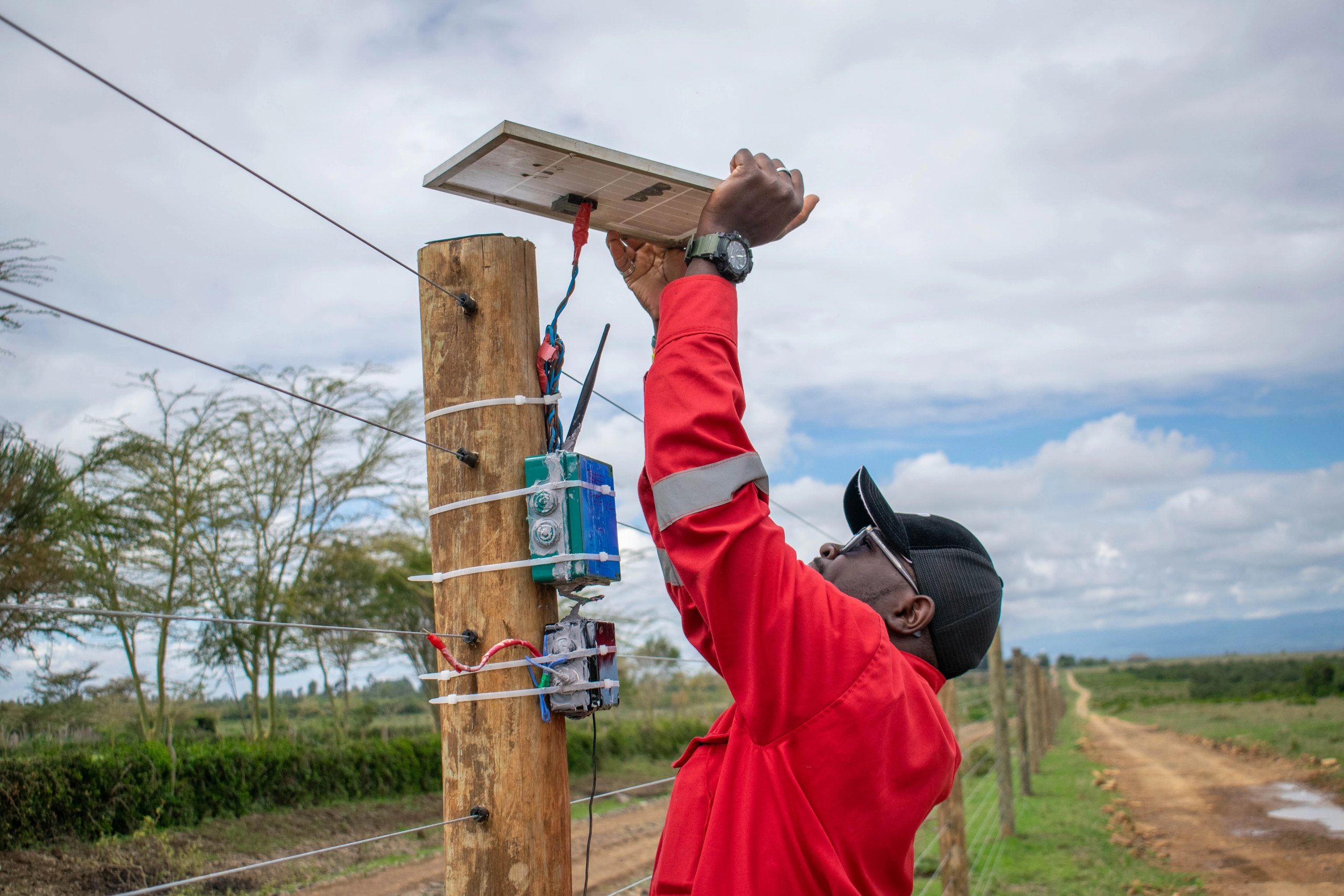
Rhino horn still carries a high price on illegal markets, which is the pressure the anti-poaching apparatus exists to meet. Alongside it the conservancy lists habitat loss, human-wildlife conflict and illegal hunting, including bushmeat demand in some areas. Those are different problems and they want different instruments, which is part of why the toolkit has grown the way it has: thermal cameras mounted on vehicles, trap cameras watching wildlife corridors, a fence monitoring system that reports where the wire was crossed.
The black rhino figure is worth a note of its own, because this is one of the cases where a facility’s wording is exactly right. The IUCN Red List assesses the black rhino, Diceros bicornis, as Critically Endangered on an assessment made on 14 January 2020, so “critically endangered” here is the Red List’s own category rather than a loose adjective. The eastern black rhino, Diceros bicornis michaeli, is the subspecies Kenya holds.
The two numbers do not divide into each other, and it is worth saying why. The Red List puts the global black rhino population at 3,142 mature individuals, with the trend recorded as increasing. Ol Pejeta’s 190 is a count of animals on its own ground, calves included. Those are different quantities, so the tempting percentage is not one we are going to print. What can be said without arithmetic is that a single Kenyan conservancy holds a share of a global population that is counted in the low thousands.
Which zoos are paying for this?
We looked, and the answer is that we could not verify any.
EarthRanger is the Allen Institute’s. The Conservation Tech Lab partner Ol Pejeta names is Fauna & Flora, a conservation NGO rather than a zoological institution. Neither the conservancy’s account of the program nor EarthRanger’s own published material on the Ol Pejeta deployment names an accredited zoo or aquarium as a funder of this work.
That is a finding rather than a gap. Most of the conservation stories in this region are like this: the organization doing the work is a conservancy, an agency or an NGO, and the credit line has no zoo in it. Where the chain does hold we say so, as with the zoo-bred herds underwriting Kenya’s mountain bongo recovery plan, which is unusually easy to trace precisely because it is unusual.
For the sector-wide number: the Association of Zoos and Aquariums reports that in 2025 its 235 accredited and certified facilities spent approximately $372.4 million on conservation across 139 countries. No published breakdown isolates the African share, so we are not going to estimate one.
The part that is easy to oversell
A room full of screens photographs well, and conservation technology coverage tends to stop at the photograph. The honest version is narrower. What Ol Pejeta has built is a way of getting information to one place quickly, which shortens the gap between something happening and somebody deciding what to do about it. It does not patrol anything. The conservancy’s own framing keeps the rangers in the sentence, and so should ours: the system is useful because there are people to send.
Quick answers
- What is EarthRanger?
EarthRanger is software built for protected areas. It brings collar data, camera traps, vehicle trackers, sensor alerts and ranger field reports onto one live map so decisions are made from a single picture. It comes out of the Allen Institute for AI.
- How much ground does Ol Pejeta monitor?
The conservancy describes its Digital Operations Room as monitoring a landscape of approximately 90,000 acres.
- What animals does Ol Pejeta say it holds?
In its 27 July 2026 account the conservancy listed 190 critically endangered eastern black rhinos, the last two northern white rhinos, elephants, Jackson's hartebeest, Grevy's zebras, lions and chimpanzees.
- Is the black rhino really critically endangered?
Yes. The IUCN Red List assesses the black rhino, Diceros bicornis, as Critically Endangered on an assessment made on 14 January 2020, so the conservancy is using the Red List category correctly.
- What hardware feeds the system?
Thermal cameras mounted on vehicles, trap cameras watching wildlife corridors, and a solar-powered fence monitoring system that reports where the wire was crossed.
- Do any zoos or aquariums fund this programme?
None that we could verify. EarthRanger comes from the Allen Institute for AI and the Conservation Tech Lab partner Ol Pejeta names is Fauna & Flora, which is a conservation NGO rather than a zoological institution.