
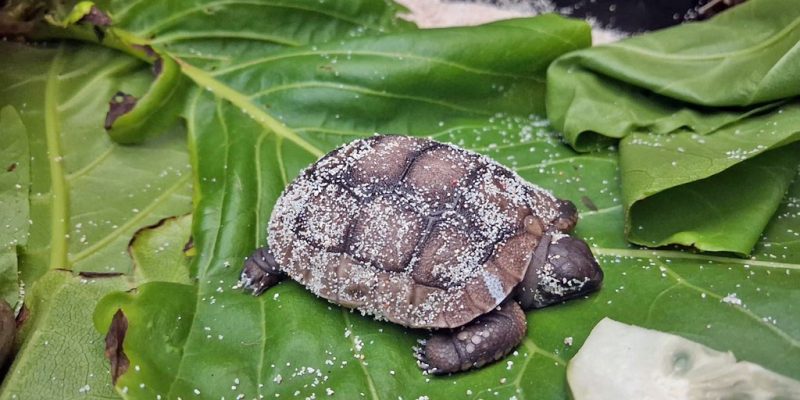
Eleven Aldabra giant tortoises hatched on Cousin Island Special Reserve over the weekend of October 31 to November 1, out of a clutch of sixteen eggs. Nature Seychelles announced the hatching on November 6. The number that matters is not eleven, though. It is one.
Over the past few years the organization has monitored more than fifteen giant tortoise nests on Cousin. Exactly one of them hatched successfully in the wild.
Why are the eggs failing?
That ratio is what turned a monitoring program into an investigation. Working with the Seychelloise scientist Alessia Lavigne, the Nature Seychelles team opened eggs from nests that had produced nothing and found something more useful than sterile eggs: some had been fertilized, and showed signs of early embryonic development. The embryos had simply stopped before they were ready to hatch.
A fertilized egg that quits partway through is a different problem from an egg that was never viable. It points at the conditions in the nest rather than at the animals, which is a problem you can test.
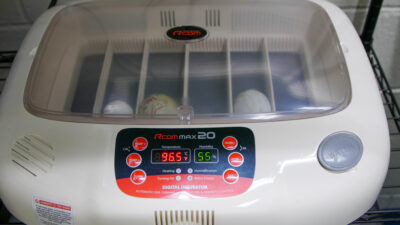
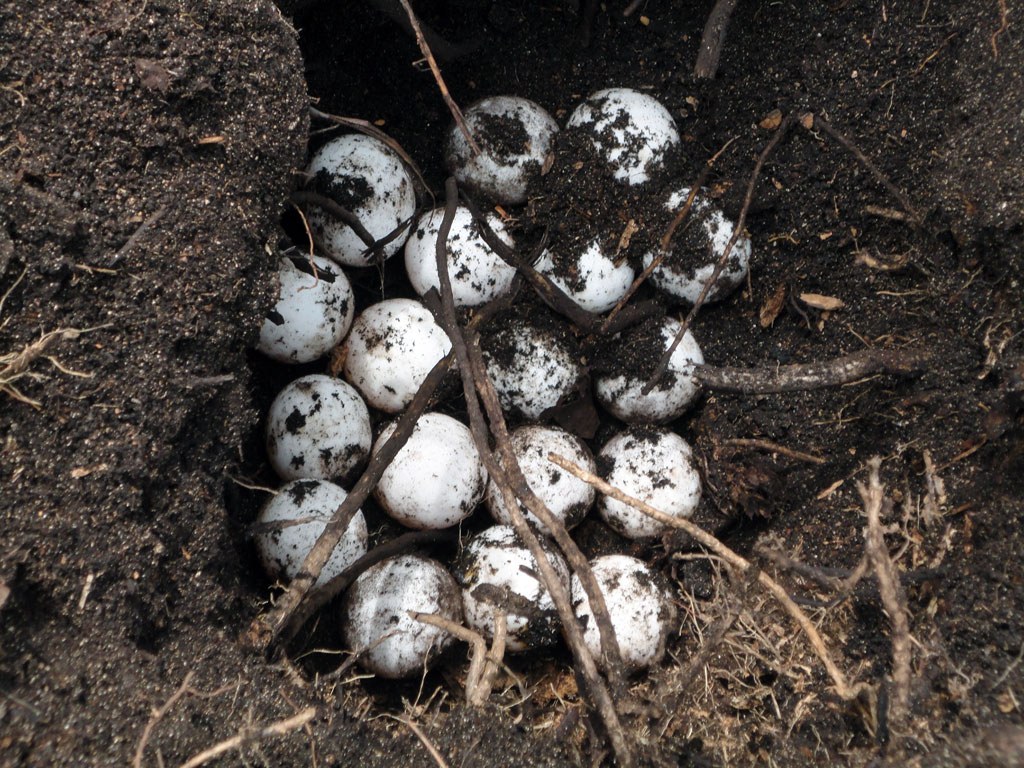
So the team began lifting eggs from selected nests and incubating them in a controlled hatchery, varying the conditions to see what the eggs respond to. Three nests have gone into the investigation so far. Two failed outright. A third held one egg that showed very early development before it, too, stopped.
The variable this time was depth
For the batch that has just hatched, the team set the eggs at a shallower depth in the sand than before. Eleven of the sixteen came out, and two or three more are still expected.
The Science Officer running the work, Chris Tagg, is continuing to collect nests and record hatching rates, so this is one result in a series rather than an answer. Nature Seychelles has been careful to say the reasons for the island’s low hatching success are not yet fully understood. But a shallower nest producing eleven live hatchlings, against a wild record of one nest in fifteen, is the kind of result that tells a team where to look next.
Daily weighing, and a shell that has to close
The hatchlings are at the island’s field center now, where they are weighed and measured every day so the team can track growth. Volunteers do much of the feeding and daily observation under Tagg’s direction, on fresh water and vegetation including hibiscus, morning glory and young leaves. They are handled as little as possible, because their shells are still soft.
That softness is also what sets the release date. The plastron, the underside of the shell, is not sealed at hatching, and it has to close completely before a young tortoise can be turned loose among the free-roaming adults on Cousin. The last controlled hatching ran into a drought and the hatchlings were held longer than planned. This time recent rain has brought the island’s vegetation back, so the conditions waiting for them are good.
Which zoos pay for this?
None that we can find, and we looked. Nature Seychelles publishes a partners page, and it names government ministries and agencies, overseas universities, and membership in BirdLife International, the IUCN and the Global Ocean Forum. Its current funding partners are listed as project consortia: the Reef Rescuers coral restoration work and the LEAP project on coastal and marine resilience in the Western Indian Ocean. No accredited zoo or aquarium appears anywhere on it.
That is worth saying plainly rather than leaving blank. Accredited zoos and aquariums are a serious source of field money, and the Association of Zoos and Aquariums reports that in 2025 its 235 accredited and certified facilities spent approximately $372.4 million on conservation across 139 countries. No published breakdown isolates how much of that reaches Africa or the Indian Ocean islands, and this particular hatchery is not part of it as far as we can establish. Cousin Island’s tortoise work is being paid for by other people.
We have covered Nature Seychelles on this same island before, when six knitters produced a hawksbill turtle for its education program.
A note on the Red List
We would normally give the IUCN Red List category for the species here, and we are not going to, because we could not verify one. The Red List’s species pages returned an access error from both of the machines we check from on the day this was written, and the category republished through GBIF for Aldabrachelys gigantea comes back as Not Evaluated with no IUCN taxon identifier attached. Older assessments exist under the name Geochelone gigantea, but we have not been able to open one, and a citation we have not opened is not a citation. The honest version is that we do not currently have a category we can stand behind for this animal.
What is not in question is the arithmetic on Cousin: one wild nest in more than fifteen, and a hatchery that has now produced eleven animals in a weekend.
Source: Nature Seychelles, November 6, 2026.
Quick answers
- How many giant tortoise eggs hatched on Cousin Island?
Eleven of sixteen, over the weekend of October 31 to November 1, 2026, with two or three more still expected from the same clutch. Nature Seychelles announced the hatching on November 6.
- Why is Nature Seychelles incubating tortoise eggs at all?
Because the wild nests are failing. The organization has monitored more than fifteen giant tortoise nests on Cousin over the past few years and only one hatched successfully in the wild.
- What did they find inside the failed eggs?
Working with the Seychelloise scientist Alessia Lavigne, the team found that some eggs from unsuccessful nests had been fertilized and showed early embryonic development, then stopped before hatching. That points at nest conditions rather than at the adults.
- What was different about this batch?
The eggs were set at a shallower depth in the sand than in earlier trials. Three nests have gone into the investigation so far: two failed outright, and a third held one egg that developed very early and then stopped.
- When will the hatchlings be released?
Once the plastron, the underside of the shell, has sealed completely. Until then they stay at the island field centre, weighed and measured daily and handled as little as possible. Recent rain has restored the island vegetation, so conditions are better than at the last controlled hatching, which ran into a drought.
- Do any zoos or aquariums fund this work?
Not that we could verify. Nature Seychelles publishes a partners page naming government ministries, overseas universities, BirdLife International, the IUCN and the Global Ocean Forum, and lists the Reef Rescuers and LEAP projects as current funding partners. No accredited zoo or aquarium appears on it.
- What is the species conservation status?
We could not establish one we are willing to print. The IUCN Red List species pages returned an access error from both machines we check from, and the category republished through GBIF for Aldabrachelys gigantea comes back as Not Evaluated with no IUCN taxon identifier. Older assessments exist under the name Geochelone gigantea and we were not able to open one.