Two Israeli marine inspectors put their heads underwater off the western Galilee coast last week and found dozens of marbled electric rays gathered together on the seabed. The Israel Nature and Parks Authority published the sighting on October 15 and asked the public to come and look at it from a distance.
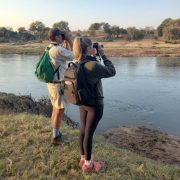
The place is the shallow water off Shavei Zion beach. The inspectors, Shai Kabsa and Ziv Nader of the authority’s marine unit, were snorkeling on a routine monitoring run. What they found was not a single ray but an aggregation: dozens of animals swimming close to the bottom, documented over a long stretch of time, moving alongside one another, swapping position and at moments packing densely together. One individual carried white markings and stood out among the rest.
Aggregations of this size are not what a monitoring dive usually turns up, and nobody is yet claiming to know why it happened.
What the inspectors actually saw
Kabsa’s account of the dive is the part worth reading in full.
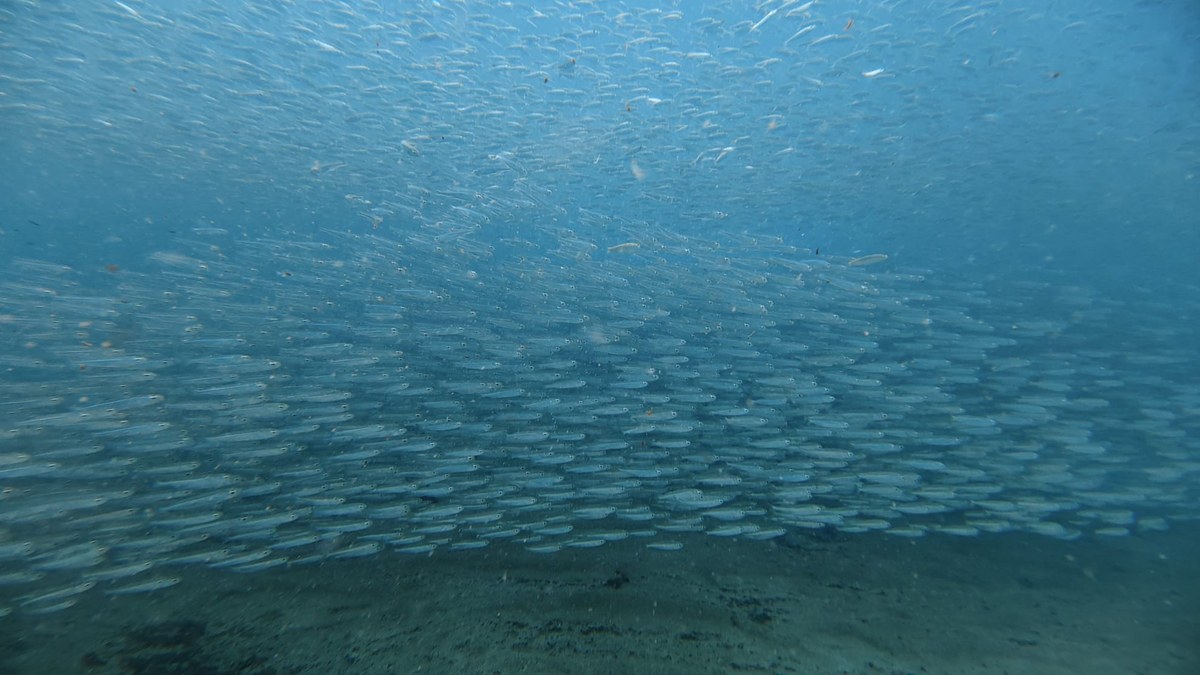
יש רגעים שבהם הטבע גורם לך לשכוח מכל העולם. הכנסתי את הראש למים, ובהתחלה ראיתי בעיקר להקות של דגיגים קטנים. המשכתי עוד קצת, ופתאום, כאילו מישהו הרים מסך, נחשפה הקרקעית ועשרות אגפיות היו ממש מתחתיי. צפיתי בשקט ולא רציתי לצאת מהמים. הקרקעית כולה נראתה כאילו היא מתעוררת לחיים. לפעמים אנחנו חושבים שכדי לראות פלאי טבע צריך לטוס רחוק, אבל הם נמצאים ממש כאן, בים התיכון שלנו.
“There are moments when nature makes you forget the whole world. I put my head in the water and at first I mainly saw schools of little fish. I went on a bit further and suddenly, as though someone had lifted a curtain, the bottom was revealed and dozens of rays were right underneath me. I watched quietly and did not want to get out of the water. The whole seabed looked as if it was waking up. Sometimes we think that to see natural wonders you have to fly far away, but they are right here, in our Mediterranean.” Translated from the Hebrew by ZooReviews.
Why a flat fish on the sand is easy to miss
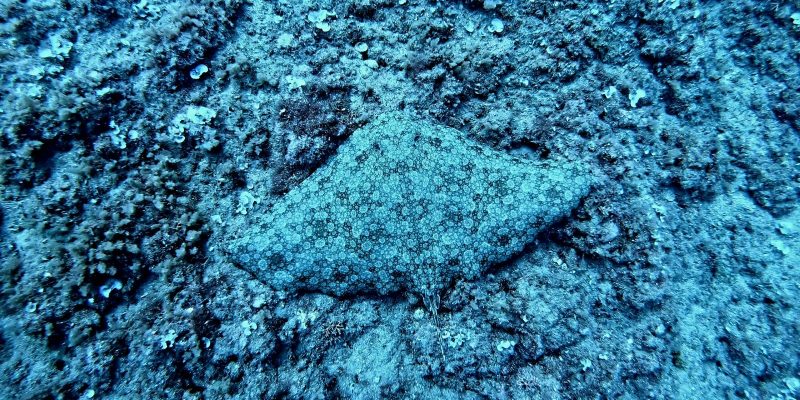
A marbled electric ray is built to be overlooked. The authority describes a flat, broad body and pectoral fins that look like wings when the animal moves, and a diet taken from the animals living in the seabed itself, in the sand and the marine substrate. The mottled rings that give the species its name are a close match for encrusted rock, which is exactly what the sighting photograph shows: an animal that only becomes a ray once you have noticed it.
Dr Ruthy Yahel, who heads marine ecology in the authority’s science division, makes the taxonomic point that reframes the sighting. Rays are cartilaginous fish, the group that also contains the sharks, and every cartilaginous fish in Israel is protected.
Her second point is about reproduction, and it is the reason the aggregation matters. Electric rays are not mammals but they bear live young, after a gestation of roughly half a year, and they produce only a small number of offspring in each breeding cycle. Populations built that way are unusually sensitive to losses and unusually slow to recover from them.
That is why the authority is treating the possibility of courtship as a reason for caution rather than a reason for a crowd. It is plausible that the gathering is connected to breeding, Yahel says, but further observations are needed before anyone can say so.
Come and look, from a distance
The authority has not closed the site. It has asked people to behave at it.
מי שמגיע לצפות באגפיות מתבקש לא לרדוף אחריהן, לא לגעת בהן ולא לנסות להתקרב אליהן בכוח. שמרו מרחק ותנו להן לבחור אם להתקרב או להתרחק. אם אכן מדובר בהתקבצות הקשורה לחיזור ולרבייה, חשוב במיוחד לא להפריע. הטבע לא צריך שניגע בו כדי להרגיש אותו, לפעמים מספיק לצוף בשקט ולהתבונן.
“Anyone coming to watch the rays is asked not to chase them, not to touch them and not to try to force their way closer. Keep your distance and let them choose whether to come nearer or move off. If this really is a gathering connected to courtship and breeding, it is especially important not to disturb it. Nature does not need us to touch it in order to feel it. Sometimes it is enough to float quietly and watch.” Ziv Nader, translated from the Hebrew by ZooReviews.
The marine unit’s ordinary week is patrol and enforcement, monitoring and documenting marine animals, treating injured wildlife and talking to the public, against pressure from fishing, habitat damage and human disturbance. The same unit’s work shows up on this site regularly: in October it released eight rehabilitated sea turtles whose problem had been plastic bags. The authority asks anyone who finds a wild animal injured or in distress to call its hotline on *3639 rather than intervene.
One figure we could not confirm
Yahel is quoted citing the IUCN Red List as listing the marbled electric ray as Endangered globally and Critically Endangered in the Mediterranean. We default to the assessment over anyone’s summary of it, and here we could not open the assessment: the Red List blocks automated access. The nearest reading we could open is FishBase, which renders the current global listing as Vulnerable, assessed 31 August 2020, citing Red List version 2025-2. An undated IUCN Mediterranean office chapter puts the regional category lower still. So the categories in circulation for this species do not agree with one another, and we are reporting the authority’s wording as the authority’s wording rather than printing a category of our own. The protection does not turn on the label in any case: Israeli law protects every cartilaginous fish in the country’s waters, whatever the Red List says this year.
Which zoo is behind this
None that we can find, and that is the honest answer rather than a missing paragraph. This was a government monitoring dive by a state authority’s own inspectors, published by that authority, with no partner organization named anywhere in it. Israel has an accredited aquarium with a Mediterranean gallery, the Gottesman Israel Aquarium in Jerusalem, and nothing connects it to this sighting; naming it here would be inventing a link to fill a field. For scale on what the sector does spend, the Association of Zoos and Aquariums reports that 235 accredited and certified facilities put approximately $372.4 million into conservation across 139 countries in 2025. No published breakdown isolates any regional share of that, and we are not going to estimate one.
Source: Israel Nature and Parks Authority, report of 15 October 2026.
Quick answers
- What did the inspectors find off Shavei Zion?
Dozens of marbled electric rays swimming close to the seabed in shallow water off the western Galilee coast, moving alongside one another and at times packing densely together. Shai Kabsa and Ziv Nader of the Israel Nature and Parks Authority marine unit documented them while snorkeling on a routine monitoring run, and the authority published the sighting on 15 October 2026.
- Why were the rays gathered together?
Nobody is saying yet. Dr Ruthy Yahel, who heads marine ecology in the authority’s science division, says it is plausible the aggregation is connected to courtship and breeding, but that further observations are needed before anyone can conclude that.
- Are marbled electric rays protected in Israel?
Yes. Rays are cartilaginous fish, the group that also contains sharks, and every cartilaginous fish in Israel is protected under national law regardless of its global Red List category.
- What is the species’ IUCN Red List category?
The categories in circulation do not agree. The authority is quoted citing Endangered globally and Critically Endangered in the Mediterranean. FishBase, rendering Red List version 2025-2, gives Vulnerable from an assessment dated 31 August 2020. We could not open the Red List assessment itself, which blocks automated access, so we report the authority’s wording as its own.
- How do electric rays reproduce?
They bear live young after a gestation of roughly half a year, and produce only a small number of offspring in each breeding cycle. That makes the populations unusually sensitive to losses and slow to recover from them.
- Can the public go and watch?
The authority has not closed the site, but it asks people not to chase the rays, not to touch them and not to force their way closer. Keep your distance and let the animals choose whether to approach. If the gathering is connected to breeding, disturbance matters more than usual.
- What should I do if I find an injured marine animal in Israel?
Keep your distance and call the Israel Nature and Parks Authority hotline on *3639 rather than intervening yourself.