
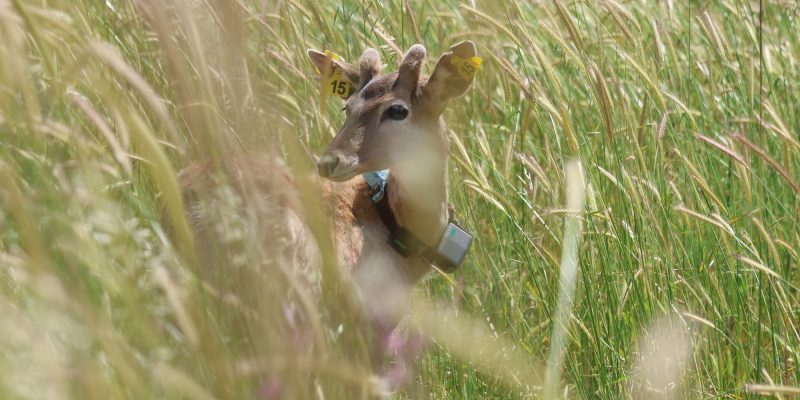
Nine Persian fallow deer born at the Tisch Family Zoological Gardens in Jerusalem, better known as the Biblical Zoo, walked out of a transport crate and straight into the Judean Hills in May 2026. There was no acclimation pen, no soft landing, no weeks of getting used to the view. Two females and seven males, all between one and two years old, went directly into the Nahal Dolev Nature Reserve, and the zoo published its account of the release in July.
What is a hard release, and why use one here?
The Israel Nature and Parks Authority ran the release alongside the zoo, and its ecologist Nadav Ganot described it as the second at Nahal Dolev to use what the field calls a hard release. In a soft release, animals spend a settling-in period inside a fenced acclimation enclosure at the site, so they learn the water sources and the terrain before the gate opens. A hard release skips that step entirely and puts the animals into open country on day one. It asks more of the animal and less of the budget, and for a species that has already produced wild-born generations nearby, it is a bet that the deer will find their own way.
The choice of site is the more interesting decision. Earlier Judean Hills releases went into the Nahal Sorek reserve using the soft method. Moving to Nahal Dolev, Ganot said, was meant to establish a second population center in the Judean Hills while keeping it close enough to stay connected to the Sorek animals. He put the current Judean Hills population at roughly 110 individuals.
That is the mechanism worth holding on to: this is not a bigger release, it is a second address. A single cluster of animals in one valley is one bad year away from trouble. Two clusters within walking distance of each other are a population.
The zoo is not a donor here. It is the breeding core.
We look for the accredited zoological institution behind every conservation story in this region, and it is usually somewhere off to the side, writing checks to a field organization. Not this time. The deer released at Nahal Dolev were born in the breeding herd at the Jerusalem Biblical Zoo, and the zoo’s chief veterinarian, Dr. Nili Avni-Magen, is one of the two people quoted in the announcement. The animals, the veterinary work and the follow-up monitoring are all the zoo’s.
Avni-Magen described tracking the released deer for several years with trail cameras and GPS collars, and said the part that moves her is seeing wild-born calves, which she called the next generation of the zoo’s own mothers. Her hope, she said, is that the joint effort returns the species to the Israeli landscape. The original Hebrew reads: “אנחנו ומלווים אותם כבר מספר שנים בעזרת מצלמות מעקב, איסוף שדרים שמגיעים מקולרי ה-GPS שלהם ומתרגשים לראות את הצאצאים ילידי הטבע, דור ההמשך של האימהות שלנו.” In English: “We have been accompanying them for several years with the help of monitoring cameras and collecting transmissions from their GPS collars, and we are excited to see the wild-born offspring, the next generation of our mothers.” The translation is ours.
No other accredited zoo or aquarium is named anywhere in the release, and we did not find one behind this work. The chain here is short because it does not need to be long. Compare the scimitar-horned oryx now walking around Chad, where the zoo money runs through an organization a zoo had to invent first.
How the herd got to Jerusalem
The founding animals arrived by air. On December 8, 1978, four female Persian fallow deer were flown from Iran to Israel to join males already transferred, and the zoo describes the airlift as a gesture of friendship between the brother of a Persian sheikh and staff at the Nature and Parks Authority. Transfers from the zoo’s breeding program to nature reserves began in 1996. The first deer went into the wild in the Jerusalem hills in the summer of 2005.
The larger success is farther north. Around 200 Persian fallow deer now live around the Kziv River in the Western Galilee, which the zoo calls the largest wild herd of the species anywhere. Set against that, 110 animals in the Judean Hills is a young population, and nine more is a real percentage of it.
What the Red List actually says
The IUCN Red List assesses the Persian fallow deer, Dama mesopotamica, as Endangered, listed under criterion D. That criterion is worth a sentence, because it is doing something specific: it flags a species whose population is simply very small, rather than one that is currently crashing. The two are different problems. A tiny population can be perfectly stable and still be one fire, one disease outbreak or one bad decade from disappearing, which is precisely the argument for a second site at Nahal Dolev.
Two caveats on that listing, offered in the spirit of reading an assessment as the dated document it is. It was last assessed on July 25, 2015, by Werner, Rabiei, Saltz, Daujat and Baker, with an errata version published in 2016, so it is a decade old. And the Red List records the population trend as increasing. The zoo’s announcement claims no category at all, which is the honest way to handle a species whose numbers have moved since anyone last checked.
The nine deer at Nahal Dolev are wearing collars, so somebody in Jerusalem is watching the dots move across the Judean Hills right now. If the last thirty years are any guide, the interesting news will be the calves nobody released.
Source: the Tisch Family Zoological Gardens’ announcement, 9 fallow deer released into the wild in May 2026, published July 13, 2026, with additional background from the zoo’s Persian fallow deer species page and the IUCN Red List assessment.
Quick answers
- How many Persian fallow deer were released, and where?
Nine, two females and seven males, into the Nahal Dolev Nature Reserve in the Judean Hills in May 2026. All were born in the breeding herd at the Tisch Family Zoological Gardens in Jerusalem and were between one and two years old.
- What is the difference between a hard release and a soft release?
A soft release gives animals a settling-in period inside a fenced acclimation enclosure at the site before the gate opens. A hard release puts them into open country on day one. Nahal Dolev is the second hard release at that reserve.
- Why move releases from Nahal Sorek to Nahal Dolev?
To create a second population center in the Judean Hills while keeping it connected to the existing Nahal Sorek animals. Israel Nature and Parks Authority ecologist Nadav Ganot puts the Judean Hills population at about 110 individuals.
- Which zoos fund the Persian fallow deer reintroduction?
The Tisch Family Zoological Gardens is itself the zoological institution behind it, holding the breeding herd and running the monitoring with the Israel Nature and Parks Authority. No other accredited zoo or aquarium is named in the release.
- How endangered is the Persian fallow deer?
The IUCN Red List assesses Dama mesopotamica as Endangered under criterion D, which flags a very small population rather than a declining one. It was last assessed on July 25, 2015, and the recorded population trend is increasing.