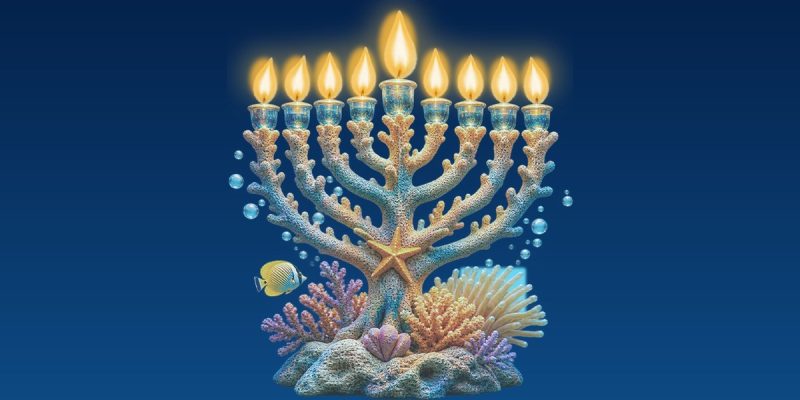
The Coral World Underwater Observatory Marine Park in Eilat is running an eight day Hanukkah program from 4 to 12 December, and the whole of it is included in the regular admission ticket. There is no separate booking, no add-on fee and no advance registration. The park is open 9:00 to 17:00 across the run.
What is actually on, and when
The spine of the program is a daily 14:00 candle lighting at the entrance plaza, with doughnuts handed out to everyone. On Saturdays the candles are not lit and the doughnuts are handed out anyway. Around that, the park has scheduled a different thing each day, and most of them are the kind of small, hands-on activity that gives a family a reason to stay past lunch:
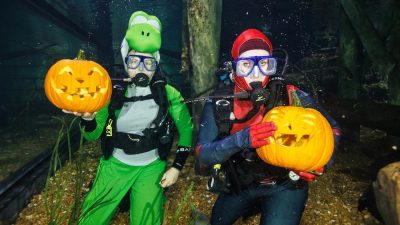
- Meet a diver, beside the shark pool, 11:10 on 7, 9 and 11 December. One of the park’s dive team surfaces and answers questions about working underwater.
- Hologram workshop, 13:30 from 5 to 12 December, at the deep-sea creatures display, building a hologram based on the animals of the deep.
- The Little Mermaid, a children’s play, 13:45 on 7 December, staged at the shark pool.
- Lantern making, 11:30 to 14:00 on 9 December, in the restaurant.
- Painting river stones, 11:30 to 14:00 on 6 December, with a wish left at the park’s wishing tower.
- Face painting as a fish, an octopus or a turtle, 11:30 to 14:00 on 8, 10 and 11 December.
- A craft corner, open all day every day from 4 to 12 December.
Staging a children’s play at the shark pool is a choice we would like to see more of. It puts a family in front of the animals for the length of a performance, in a spot they might otherwise walk past in ninety seconds.
Why this park is worth knowing about
Coral World is where the land-based underwater observatory was invented. The park says its first tower went up in 1974 and the second, larger one in 1991, and that the attraction opened in 1975 as the first land-based underwater tourist attraction, built by the Kahn family after diving trips in Eilat convinced them that people would pay to see a coral reef without getting wet. The towers have no nets around them. The fish on the reef outside the windows are there because they choose to be, which is an unusual thing for an aquarium to be able to say about its main exhibit.
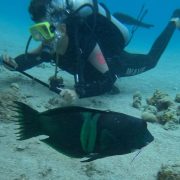
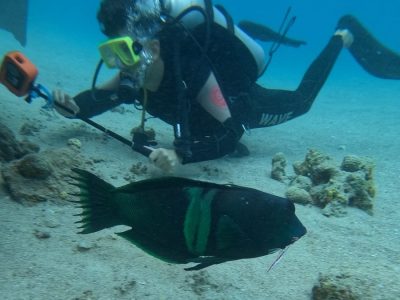
Behind the visitor attractions, the park runs breeding programs including coral propagation, which it says reduces the need to take organisms from the sea, and rehabilitates and breeds turtles, seahorses, butterfly fish and anemones, releasing animals raised in the park back into the Red Sea. Its dive team also works on the reef itself. On 17 November the park’s divers joined inspectors from Israel’s Nature and Parks Authority to free a Red Sea wrasse that had been swimming with a fishing hook in its mouth since late October.
This is the first time ZooReviews has covered the park, and it will not be the last. For American readers the eight days in December are unlikely to be a trip plan, but the Red Sea reef in Eilat is one of the most accessible coral reefs on earth and the tower sitting in it has been open for half a century.
Program details from the park’s own Hanukkah page, published 13 November 2026, and its mission page. Our report on the hook removal is here: two weeks to find the fish, one minute to free it. For more from Israel’s coast, see the electric rays that gather off a Galilee beach every winter.
Quick answers
- When is the Hanukkah program at the Underwater Observatory?
4 to 12 December 2026, across all eight days of the holiday. The park is open 9:00 to 17:00 during the run.
- Does it cost extra?
No. The park says every activity is included in the regular admission ticket, with no advance registration.
- What happens each day?
Candles are lit at 14:00 at the entrance plaza and doughnuts are handed out to everyone. On Saturdays the doughnuts are distributed without the candle lighting. A craft corner is open all day throughout.
- What is the Underwater Observatory Marine Park?
A public aquarium and marine park on the Red Sea at Eilat, Israel. The park says it opened in 1975 as the first land-based underwater tourist attraction, with a first observatory tower built in 1974 and a second, larger one in 1991.