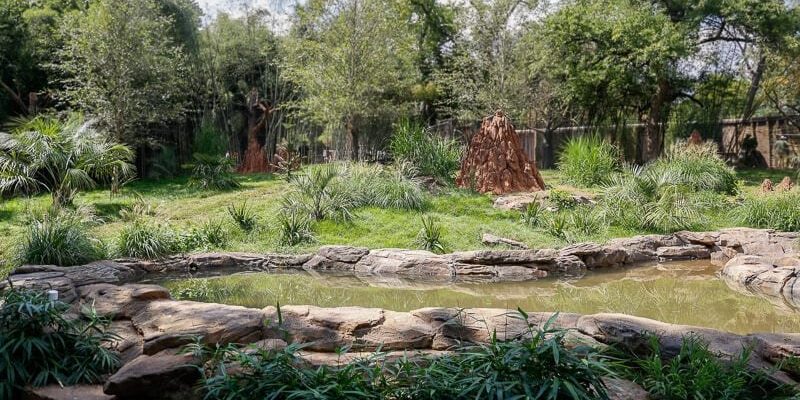
The old tapir yard at Nashville Zoo is now a South American grassland with artificial termite mounds in it, and the mounds are the part worth understanding. They are not scenery. Keepers load them with fruit and insects every day, which turns a flat piece of ground into a place where a giant anteater has to go and work for its food.
Nashville Zoo at Grassmere opened the habitat on Friday, September 4, 2026, on the site of the previous tapir exhibit, just past Flamingo Lagoon.
Who lives there
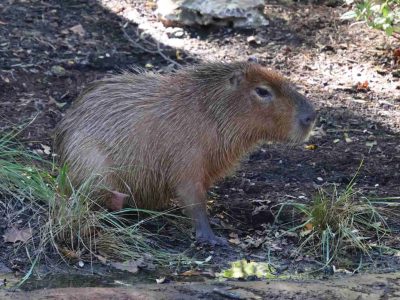
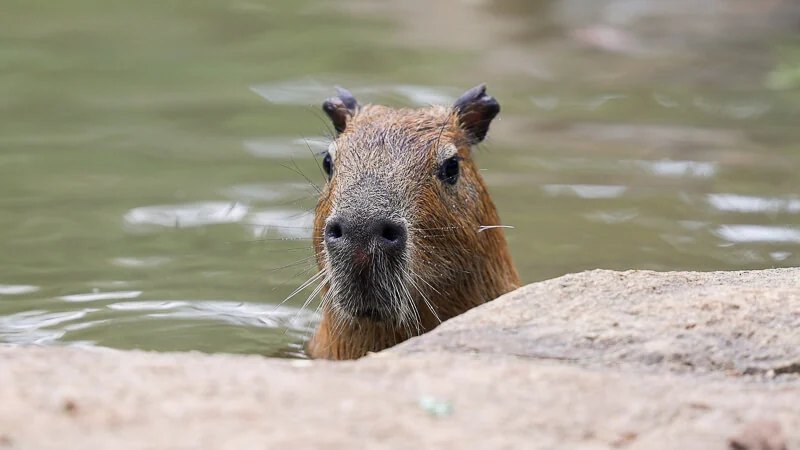
The roster is four species: the recently acquired capybara pups Andouille and Brie, one giant anteater, three common rhea and two crested screamers. Guests could see the capybara and the screamers on opening day. The anteater and the rhea are being added gradually so each animal has time to settle, which is standard practice and the reason a multi-species habitat usually opens in stages rather than all at once.
A multi-species habitat means exactly what it says: several species that share range in the wild sharing one enclosure, rather than each getting a separate box. It is harder to run than a single-species yard because the animals have to be compatible in temperament, diet and use of space, and it is better to look at because a grassland with a rodent, an anteater, a flightless bird and a screamer in it is closer to what that grassland actually contains.
“By housing compatible species together, we created a more dynamic experience for both the animals and our guests,” said Rick Schwartz, Nashville Zoo’s president and CEO. “The new habitat illustrates the interconnectedness of species within ecosystems and allows us to tell a more complete conservation story for all of the animals that now reside in the new exhibit.”
What changed in the ground itself
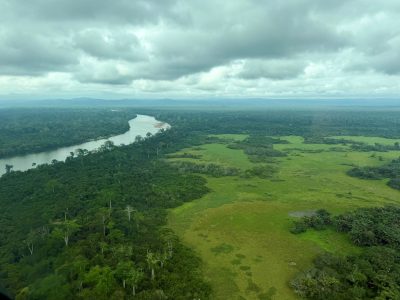
The yard was expanded and redesigned to read as South American grassland: open sight lines, a deliberate selection of grasses and other plants, and the termite mounds. The mounds were built from the foraging behavior backward. A giant anteater in the wild opens a mound, feeds briefly and moves on, and a mound that can be worked repeatedly gives the animal a reason to cross the yard rather than wait at a bowl.
The pool was already there and was modified to suit two very different swimmers, because both the capybara and the anteater use water. A capybara is a semi-aquatic rodent that will sit in a pool for long stretches; an anteater swims with its snout up, using the length of it like a snorkel.
The bridge over the habitat was remodeled with glass panels, which does two jobs at once: it improves accessibility and it drops the sight line for anyone who is not six feet tall.
Why Nashville and anteaters
This is not a zoo picking up a giant anteater for the first time. Nashville Zoo holds the largest collection of giant anteaters in the United States and has produced 19 births at its off-exhibit breeding facility since 2001, alongside published research and field work on the species. The animal in the new yard sits at the public-facing end of a program that mostly runs out of sight, which is the usual arrangement for a breeding operation.
The zoo also runs a long record with confiscated and rescued primates and a clouded leopard program, including the cub Mayuree. Joining yards to make better space is a move other collections are making too: the Saint Louis Zoo merged two River’s Edge yards into one capybara habitat in October.
One note on the listing
The zoo’s announcement describes the giant anteater as vulnerable to extinction and says it is considered extinct in Belize, El Salvador, Guatemala and Uruguay. The category is right. The current IUCN Red List assessment of Myrmecophaga tridactyla, assessed on May 10, 2024 and published in 2025, lists the species as Vulnerable under criteria A2cd, with a decreasing population.
The country list is where we would use a slightly different word. The Red List files those four countries under Possibly Extinct rather than extinct, a category it uses when a species has very likely disappeared from a place but a survey has not settled it. The same assessment has since added Costa Rica to that list, along with parts of Argentina and Brazil. The four-country version matches the older 2014 assessment exactly, which is almost certainly where it came from. We default to the current assessment, and the picture it paints is the one the zoo is describing: an animal losing ground country by country, which is the argument for a breeding program in Tennessee that has produced 19 of them.
For a visitor, none of that is the experience. The experience is an open yard past the flamingos where, on a good afternoon, a capybara is in the pool, a pair of screamers is making the noise screamers make, and something with a very long nose is taking a termite mound apart.
Quick answers
- What is in Nashville Zoo's new South American habitat?
Four species: the capybara pups Andouille and Brie, one giant anteater, three common rhea and two crested screamers. The capybara and the screamers were visible on opening day, September 4, 2026, and the anteater and the rhea are being added gradually so each animal can acclimate.
- Why does the habitat have artificial termite mounds?
Keepers load them with fruit and insects daily, so the anteater has to cross the yard and work a mound open the way it would in the wild rather than feed from a bowl. The yard was designed around that behavior.
- Where is the new habitat?
On the site of the zoo's previous tapir exhibit, just past Flamingo Lagoon. The yard was expanded and replanted to read as South American grassland, and the bridge over it was remodeled with glass panels.
- How many giant anteaters has Nashville Zoo bred?
Nineteen have been born at the zoo's off-exhibit breeding facility since 2001. Nashville Zoo holds the largest collection of giant anteaters in the United States.
- Is the giant anteater endangered?
The IUCN Red List lists Myrmecophaga tridactyla as Vulnerable under criteria A2cd, assessed on May 10, 2024 and published in 2025, with a decreasing population.
- Is the giant anteater extinct in Belize, El Salvador, Guatemala and Uruguay?
The Red List files those four countries under Possibly Extinct rather than extinct, a category used when a species has very likely gone from a place but no survey has settled it. The current assessment adds Costa Rica to that list, along with parts of Argentina and Brazil.