
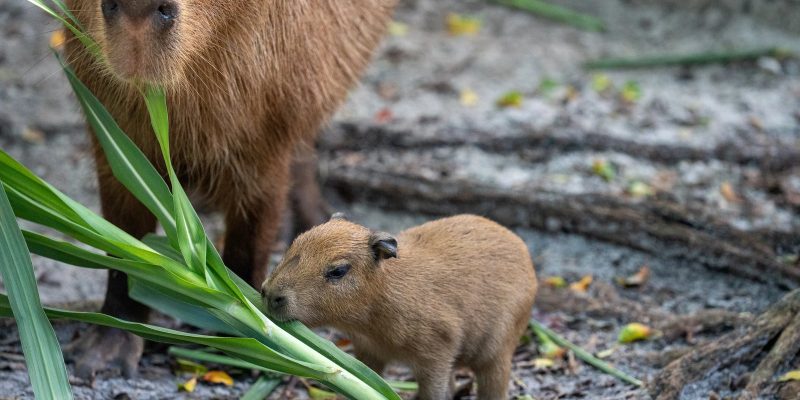
Iyari, the Palm Beach Zoo’s capybara, has given birth to a single pup. Mother and baby are both doing well, and neither is on public view yet.
The zoo says the pair’s job for now is rest and bonding, and that the animal care team is giving them quiet, low-stress time to settle together. It is Iyari’s second litter. The zoo announced in mid-September that she was expecting again.
The first litter has moved out
Iyari’s earlier pups have left the nest in the most literal sense. The trio has moved into the anteater habitat, where they now live alongside the resident anteaters Ru, Cruz and Odelia, and where there is more room to explore on their own terms. Mixed-species housing of that kind is routine at accredited zoos when the animals are compatible, and it generally means a larger and more varied space than either species would get alone.
Why a capybara birth goes through a committee
Iyari was paired with Zeus on the recommendation of the Capybara Species Survival Plan, the Association of Zoos and Aquariums program that matches animals across accredited institutions to keep the population in human care genetically healthy over the long run.
That is not a rescue operation, and the zoo does not claim it is. The IUCN Red List assesses the capybara as Least Concern with a stable population, in an assessment by F. Reid dated March 1, 2016. What an SSP does for a common species is arithmetic: it keeps the North American population from quietly becoming a handful of extended families over a few decades.
What a capybara actually is
The largest rodent on earth, and built accordingly. Capybaras have webbed feet, swim strongly and can hold their breath underwater for around five minutes. They are relentlessly social, live in groups, and are famously tolerant of other animals sitting on them, birds included. Their teeth never stop growing, which is why near-constant grazing is not a quirk but a maintenance requirement.
The zoo has not set a date for the pup’s public debut and says it will announce the next milestone through its own channels. Palm Beach Zoo’s last major guest-facing change was the opening of Tiger Forest and its elevated trails.
Quick answers
- What happened at the Palm Beach Zoo?
Iyari, the zoo's capybara, gave birth to a single pup. The zoo says mother and pup are both doing well. It is her second litter; the zoo announced in mid-September that she was expecting again.
- Can visitors see the pup?
Not yet. The zoo says the pair need quiet, low-stress time to rest and bond, so they are off public view, and that it will announce the public debut through its own channels.
- Where did the first litter go?
Iyari's earlier pups have moved into the anteater habitat, where they live alongside the resident anteaters Ru, Cruz and Odelia and have more room to explore on their own.
- Why does a capybara birth need a breeding recommendation?
Iyari was paired with Zeus on the recommendation of the Capybara Species Survival Plan, the Association of Zoos and Aquariums program that matches animals across accredited institutions to keep the population in human care genetically healthy over the long term.
- Are capybaras endangered?
No. The IUCN Red List assesses the capybara, Hydrochoerus hydrochaeris, as Least Concern with a stable population, in an assessment by F. Reid dated March 1, 2016. The Species Survival Plan here is managing genetics, not scarcity.
- How long can a capybara hold its breath?
About five minutes. Capybaras have webbed feet and swim strongly. They are the largest rodents on earth, intensely social, and their teeth grow continuously, which is why they graze almost constantly.