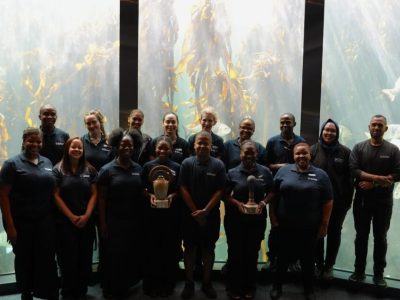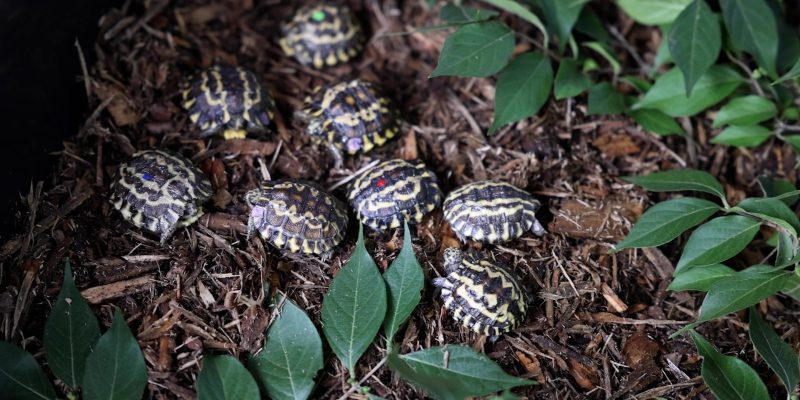
Zoo Knoxville has won the Association of Zoos and Aquariums’ Edward H. Bean Population Sustainability Award for its work with the Madagascar flat-tailed tortoise, a small, critically endangered tortoise it has worked with for more than fifty years. The award was announced at the AZA Honors and Awards Lunch on September 30, at the association’s annual conference in Portland, Oregon, out of 96 applicants across every award category.
It arrives on the back of the best season the zoo’s herpetology team has ever had with the animal. Ten flat-tailed tortoises hatched at Zoo Knoxville this year, roughly double its previous record of about five in a single season.
What does a population sustainability award actually measure?
Not one good year. The Bean award is named for sustainability, and sustainability here is a long-horizon idea: whether a population spread across accredited institutions can keep itself going, generation after generation, without pulling more animals out of the wild to prop it up. That is the work of a Species Survival Plan, the managed breeding program AZA institutions run for a given species, in which a studbook tracks the pedigree of every individual and pairings are recommended so that the genetic diversity of the whole population does not quietly narrow. Zoo Knoxville’s award is for the Madagascar Flat-Tailed Tortoise SSP.
The zoo has been at this for more than fifty years. In 2002 it became the first facility in the United States to hatch the species successfully, and it now maintains the largest breeding population of flat-tailed tortoises outside Madagascar. Ten hatchlings in one year is what five decades of accumulated practice looks like when it finally compounds.
“Congratulations to the team at Zoo Knoxville for their hard work and dedication in achieving this remarkable recognition,” said Dan Ashe, president and chief executive of the Association of Zoos and Aquariums. “This award recognizes the best of the best in the global aquarium and zoo community. The work being done at Zoo Knoxville further strengthens the impact of our entire community and is something Knoxville can be proud of.”
Why is this tortoise so hard to breed?
The flat-tailed tortoise is endemic to the dry deciduous forest of western Madagascar, a habitat with a hard seasonal rhythm: a short wet season when the animals are active, a long dry one when they largely are not. Reptiles out of that kind of forest generally have to have those seasonal cues reproduced for them before they will breed in human care at all, and arriving at the right recipe is slow, iterative work. The United States did not see a flat-tailed tortoise hatch until Zoo Knoxville managed it in 2002.
Other AZA institutions are running the same play with other threatened tortoises. Cincinnati Zoo hatched four Asian giant tortoises under their own Species Survival Plan at the end of September, which is the same argument in a different shell. You can read our coverage of those hatchlings here.
Can visitors see them?
Not right now. Zoo Knoxville’s flat-tailed tortoises are spending the fall and winter in a greenhouse behind the scenes, which is the sensible arrangement for a dry-forest reptile in an East Tennessee October. When the weather warms in the spring they move back out, into the outdoor space beside the Clayton Family Amphibian and Reptile Conservation Campus. If you want to see what a national award for population sustainability actually looks like, it looks like a row of hatchlings the size of a biscuit, working their way across the mulch.
The zoo’s own announcement is here.
Quick answers
- What award did Zoo Knoxville win?
The Edward H. Bean Population Sustainability Award from the Association of Zoos and Aquariums, announced at the AZA Honors and Awards Lunch on September 30, 2026 at the association’s annual conference in Portland, Oregon. There were 96 applicants across all award categories.
- What was the award for?
Zoo Knoxville’s work in the Madagascar Flat-Tailed Tortoise Species Survival Plan, a managed breeding program run across AZA institutions.
- How many tortoises hatched at Zoo Knoxville this year?
Ten Madagascar flat-tailed tortoises, roughly double the zoo’s previous record of about five hatchlings in a single season.
- How long has Zoo Knoxville worked with this species?
More than fifty years. In 2002 it became the first facility in the United States to hatch a Madagascar flat-tailed tortoise successfully, and it now maintains the largest breeding population of the species outside Madagascar.
- Can visitors see the flat-tailed tortoises?
Not during the fall and winter. The tortoises are behind the scenes in a greenhouse for the colder months and move back outside in the spring, beside the Clayton Family Amphibian and Reptile Conservation Campus.
- What is a Species Survival Plan?
A managed breeding program AZA institutions run for a given species. A studbook tracks the pedigree of every individual and pairings are recommended so the population keeps its genetic diversity across generations without taking more animals from the wild.