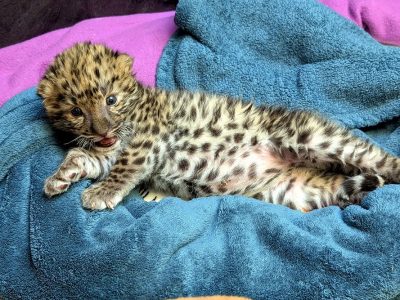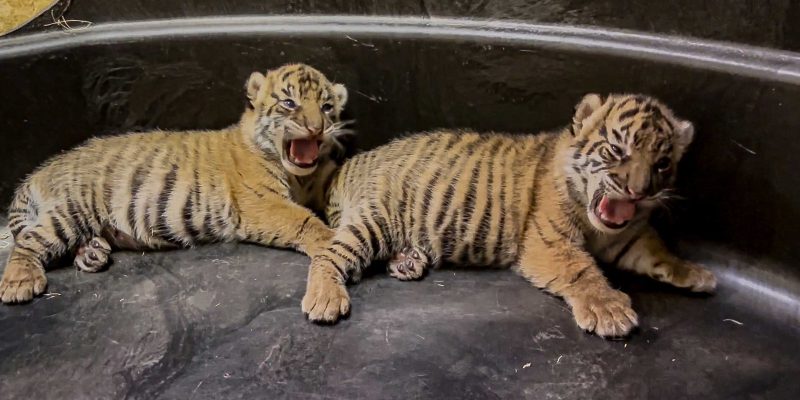
Memphis Zoo went into the birth of its Sumatran tiger cubs expecting one animal. Every ultrasound the animal health team ran on Dari, the mother, could definitively confirm a single cub in utero. On August 12 she delivered two, both female, and the second arrived as a surprise to the people who had been watching her for months.
The zoo kept the news for a crowd. It announced the cubs at halftime of a University of Memphis football game, which is an unusual way to break an animal story and a reasonable one for a city whose team is named for the animal.
Why does an ultrasound miss a cub?
Because a tiger is not a patient who holds still for imaging, and a uterus carrying two cubs can read as a uterus carrying one. Ultrasound finds what the probe can reach, and a second fetus lying behind the first can stay hidden through repeated scans. A confirmed count is a floor rather than a total, which is why the team was prepared for the animal it had not seen.
Dari had the advantage of experience. This is her second litter, and the zoo describes her as taking to the cubs without difficulty. The father is Badar, a male Memphis brought in this past April as an addition to its tiger program. All three animals stayed behind the scenes after the birth, in the quiet space where a tiger mother is left alone to do the work, with keepers and veterinary staff watching rather than intervening.
What does the Species Survival Plan have to do with it?
Everything, including the fact that these two particular tigers were ever in the same building. Memphis Zoo is accredited by the Association of Zoos and Aquariums and takes part in the Sumatran Tiger Species Survival Plan, the program that treats every Sumatran tiger at every accredited institution as one managed population and decides, on genetics and health and the needs of individual animals, which tiger should live where. Badar’s move to Memphis was that program working. So, eventually, will be the cubs’ departures.
That is the part people find hardest about a zoo birth, and it is worth saying plainly: these cubs will probably not spend their lives in Memphis. As they grow, the SSP will decide where their genetics are most useful, and that is likely to be somewhere else. Two females is the outcome the program wants, because females set the ceiling on how fast a managed population can grow.
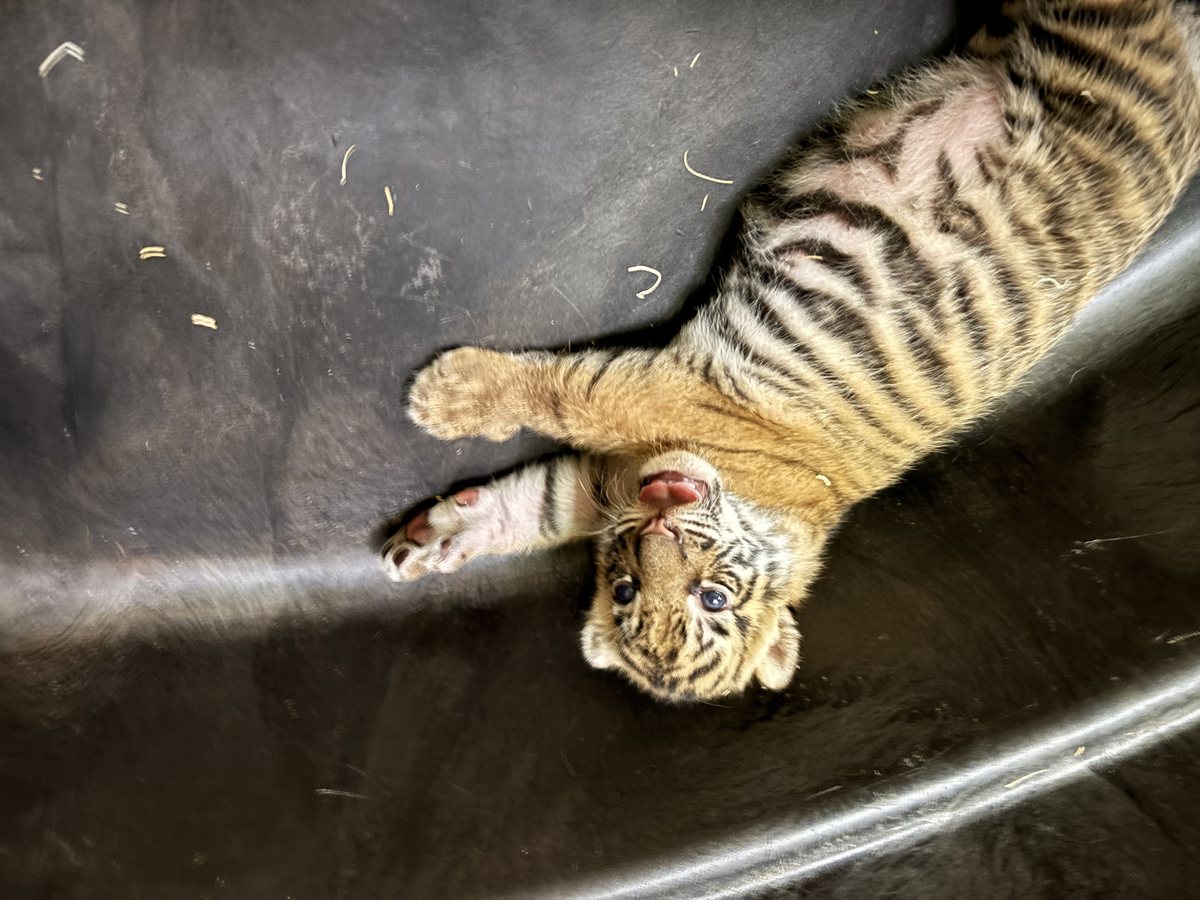
How rare is a Sumatran tiger, exactly?
Rare enough that the answer depends on which document you ask, and the documents do not agree.
Memphis Zoo describes the Sumatran tiger as critically endangered, with fewer than 400 remaining in the wild and about 70 living in zoos worldwide. Those figures are in general circulation among zoos and tiger specialists, and the second one is the kind of count a Species Survival Plan keeps accurately, because it is counting animals it manages.
The IUCN Red List is organized differently. Its current entry assesses the tiger as a single species, Panthera tigris, and lists it as Endangered under criteria A2abcd, assessed in December 2021 and published in 2022. The best estimate there is 3,140 mature individuals across the entire range, within a plausible band of 2,608 to 3,905, and the trend is decreasing. The assessment names P. t. sumatrae as one of six living subspecies and identifies Sumatra as a place where deforestation has driven habitat loss, but it publishes no separate population figure for the island.
So the Red List does not currently carry a Sumatran tiger number to check the zoo’s against, and the two documents are counting different things rather than disagreeing. Where there is a conflict we default to the assessment, and here there is no conflict to resolve, only a gap. None of it changes what the zoo is actually saying, which is that there are very few of these animals and two more of them is a good day.
What are they called?
Boneka and Kari. The zoo put six Indonesian names to a public vote, all drawn from the language of the island the subspecies is named for, and several of them referring to the total solar eclipse that fell on the cubs’ birthday. Voting ran from September 5 to September 15, and the winners were announced at the September 19 home game: Boneka, Indonesian for doll, chosen in honor of Dolly Parton, and Kari, Indonesian for curry, chosen in honor of Tim Curry.
The names that lost were Rahasia, meaning secret or hidden, for the unexpected second cub; Senja, meaning twilight; Matahari, meaning sun; and Surya, for the Hindu sun god.
Can you see them yet?
Not quite. In early October the zoo reported that both cubs were healthy, were being monitored closely, and had eaten meat for the first time, with a public debut expected toward the end of the year. Until then there is a Cub Cam, which is the closest thing available to standing at the glass.
Memphis Zoo’s own announcement is here, and the IUCN Red List assessment for Panthera tigris, the source of the population figures above, is here. We covered a Sumatran tiger litter on the other side of the Atlantic, at Fota Wildlife Park, here.
Quick answers
- When were the Memphis Zoo tiger cubs born?
August 12, 2026. Memphis Zoo announced the birth on September 6 at halftime of a University of Memphis football game.
- What are the Memphis Zoo tiger cubs named?
Boneka and Kari. The names came from a public vote among six Indonesian options and were announced at the September 19 home game. Boneka means doll and honors Dolly Parton; Kari means curry and honors Tim Curry.
- Who are the cubs’ parents?
Dari, an experienced mother for whom this is a second litter, and Badar, a male Memphis Zoo brought in during April 2026.
- Why did the zoo only expect one cub?
Every ultrasound could definitively confirm just one cub in utero. A second fetus lying behind the first can stay hidden through repeated scans, so a confirmed count is treated as a floor rather than a total.
- How many Sumatran tigers are left?
Memphis Zoo cites fewer than 400 in the wild and about 70 in zoos worldwide. The IUCN Red List assesses the tiger as one species, Endangered, with a best estimate of 3,140 mature individuals across the whole range, and publishes no separate figure for Sumatra.
- Can visitors see the cubs?
Not yet. As of early October 2026 both cubs were healthy and behind the scenes, with a public debut expected toward the end of the year. The zoo runs a Cub Cam in the meantime.