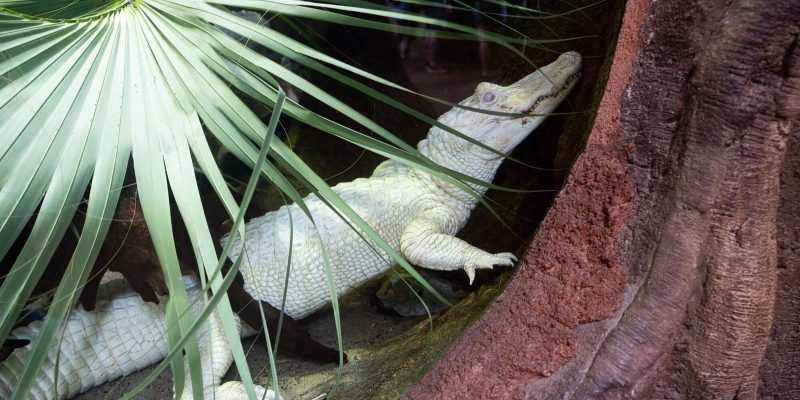
Zoo Knoxville has an American alligator on exhibit that is the color of bone. Elsa came from an AZA-accredited institution in Florida, and she is at the Clayton Family Amphibian and Reptile Conservation Campus for a limited stay rather than as a permanent resident.
She is an albino, which in an alligator is not a paint job but a shortfall in one pigment, and almost everything interesting about her follows from that single fact.
What albinism does to an alligator
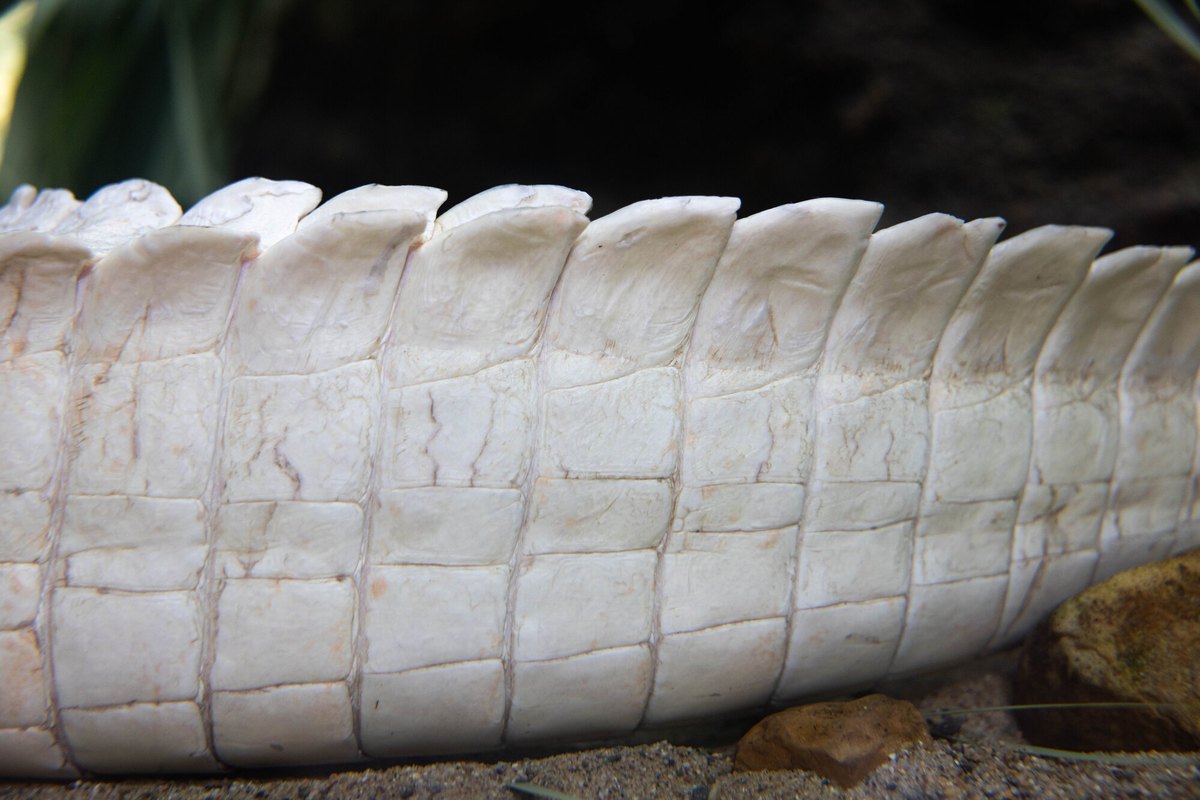
Melanin is the pigment that colors skin, scales and eyes, and it also absorbs ultraviolet light. Elsa’s body produces very little of it, which gives her the pale hide and the pink-tinted eyes, and which means she sunburns easily. An alligator that cannot sit out in the sun has lost access to one of the main things alligators do.
The second consequence is camouflage. American alligators are dark for a reason: in the wetlands, swamps, marshes, rivers and lakes they live in, a dark animal lying still at the surface is close to invisible, to prey and to anything that might eat a young alligator. Elsa’s coloring removes that. In the wild she would be the most conspicuous thing in the water.
Why the zoo is using her as a teaching animal
“Elsa’s story is about more than what makes her look different,” said Michael Ogle, curator of herpetology and birds at Zoo Knoxville. “Her albinism helps us talk about the challenges she would face in the wild and the challenges facing wildlife everywhere. By connecting people with animals like Elsa, we can turn curiosity into a greater investment in protecting wildlife and wild places.”
That is the argument for charismatic animals in one sentence, and it works better when the animal is strange. A visitor who stops at a white alligator will stand there long enough to be told why a white alligator is a problem, and that is a longer conversation than most exhibit signs get.
The species story is a comeback
The American alligator, Alligator mississippiensis, is one of the clearest wins in American wildlife law. Hunted to near extinction, it received federal protection in 1967, and the populations recovered to the point that they are now considered stable. The pressure that remains is on habitat rather than on the animals directly: wetland loss, degradation of what is left, and conflict where people and alligators end up in the same water.
Alligators are also a keystone species, which is a term worth unpacking because the whole wetland argument rests on it. A keystone species shapes the physical place it lives in, and removing it changes the system for everything else. Alligators dig and maintain the depressions known as gator holes, which hold water through dry spells and become refuges for fish, turtles, wading birds and amphibians when everything around them goes dry. They also keep prey populations in check. Take the alligators out of a marsh and you do not get the same marsh minus alligators; you get a different marsh.
Where to find her
Elsa is on exhibit in the Clayton Family Amphibian and Reptile Conservation Campus, known at the zoo as the ARC and sponsored in part by Dippin’ Dots and Publix Charities. Because the stay is a limited engagement, anyone making a trip specifically for her would do well to check with the zoo first. The U.S. Fish and Wildlife Service keeps a species profile for anyone who wants the regulatory history behind the recovery.
Zoo Knoxville’s herpetology department is the reason this animal landed here rather than somewhere else; the same team’s work on Madagascar tortoises won it the Edward H. Bean Award in 2026.
Source: Zoo Knoxville, September 3, 2026.
Quick answers
- What makes Elsa white?
Albinism. Her body produces very little melanin, the pigment that colors skin, scales and eyes, which gives her pale skin and pink-tinted eyes.
- Could an albino alligator survive in the wild?
It would be at a serious disadvantage. American alligators rely on dark coloring to blend into wetlands, swamps, marshes, rivers and lakes, and an albino is far more visible. Low melanin also means she sunburns easily.
- Where can you see Elsa at Zoo Knoxville?
In the Clayton Family Amphibian and Reptile Conservation Campus, known as the ARC. The zoo describes her stay as a limited engagement, so it is worth checking before making a special trip.
- Where did Elsa come from?
An AZA-accredited institution in Florida.
- Why is the American alligator called a keystone species?
It shapes the wetland itself. Alligators dig and maintain gator holes that hold water through dry spells and shelter fish, turtles, wading birds and amphibians, and they keep prey populations in check.
- Is the American alligator endangered?
No. It was hunted to near extinction, received federal protection in 1967 and recovered to the point that populations are considered stable. The pressure now is on habitat rather than on the animals directly.