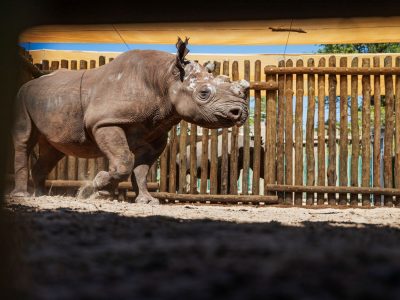

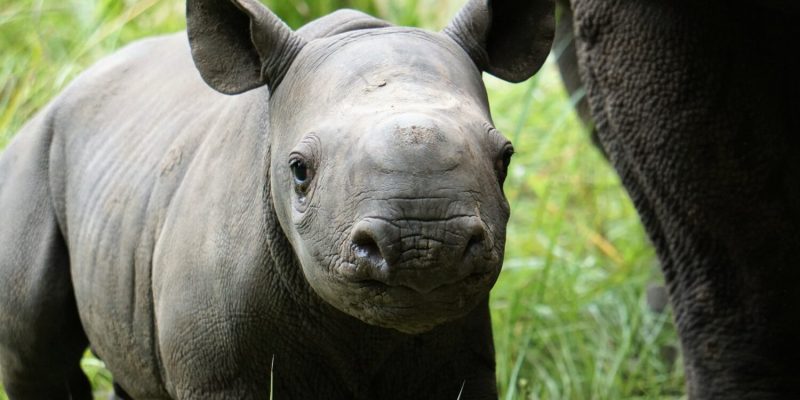
A male black rhino was born at White Oak Conservation in Florida in August 2020, and by four months old he had gone from 70 pounds to 250.
Staff at the Yulee refuge named him Rocky, after the boxer. His parents are of South African ancestry.
“Mom has been great and protective, keeping him very close,” said Brandon Speeg, director of conservation at White Oak. “That’s why in the wild, rhino calves are not a real easy target for carnivores. They have a large, protective mom to watch over them.”
The threat is not carnivores
Thousands of rhinos have been killed by poachers for their horns over the past decade, and black rhinos are now listed as critically endangered across Africa.
The horns are smuggled out of Africa to Asia and traded as status symbols and as remedies for hangovers, headaches and fevers. They have no medicinal value. Rhino horn is keratin, the same material as fingernails and hooves.
A refuge built around the species
White Oak is a refuge for rare species in northeastern Florida supported by philanthropists Kimbra and Mark Walter.
“Kimbra and I started our work in wildlife conservation with rhinoceroses because they have been so badly decimated throughout Africa,” Mark Walter said. “We will continue to do everything we can to protect wild rhinos in Africa and to provide a safe refuge for them here in the United States.”