
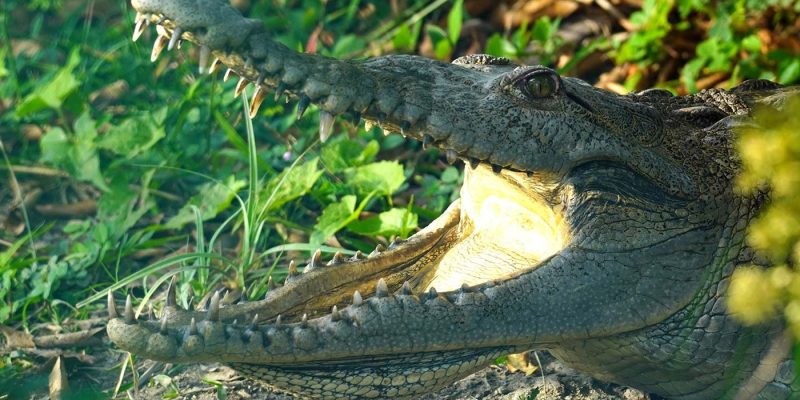
Gatorland pays alligator trappers not to kill the alligators.
That is the simplest description of one arm of Gatorland Global, the conservation program the Orlando park established in 2017, and it addresses a specific Florida problem. As the state’s human population grows, encounters with large alligators grow with it. The Florida Fish and Wildlife Conservation Commission permits nuisance trappers to remove those animals, and trappers make their living by euthanizing what they catch and selling the meat and hides.
Gatorland Global works with trappers in Central Florida and offers to pay them to take the animals alive and bring them to the park instead.
It is not the only Florida park doing it. Gatorama in Palmdale takes in nuisance alligators on the same principle, and credits Gatorland with helping rescue an alligator found with her mouth taped shut in 2023.
Protect, conserve, educate
The program runs under a three-part mission the park states plainly: to protect, conserve and educate. Its projects cover wild populations of American alligators and American crocodiles, Cuban crocodiles, and Australian saltwater and freshwater crocodiles.
Cuban crocodiles are among the most endangered crocodilians in the world, confined in the wild to a small area of Cuba. The Australian work came through a different route.
Darwin
In February 2020, Savannah Boan, Gatorland Global’s international ambassador, spent two weeks at Crocodylus Park in Darwin, Australia, working with the park’s founder, Professor Grahame Webb, and his team on saltwater and freshwater crocodiles, from hatchlings to full-grown adults.
Webb, whom Gatorland describes as a world-renowned crocodile biologist, issued the invitation himself.
“Gatorland has been the leader in alligator safety, education and research for over 70 years in Florida,” said Mark McHugh, Gatorland’s president and chief executive. “Gatorland Global has allowed us to expand our conservation efforts around the world, and we are incredibly excited to work with Professor Webb and his amazing team at Crocodylus Park.”
Boan joined Gatorland in 2016 as crocodilian enrichment coordinator and now runs the program’s international work alongside its social media, which is the third leg of the mission in practice. Gatorland Global’s conservation projects have reached crocodilians in South Florida, Cuba, Jamaica, India and now Australia.
The education part is not filler
Gatorland has been in Orlando since 1949, more than twenty years before the theme parks arrived, and the park counts an audience in the hundreds of thousands reached through its social media channels alone.
The stated goal for that audience is neither fear nor affection. It is to understand what alligators and crocodiles do for the ecosystems they live in, respect what they are capable of, and know how to live alongside them in Florida and everywhere else they occur.